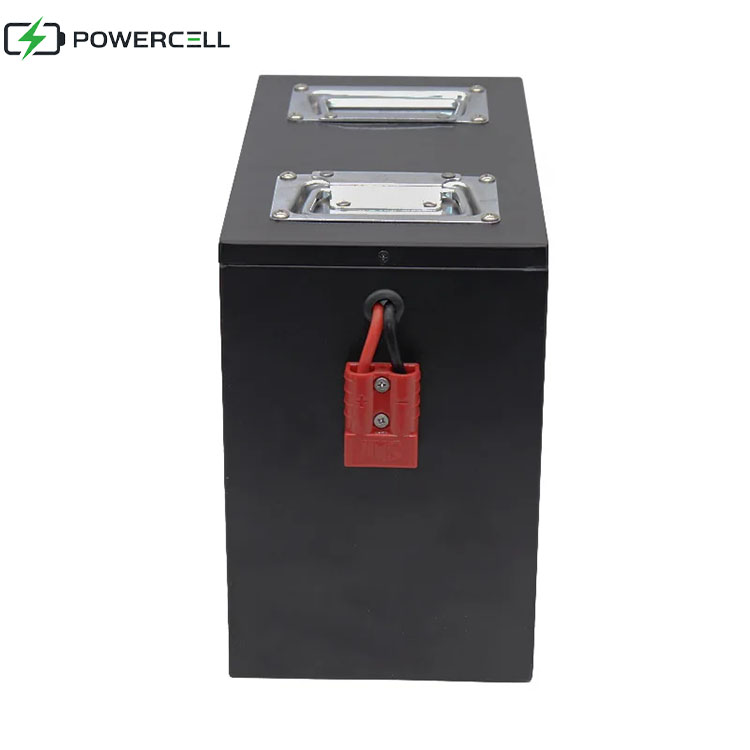
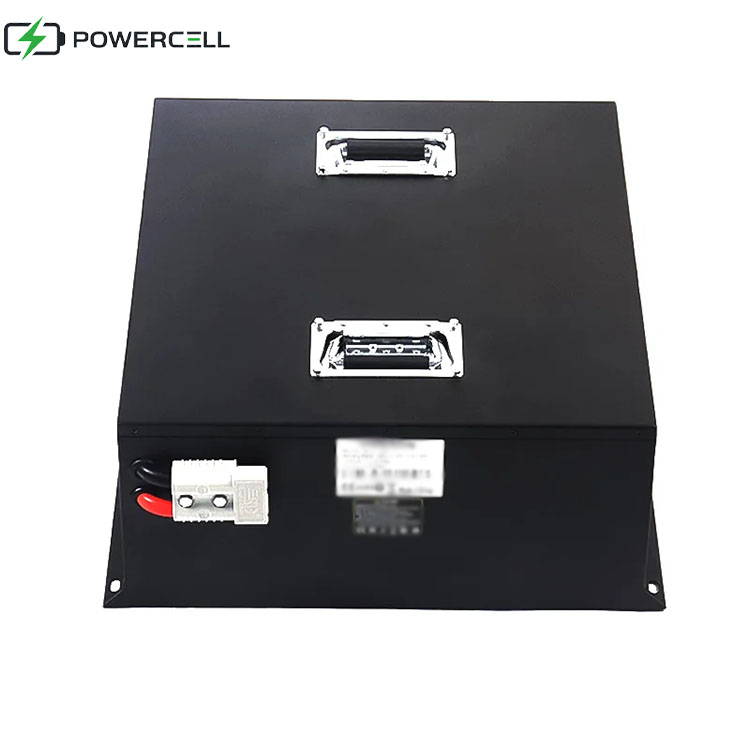
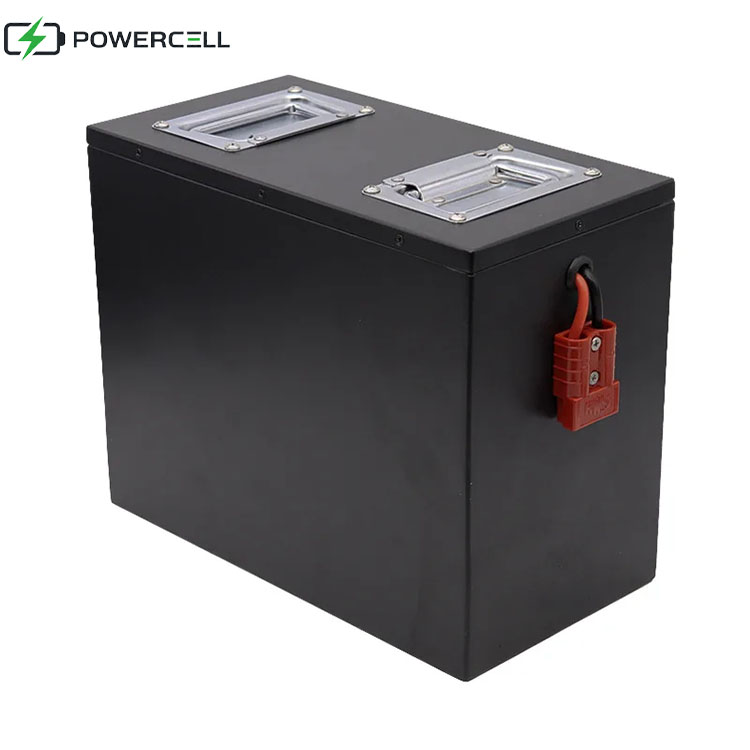
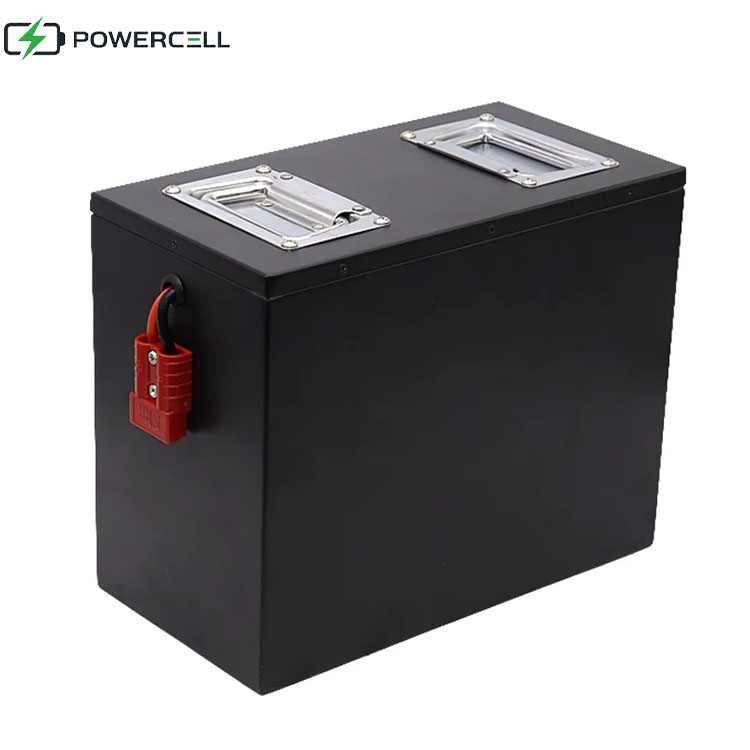
Send us your application, voltage, capacity, battery size, quantity, and branding needs. BYingPower will review your project and recommend the right LiFePO4 battery solution for golf carts, RVs, marine systems, solar storage, forklifts, or lead-acid replacement.
Custom battery pack review for your application
OEM/ODM and private-label battery guidance
BMS, charger, terminals, heating, and packaging support
Faster quote path for samples and bulk orders
4th Floor, Building A, No. 2, Longjiang 2nd Road, Xie Keng, Qingxi Town, Dongguan Province,China.
Single Lithium Pack vs Parallel Batteries for Golf Cart Conversions
A single lithium pack usually gives golf cart owners the cleanest and most reliable conversion. Parallel batteries can add capacity and current, but only when the BMS, cables, fuses, charger, and battery specifications are engineered as one system.
After reviewing battery recall records, parallel-pack research, charger behavior, and the electrical demands of Club Car, EZGO, Yamaha, ICON, and other 48V carts, I would choose one properly sized lithium pack for most golf cart conversions rather than create a more complicated external parallel bank.
Why add failure points you do not need?
That opinion will annoy sellers who promote modular batteries as automatically safer, cheaper, or easier to repair. But the hard truth is simple: two batteries do not provide useful redundancy merely because both positive terminals and both negative terminals are connected.
Parallel systems can work extremely well. They can double stored energy, increase available discharge current, and make a large battery bank easier to position in an awkward tray. Yet they also introduce additional BMS units, fuses, terminals, communication questions, current-sharing problems, and opportunities for installation error.
A golf cart lithium battery conversion should not begin with the number of boxes. It should begin with voltage, watt-hours, controller current, charger compatibility, physical fit, and the cart’s actual duty cycle.
First, Stop Confusing Series and Parallel Batteries
Many golf cart owners use “parallel batteries” to describe any conversion involving more than one battery. That is technically wrong, and the distinction matters.
Four 12.8V 100Ah LiFePO4 batteries connected in series create a nominal 51.2V 100Ah bank:
12.8V × 4 = 51.2V
The voltage increases, but the amp-hour capacity remains 100Ah. Nameplate energy is approximately:
51.2V × 100Ah = 5,120Wh
Two complete 51.2V 100Ah batteries connected in parallel remain at 51.2V, while capacity rises to 200Ah:
51.2V × 200Ah = 10,240Wh
That is a very different lithium golf cart battery setup.
A single 51.2V pack normally contains 16 series-connected LiFePO4 cell groups inside one enclosure. Those internal groups may contain multiple cells in parallel, but the cart sees one battery, one main BMS, one set of power terminals, and one integrated protection strategy.
External parallel batteries for a golf cart mean two or more complete packs, each with its own BMS, connected to a shared DC bus.
Before choosing either architecture, calculate energy in watt-hours rather than comparing amp-hour labels alone. CoreSpark’s guide on how to size a golf cart battery by watt-hours explains why a 36V 100Ah pack and a 51.2V 100Ah pack are not remotely equal energy sources.
Single Lithium Pack vs Parallel Batteries: The Real Comparison
Decision Factor
Single Integrated Lithium Pack
Multiple Batteries in Parallel
My Verdict
Main wiring
One positive and one negative power path
Multiple branch cables, busbars and connections
Single pack is cleaner
BMS coordination
One BMS controls the complete pack
Independent BMS units may react at different times
Single pack is easier to predict
Current sharing
Managed within the pack design
Depends on resistance, cable layout, battery condition and SOC
Parallel requires better engineering
Stored energy
Limited to the selected pack capacity
Capacity can be expanded by adding approved matching packs
Parallel wins for expansion
Failure diagnosis
One data source and one fault history
Fault may come from either pack or the shared wiring
Single pack is faster to diagnose
Physical installation
May require a custom tray or hold-down
Smaller modules may fit existing battery wells
Depends on the cart
Serviceability
Entire pack may need removal
One module may be isolated or replaced if the design allows it
Parallel can help fleets
Fusing
Main pack fuse or breaker
Main protection plus branch protection for each pack
Single pack uses fewer components
Charger matching
One pack specification
Every connected pack and BMS must accept the same charging profile
Single pack is simpler
Upgrade risk
Lower when correctly specified
Higher if batteries differ in model, age, SOC, firmware or resistance
Single pack wins for most conversions
The table makes the direction clear. For a private cart, dealer installation, or ordinary 48V lithium golf cart battery conversion, one integrated pack removes several problems before they exist.
But there are legitimate exceptions. A resort cart running two shifts, a utility cart carrying tools, or a high-capacity fleet vehicle may need 7.5–10kWh or more. Parallel packs can make sense there, provided the manufacturer explicitly approves that configuration.
Why One Integrated Pack Usually Works Better
One BMS Makes Protection Behavior Easier to Predict
A battery management system monitors cell-group voltage, pack current, temperature, charge limits, discharge limits, and short-circuit conditions. In a single lithium battery for a golf cart, one BMS sees the entire traction load and makes one protection decision.
With two packs in parallel, each BMS sees its own branch current. Those currents will not always divide equally.
A 2019 experimental study on imbalances in parallel-connected lithium-ion battery packs found that uneven current distribution can produce different degradation rates and cell overcurrent issues. The researchers identified cell chemistry, discharge rate, connection design, and operating state of charge as factors affecting current sharing.
A separate 2022 analysis of parallel battery current-imbalance dynamics showed that differences in battery capacity and internal resistance influence both branch current and state-of-charge behavior. An aged battery can experience a higher current magnitude near the end of a charge or discharge cycle under certain conditions.
That matters in a golf cart.
Suppose two nominally identical packs power a controller demanding 200A. The sales-sheet assumption is that each battery supplies 100A. But if one branch has lower resistance, newer cells, shorter cables, tighter terminals, or a different state of charge, it may carry noticeably more than half.
Then one BMS trips.
The second battery may suddenly inherit most or all of the load. Unless that remaining pack, its BMS, its fuse, and its cable branch can safely support the controller demand, the second BMS may trip immediately afterward.
That is not redundancy. It is a two-stage shutdown.
Fewer Connections Mean Fewer Resistance Problems
Lithium batteries expose poor wiring quickly because they can deliver high current with relatively little voltage sag.
Every additional cable lug, fuse holder, busbar joint, disconnect, and battery terminal adds resistance. The resistance may be tiny, but heat rises with the square of current:
Heat loss = Current² × Resistance
At 200A, a connection with only 1 milliohm of resistance dissipates:
200² × 0.001 = 40W
Forty watts concentrated at one loose or corroded connection is not a harmless detail.
A single integrated pack normally reduces the number of high-current junctions. That makes installation, torque inspection, voltage-drop testing, and thermal diagnosis easier.
For carts already suffering from shutdowns on hills or during acceleration, CoreSpark’s golf cart BMS cut-off guide covers the relationship between controller surge, cable resistance, cell sag, charger mismatch, and BMS protection.
One Pack Simplifies Charging
A 16-series LiFePO4 battery has a nominal voltage of 51.2V because each cell group is approximately 3.2V nominal. A common maximum charge voltage is 58.4V, based on 3.65V per series group, although the battery manufacturer’s specification must control the final charger selection.
With one pack, the installer needs to verify one set of charge limits.
Parallel charging adds questions:
Does the manufacturer permit the packs to be charged while connected?
Are the BMS charge MOSFETs designed for external parallel operation?
Can one pack disconnect while the other remains online?
Does the charger restart correctly after a BMS opens?
Must CAN or RS485 communication be shared with the charger?
What voltage difference is permitted before the packs are connected?
Never assume that two batteries can be paralleled simply because their labels show the same nominal voltage. Model, chemistry, capacity, production revision, firmware, state of charge, age, and internal resistance all matter.
And no, an old lead-acid charger does not become a lithium charger because the connector fits.
LiFePO4, chemically written as LiFePO₄, has strong thermal-stability advantages compared with many nickel-rich lithium-ion cathodes. But “more stable” does not mean immune to abuse, overcharge, bad wiring, physical damage, or defective pack construction.
The U.S. Department of Energy’s 2024 Energy Storage Safety Strategic Plan describes LFP as having lower energy density but good thermal stability. The same report identifies thermal runaway as the primary Li-ion safety concern and notes that electrical, mechanical, or thermal abuse can initiate it.
There is an important technical nuance. An Oak Ridge National Laboratory-supported comparison of large-format cells found that the tested LFP cell entered thermal runaway earlier during a specific overcharge test than the tested NCM cells, yet its resulting reaction was less severe: the LFP cell released heavy smoke, while the tested NCM cells caught fire or exploded. The takeaway is not that LFP is unsafe. It is that charger control and BMS protection still matter, even with a more thermally stable chemistry. Read the full overcharge study.
A real golf cart case makes the point more directly.
On March 2, 2023, the U.S. Consumer Product Safety Commission announced a recall covering about 7,250 RELiON InSight Series 48V batteries, model 48V030-GC2. The products were intended for golf carts, low-speed vehicles, AGVs, and UTVs. CPSC reported five overheating incidents, no injuries, and an original selling price of about $1,350. The official CPSC recall notice instructed owners to stop using affected batteries and obtain a repair.
That recall involved a respected commercial product, not a homemade battery assembled in a garage.
The lesson is uncomfortable: pack-level engineering, manufacturing consistency, traceability, BMS behavior, and corrective support matter as much as the letters “LiFePO4” on the case.
When Parallel Lithium Batteries Make Sense
I do not reject parallel batteries. I reject lazy parallel installations.
Parallel lithium batteries for a golf cart are defensible when at least one of the following conditions exists.
The Cart Needs More Than One Pack Can Reasonably Supply
A 51.2V 105Ah pack stores approximately:
51.2V × 105Ah = 5,376Wh
That may suit a standard recreational cart, depending on terrain, controller settings, passenger load, tire size, and required range.
A fleet vehicle needing roughly 10kWh could use one 51.2V 200Ah pack or two approved 51.2V 100Ah packs in parallel. The two-pack system may fit the battery compartment more easily or allow one module to be serviced without moving a very large enclosure.
The Installation Has Severe Space Constraints
Some older Club Car Precedent, Club Car DS, EZGO TXT, EZGO RXV, or Yamaha Drive battery trays contain dividers and structural features designed around multiple lead-acid batteries.
A large single pack may require a new tray, mounting frame, hold-down system, or protective enclosure. Smaller parallel modules can sometimes use the available space more efficiently.
But “it fits” is not a complete engineering standard. Each battery still needs secure restraint, protected terminals, branch fusing, cable strain relief, water protection, and ventilation consistent with the battery manufacturer’s instructions.
The Fleet Has a Genuine Modular-Service Plan
A fleet operator may prefer modules that technicians can remove with ordinary lifting equipment. That is a valid operational argument.
Yet redundancy only exists when the cart can safely operate on one pack, the remaining pack can handle the full required load, the failed branch can be isolated, and the system does not create unsafe backfeed or communication faults.
Otherwise, two packs merely create two possible failure sources.
The Battery Manufacturer Designed the Packs for Parallel Use
This is non-negotiable.
The battery documentation should state:
Maximum number of parallel packs
Permitted voltage difference before connection
Required SOC matching procedure
Branch fuse or breaker requirements
Approved cable topology
Charger configuration
BMS communication requirements
Whether packs must share firmware and production revision
Whether batteries of different ages may be combined
Current limits for normal and single-pack operation
Without those answers in writing, I would not approve the installation.
How to Build a Parallel Setup Without Creating a Current-Sharing Mess
Use Identical Batteries
The batteries should have the same manufacturer, model, nominal voltage, capacity, chemistry, BMS hardware, firmware version, terminal configuration, and preferably production batch.
Do not parallel a 51.2V 100Ah battery with a 51.2V 105Ah battery because the voltage appears compatible. Do not mix a three-year-old pack with a new one and expect equal current sharing. Do not combine batteries with different peak-current limits.
Close enough is not enough.
Match the State of Charge Before Connection
Connecting batteries at materially different voltages can create a large equalization current. That current may be limited mostly by cable resistance, terminal resistance, cell resistance, and BMS behavior rather than by the golf cart controller.
Follow the battery manufacturer’s approved connection procedure. Never improvise by using sparks, hot terminals, or a tripped BMS as evidence that the packs have “balanced themselves.”
Give Every Branch Equal Electrical Resistance
Use the same cable gauge, conductor type, lug construction, and cable length for each battery branch.
Do not connect the cart’s positive and negative leads directly to the terminals of the nearest battery while the second pack is attached with longer cables. That arrangement can make the closest battery work harder.
A properly designed busbar layout or balanced diagonal connection helps reduce branch-resistance differences. For high-current conversions, measure voltage drop across each branch under real load rather than trusting visual symmetry.
Fuse Every Battery Branch
Each parallel pack should normally have appropriately rated branch protection close to its positive terminal, plus main system protection sized for the controller, cables, and total battery capability.
A main fuse alone may not protect one battery from fault current supplied by the other battery through the shared bus.
Fuse selection must consider DC voltage rating, interrupt capacity, time-current behavior, expected continuous current, controller surge, and cable ampacity. An automotive fuse that physically fits is not automatically suitable for a 58.4V DC lithium system.
Test the Cart With One Pack Offline
A professional parallel design should answer an unpleasant question before delivery: what happens when one BMS disconnects at full load?
Test controlled fault and isolation behavior according to the battery and vehicle manufacturer’s procedures. Confirm that the remaining pack, branch wiring, and protection system are not overloaded. Check whether the charger, display, controller, and SOC reading recover correctly.
That test separates real redundancy from marketing.
Which Setup Is Best for a 48V Golf Cart Lithium Battery Conversion?
For most standard Club Car, EZGO, or Yamaha conversions, I recommend one integrated 48V-class or 51.2V LiFePO4 golf cart battery with:
Enough watt-hours for the real route plus a 20–30% operating reserve
A continuous BMS rating above expected sustained controller demand
A documented peak-current rating with a stated time limit
A charger approved for the exact pack voltage and chemistry
Low-temperature charge protection where freezing conditions are possible
Secure tray mounting and terminal protection
A main fuse or DC-rated breaker
Bluetooth, CAN, RS485, or a readable display for fault diagnosis
Written warranty conditions
Model-level UN38.3 and transport documentation where required
A single 51.2V 100Ah or 105Ah pack is often a sensible starting point for a standard recreational cart. A lifted cart, cargo cart, hilly route, high-output AC controller, or all-day fleet duty may justify 150Ah, 160Ah, 200Ah, or a properly engineered parallel system.
Do not choose capacity by habit. Use CoreSpark’s 48V lead-acid-to-lithium conversion checklist to verify the controller, charger, fuse, wiring, tray, DC-DC converter, and accessory system before placing an order.
The Buying Questions That Expose a Weak Battery Quote
Before approving the best lithium battery for a golf cart conversion, ask the supplier for written answers to these questions:
What is the exact nominal voltage and maximum charge voltage?
How many watt-hours are stored?
What are the continuous and peak BMS discharge ratings?
How long can the BMS sustain its peak-current rating?
Is external parallel operation explicitly supported?
How many packs may be connected in parallel?
What branch fuses, cables, and busbars are required?
What charger model and charging profile are approved?
What happens if one parallel-pack BMS disconnects?
Can the remaining pack support the cart’s controller load?
Are cell voltage, temperature, current, and fault history visible?
What documentation applies to the exact model being purchased?
What installation conditions void the warranty?
How should a damaged or end-of-life pack be transported and recycled?
That last question is often ignored. The U.S. Environmental Protection Agency says lithium-ion batteries should not be placed in household garbage or municipal recycling bins because crushing or damage during handling can create a fire hazard. It recommends using qualified battery or hazardous-waste collection channels instead. EPA lithium-ion battery disposal guidance.
A supplier who cannot answer these questions is not selling a conversion system. They are selling a box and transferring the engineering risk to you.
FAQs
Is one lithium battery better than multiple batteries for a golf cart?
A single lithium battery is generally better for a golf cart when one properly sized pack can meet the required voltage, watt-hours, continuous current, peak current, and physical-fit requirements, because it reduces high-current connections, eliminates external pack-to-pack imbalance, simplifies charging, and gives the installer one coordinated BMS to diagnose and protect.
Parallel batteries become reasonable when a manufacturer-approved design is needed for higher energy, modular servicing, unusual tray dimensions, or fleet operations. They should not be used merely because several smaller batteries appear cheaper or easier to purchase.
What are parallel lithium batteries for a golf cart?
Parallel lithium batteries are two or more complete battery packs connected positive-to-positive and negative-to-negative so that nominal system voltage stays the same while total amp-hour capacity and stored watt-hours increase, with each pack retaining its own cells, BMS, terminals, branch wiring, protection devices, and internal resistance characteristics.
For example, two 51.2V 100Ah batteries in parallel form a 51.2V 200Ah bank with approximately 10.24kWh of nameplate energy. The manufacturer must approve the packs for parallel operation.
Can I connect two 48V lithium golf cart batteries in parallel?
Two 48V lithium golf cart batteries can be connected in parallel only when their manufacturer explicitly permits it and specifies matching requirements for model, chemistry, capacity, firmware, age, state of charge, voltage difference, cable resistance, branch protection, charging method, communication wiring, and the maximum supported number of connected packs.
Matching label voltage alone is insufficient. Before connecting them, confirm that each pack can safely handle expected branch current and that one pack can tolerate the changed load if the other BMS disconnects.
What is the best lithium battery setup for a 48V golf cart conversion?
The best lithium battery setup for most 48V golf cart conversions is one integrated 51.2V LiFePO4 pack with enough watt-hours for the route, a BMS matched to the controller’s continuous and peak current, an approved charger, proper DC protection, secure mounting, temperature safeguards, and accessible diagnostic data.
A 100Ah or 105Ah pack may suit a standard recreational cart, while lifted carts, hills, cargo, large tires, aggressive controllers, and fleet use may require 150Ah, 200Ah, or a manufacturer-engineered parallel configuration.
How do you convert a golf cart to lithium batteries safely?
A safe golf cart lithium conversion is a system-level replacement process that verifies nominal voltage, controller limits, charger profile, BMS current, cable condition, fuse ratings, tray strength, battery restraint, DC-DC accessory power, regenerative-braking voltage, temperature protection, SOC display compatibility, and load performance before the converted cart enters normal service.
Disconnect the old bank according to the vehicle manual, remove corrosion, inspect every high-current connection, install the approved lithium system, and test charging, acceleration, hills, braking, accessories, low SOC, and BMS fault reporting before delivery.
Build the Conversion Around the Cart, Not the Catalog
For most golf carts, choose one properly engineered lithium pack. Use parallel batteries only when measured energy demand, controller current, tray geometry, or fleet-service requirements genuinely justify the additional hardware.
Send the cart model, controller specifications, existing battery voltage, daily distance, terrain, passenger load, tire size, accessory list, available tray dimensions, and required order quantity to CoreSpark through its custom LiFePO4 OEM/ODM battery engineering service.
Ask for a written recommendation covering pack voltage, watt-hours, BMS continuous and peak current, charger output, dimensions, branch protection, communication options, documentation, and parallel-operation approval.
Do that first.
It is much cheaper than diagnosing two batteries, three hot terminals, a tripped BMS, and an angry customer at the bottom of the first hill.
Newsletter Updates
Enter your email address below and subscribe to our newsletter
BYingPower provides OEM, wholesale, and custom LiFePO4 battery packs for golf carts, RVs, forklifts, solar storage, marine power, and lead-acid replacement applications. We support battery brands, distributors, dealers, system integrators, and OEM buyers with reliable lithium battery solutions, smart BMS options, private-label services, and export documentation support.