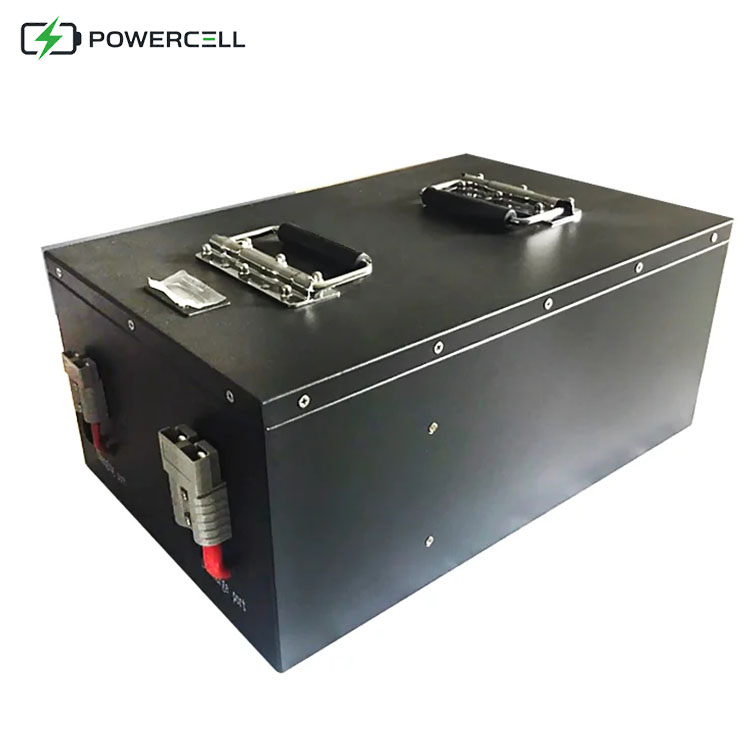
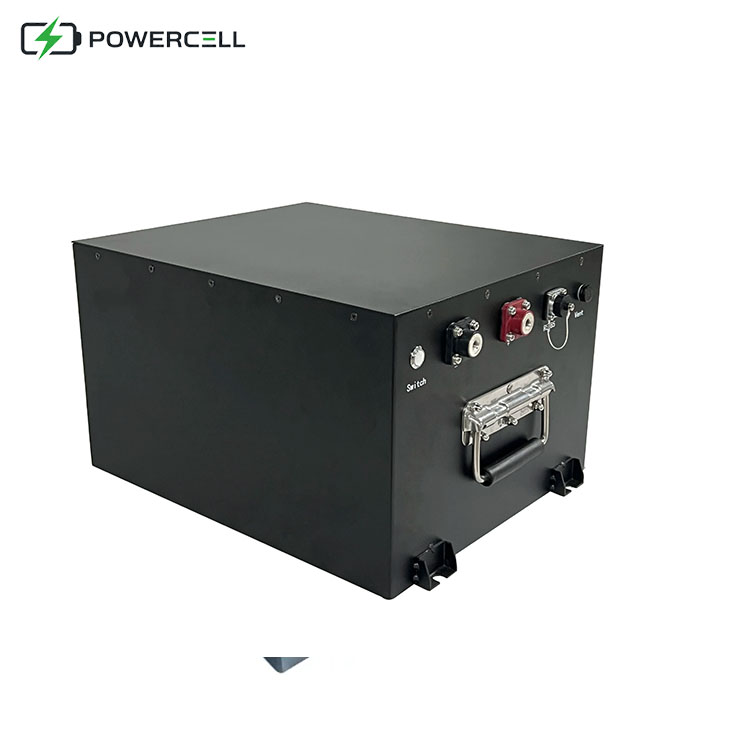
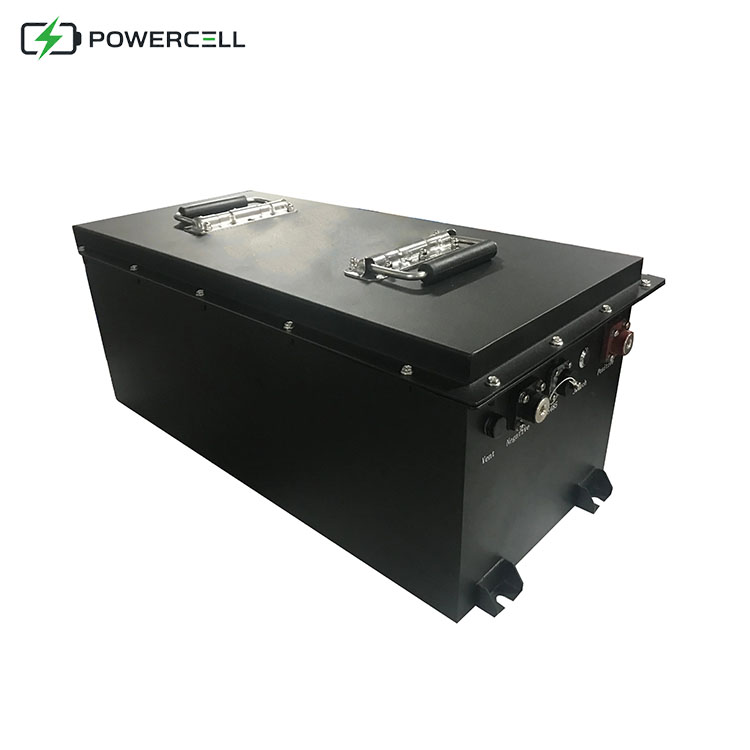
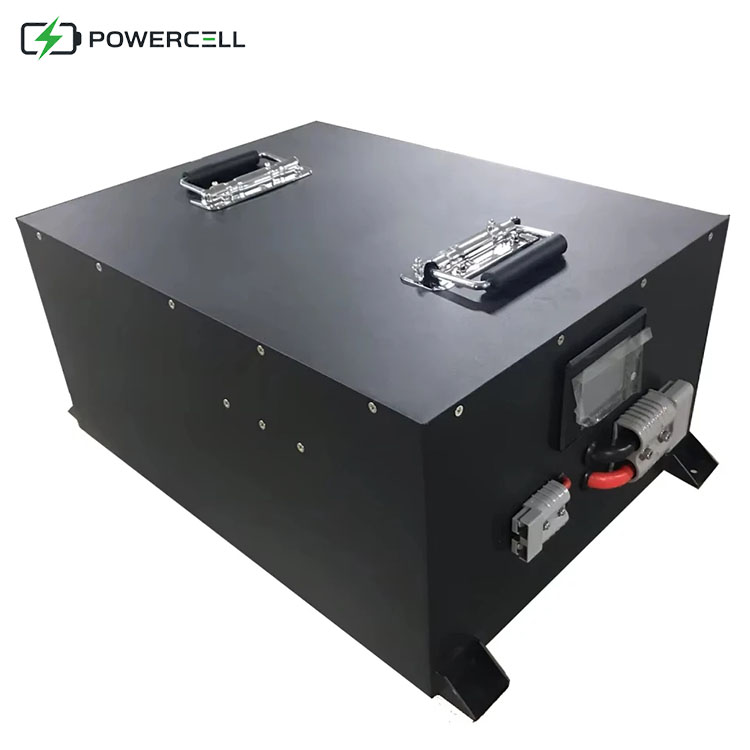
Send us your application, voltage, capacity, battery size, quantity, and branding needs. BYingPower will review your project and recommend the right LiFePO4 battery solution for golf carts, RVs, marine systems, solar storage, forklifts, or lead-acid replacement.
Custom battery pack review for your application
OEM/ODM and private-label battery guidance
BMS, charger, terminals, heating, and packaging support
Faster quote path for samples and bulk orders
4th Floor, Building A, No. 2, Longjiang 2nd Road, Xie Keng, Qingxi Town, Dongguan Province,China.
9 Checks When Lithium Golf Cart Range Suddenly Drops
A sudden loss of golf cart range does not automatically mean the LiFePO4 cells are dead. This diagnostic guide separates charger faults, BMS restrictions, mechanical drag, weather effects, wiring losses, and genuine capacity degradation.
Your lithium golf cart range has fallen off a cliff. Last month, the cart completed the route with 35% remaining. Now it limps home at 8%, cuts power on the final hill, or loses ten miles of expected range.
Don’t blame the cells.
Start with evidence. A sudden range reduction can begin at the wall outlet, inside the charger, in the Battery Management System, at a loose cable lug, inside a dragging brake, or where an underinflated tire meets the pavement, so replacing the battery before measuring those systems is expensive theater.
Why condemn a four-figure battery pack before proving it failed?
There is evidence behind that skepticism. In April 2024, the U.S. Department of Energy summarized data from roughly 15,000 plug-in vehicles and reported that battery replacements caused by failure occurred in only 1.5% of vehicles outside recalls. Golf carts are not road-going EVs, but the data is a useful warning against assuming every range complaint equals catastrophic pack failure. Read the Department of Energy battery-replacement analysis.
Battery age alone is not a verdict either. A widely cited 2019 Nature Energy study tested 124 commercial lithium iron phosphate, or LiFePO4, cells under fast-charging conditions and recorded lifetimes ranging from 150 to 2,300 cycles. That enormous spread tells us something uncomfortable: chemistry labels and cycle counters cannot replace measured data. See the LFP cycle-life study in Nature Energy.
My rule is simple: diagnose energy in, energy stored, energy delivered, and energy consumed—in that order.
First, Prove the Golf Cart Range Really Changed
Owners often compare two trips that were never comparable.
One trip happened at 24°C on flat pavement with one driver. The next happened at 3°C with four passengers, low tires, a rear seat kit, headlights, a sound system, and repeated hill starts. The dashboard calls both trips “15 miles.” The battery does not.
Numbers beat guesses.
Choose a repeatable route and record:
Starting and ending state of charge
Starting and ending pack voltage
Distance traveled
Battery temperature
Ambient temperature
Average payload
Tire pressure
Accessory use
Elevation or hill conditions
Maximum and average current, when the BMS app provides it
Run the same route twice. Use similar speed, payload, weather, and tire pressure.
A single dashboard percentage is weak evidence because LiFePO4 has a relatively flat working-voltage curve. State-of-charge calculations can drift when the pack does not regularly reach the charger’s proper finishing stage or when the BMS current sensor loses calibration.
Convert the Battery Label Into Real Energy
Amp-hours do not tell the whole story. Watt-hours do.
The following figures are mathematical examples, not guaranteed mileage claims:
Average energy use
Theoretical distance from 5.12kWh
What may cause this consumption
120Wh per mile
42.7 miles
Light cart, flat route, moderate speed
160Wh per mile
32.0 miles
Mixed terrain, passengers, normal accessories
200Wh per mile
25.6 miles
Hills, larger tires, heavy load, hard acceleration
240Wh per mile
21.3 miles
Lifted cart, mechanical drag, aggressive route
Actual usable energy will be lower than nameplate energy because the BMS maintains protection limits, electrical components produce losses, and the cart may reach a low-voltage cutoff under load before every theoretical watt-hour is removed.
That distinction matters. A pack can contain adequate energy at rest but still shut down early when voltage sags during acceleration.
The Nine Checks That Find Most Sudden Range Losses
1. Confirm the Battery Is Actually Receiving a Full Charge
A charger fan running does not prove the pack is full.
Check the charger model, output specification, connector, charge profile, indicator sequence, and ending voltage. Review the battery label before assuming that every product marketed as “48V” uses the same charging voltage.
For example, a 16-series LiFePO4 pack has a nominal voltage of 51.2V because each LiFePO4 cell is nominally rated at about 3.2V:
16 × 3.2V = 51.2V
Its charge profile commonly ends near 58.4V:
16 × 3.65V = 58.4V
But not every 48V-labelled system uses the same cell count or limit. Confirm the approved charger specification in writing. Do not substitute a charger because its plug fits.
Look for:
Charger stopping unusually early
Charger never reaching its normal finishing stage
AC voltage interruptions
Burned, loose, or corroded charge-port contacts
A charger that becomes abnormally hot
A BMS charge-temperature lockout
Charge current falling to zero while state of charge remains low
A charger originally designed for lead-acid batteries
Hard truth: a partially charged healthy battery can look exactly like a failing battery during use.
Record kilowatt-hours from the wall with an energy meter when practical. If the charger previously drew 5.5kWh after a deep run and now stops after 3.1kWh, that is evidence. It does not yet prove whether the charger, BMS, temperature protection, or state-of-charge calibration caused the difference, but it narrows the case.
2. Read the BMS Fault History, Not Just the Percentage Gauge
The BMS is the witness that owners routinely ignore.
Open the Bluetooth app or service display and capture screenshots before clearing faults. Examine:
Pack voltage
Individual cell voltages
Cell-voltage difference
Charge and discharge current
Battery temperature sensors
State of charge
Remaining amp-hours
Overcurrent events
High- and low-cell-voltage events
Charge or discharge temperature lockouts
Short-circuit protection events
Total cycles
BMS disconnect history
A cart that cuts out on a hill but restarts seconds later may be hitting an overcurrent, low-cell-voltage, or pack-voltage-sag limit. That is different from simply “running empty.”
The cause could be an undersized BMS, a controller that demands more peak current than the pack permits, one weak cell group, cold cells, or excessive resistance in the cable path. CoreSpark’s guide to golf cart BMS cut-off problems expands on those fault patterns.
Do not erase the evidence first. I would photograph every BMS screen, write down the time and route condition, and only then reset the system.
3. Compare Cell Balance at Full Charge and Under Load
Pack voltage can hide a weak cell group.
Consider a 16-series LiFePO4 pack. Fifteen cell groups may remain stable while one group falls rapidly under acceleration. The total voltage can appear acceptable at rest, yet the weakest group reaches the BMS low-cell cutoff and shuts the entire pack down.
Check cell voltages:
Near the top of charge
After the battery has rested
During a controlled load
Immediately after a range-loss or shutdown event
Small differences must be interpreted against the manufacturer’s specification, battery temperature, state of charge, and measurement accuracy. A persistent spread approaching 100mV near full charge deserves investigation, but it is an investigation trigger—not a universal failure limit.
What matters most is behavior.
Does one cell group rise first during charging? Does the same group collapse first under load? Does the difference grow from 30mV at rest to 250mV during a hill climb?
That pattern points toward imbalance, elevated resistance, a sensing-wire problem, or a weak parallel group. It is much stronger evidence than a cycle counter.
Never open a sealed battery pack or bypass the BMS to continue driving. High-current DC systems can arc violently, and an improvised bypass removes the protections designed to stop overcurrent, over-discharge, and unsafe temperature operation.
4. Check Battery Temperature Before Calling It Degradation
Cold range loss is real.
In January 2024, the Associated Press reported that research on road-going EVs found cold-weather range reductions ranging from 10% to 36%, depending on the vehicle and conditions. Golf carts use different drivetrains and usually lack sophisticated battery thermal management, so the exact percentages cannot be transferred directly—but the underlying low-temperature problem remains relevant. Read the Associated Press cold-weather battery report.
Lithium-ion reactions slow as temperature falls. Internal resistance rises. Voltage sag becomes more pronounced. Charging acceptance may also be reduced or completely blocked by the BMS below its programmed threshold.
Compare cold-soaked and warmed performance:
Record battery temperature before charging
Record whether the BMS permits charge current
Run the same route after the pack reaches a moderate temperature
Compare maximum voltage sag and delivered kilowatt-hours
Check whether the battery includes internal heating
Verify that heating power comes from an approved source
Do not confuse temporary cold-weather performance loss with permanent capacity loss. A pack that recovers after warming probably needs a thermal-use plan, not immediate replacement.
Heat deserves attention too. A pack exposed to high ambient temperatures, restricted airflow, repeated high-current use, or hot charging can age faster and may trigger thermal protection. Check all temperature sensors rather than trusting the temperature of the outer case.
5. Measure Every Tire—Cold
This sounds too basic.
Do it anyway.
Low tire pressure increases rolling resistance, and rolling resistance consumes battery energy every second the cart moves. Oversized all-terrain tires, aggressive tread, poor alignment, and soft pressure settings can turn a reasonable lithium golf cart battery range into a disappointing one.
The U.S. Department of Energy has reported that, in light-duty vehicle testing, underinflation across all four tires can reduce fuel economy by roughly 0.2% for every 1psi drop. That is not a golf-cart-specific conversion factor, but it confirms the direction and cumulative effect of underinflation. Review the DOE tire-pressure guidance.
Check pressure when the tires are cold and use the cart or tire manufacturer’s approved setting—not the maximum pressure moulded into the sidewall.
Also inspect:
Mismatched tire diameters
Uneven tread wear
A recent switch to larger wheels
Tires rubbing against bodywork
Low pressure in only one corner
Bent wheels
Toe alignment
Wheel-bearing play
A Club Car Precedent, Club Car Tempo, E-Z-GO TXT, E-Z-GO RXV, or Yamaha Drive2 may respond differently to tire and suspension changes, but none of them gets free energy. More rolling resistance always has to be paid for by the battery.
6. Test for Brake, Bearing, and Drivetrain Drag
Lift each driven wheel according to the manufacturer’s service procedure and confirm that it rotates as expected. Compare left and right sides. Listen for scraping, grinding, or inconsistent resistance.
After a controlled drive, cautiously compare wheel-hub and brake temperatures with an infrared thermometer. One significantly hotter corner can indicate:
A dragging brake
A seized or dry bearing
Poor brake adjustment
A damaged hub
Misalignment
A parking-brake mechanism that is not fully releasing
Be careful here. Brakes can become hot enough to burn skin.
Mechanical drag often creates a quiet range loss. The cart may still reach normal speed, but motor current remains higher throughout the route. That means the battery app can expose a mechanical problem: compare current on a familiar flat section at the same speed and payload.
Suppose the cart previously needed 35A to hold that speed and now needs 49A. The battery did not suddenly become smaller. Something is demanding more power.
7. Audit Payload, Speed, Hills, and Accessories
Owners underestimate accessory consumption. They underestimate weight even more.
A rear seat kit, four adults, cargo box, cooler, sprayer, lift kit, 23-inch tires, stereo amplifier, headlights, USB ports, fans, and a street-legal lighting kit all take their share. Some increase continuous electrical load. Others increase the motor current needed to move the cart.
And hills punish everything.
Record the route with GPS elevation data. Compare average speed and peak speed. Aggressive acceleration can increase current sharply, while higher sustained speed raises aerodynamic and drivetrain losses.
Inspect the DC-DC converter as well. A badly matched converter, parasitic accessory, or wiring fault can continue drawing energy while the cart is parked. CoreSpark’s article on voltage reducers for lithium golf carts explains why lights, horns, audio systems, and 12V accessories must be treated as part of the power system.
Perform a parked-current test after every system enters sleep mode. Compare the result with the manufacturer’s specification. A small continuous draw, multiplied across several days, can create the impression that the cart “never charges properly.”
8. Inspect Cables, Lugs, Solenoid Contacts, and the Charge Port
Resistance wastes energy as heat.
Inspect every high-current connection from the battery to the controller and motor circuit. Look for:
Loose terminal hardware
Incorrectly stacked lugs
Corrosion
Darkened copper
Melted insulation
Cracked cable strands
Undersized replacement cables
Poorly crimped terminals
Damaged Anderson-style connectors
Pitted solenoid or contactor terminals
Heat damage around the fuse holder
A connection can look clean while failing under load. Voltage-drop testing is more useful than appearance alone.
Measure across each part of the high-current path during a controlled load, following the cart and battery manufacturer’s service instructions. Do not let meter probes bridge adjacent terminals.
An infrared scan immediately after a test run can also identify a hot connector or cable. Heat concentrated at one lug means resistance is concentrated there.
Check the charge side separately. A damaged charging connector may still pass enough current to light the charger indicator while preventing a complete, reliable charge cycle.
For carts using a nominal 51.2V pack in a system commonly described as 48V, confirm controller and charger limits through a proper 51.2V golf cart battery compatibility check. Voltage naming is messy. The controller does not care what the sales page called the battery.
9. Run a Controlled Capacity Test
This is the final check because it separates genuine battery degradation from everything else.
A proper capacity test measures the amp-hours and kilowatt-hours the pack can deliver from a verified full charge to the manufacturer’s approved discharge endpoint under a documented current and temperature.
The basic energy calculation is:
Energy in Wh = voltage × current × time
Because voltage changes throughout the test, professional equipment calculates and totals energy continuously rather than multiplying one voltage reading by the entire test time.
Record:
Starting state of charge
Starting pack and cell voltages
Battery temperature
Discharge current
Lowest pack voltage under load
Lowest individual cell voltage
Ending reason: capacity target, BMS cutoff, low cell, or overcurrent
Delivered amp-hours
Delivered kilowatt-hours
Cell-voltage spread throughout the test
Compare measured usable energy with the manufacturer’s rated usable energy—not a number copied from another brand’s advertisement.
For example, 80% of a 5.12kWh nameplate rating is:
5.12kWh × 0.80 = 4.096kWh
But 80% is not an automatic warranty verdict. Warranty conditions may specify a particular temperature, test current, charger, calibration process, cutoff voltage, and usable-capacity definition.
The test result needs context:
Normal energy, poor road range: investigate mechanical drag, tires, route, payload, or accessories.
Low energy, one cell collapsing: investigate a weak cell group or sensing fault.
Normal low-current capacity, early shutdown on hills: investigate internal resistance, BMS peak-current limits, connections, controller demand, or an undersized pack.
This is how to test a lithium golf cart battery without guessing.
A Fast Diagnostic Matrix
What the cart does
First data to inspect
Most likely direction
Range fell immediately after a weather change
Battery and ambient temperature
Cold-related resistance or BMS temperature limits
Charger stops early
Charger ending voltage, BMS charge faults, cell high voltage
Amp-hour counter, full-charge history, cell voltage
State-of-charge calibration error or voltage sag
Range dropped after fitting larger tires
Current at fixed speed, tire pressure, alignment
Higher rolling resistance and drivetrain load
One wheel or hub becomes hotter
Wheel rotation and brake temperature
Brake or bearing drag
Battery loses charge while parked
Sleep current and DC-DC converter input
Parasitic accessory draw
Connector or cable becomes hot
Voltage drop under load
Loose, damaged, undersized, or poorly crimped connection
Capacity test delivers low kWh
Cell behavior and ending fault
Incomplete charge, imbalance, aging, or cell damage
When the Battery Really Is the Problem
Sometimes the pack is guilty.
Evidence of genuine lithium golf cart battery problems includes:
Measured usable energy remaining substantially below specification after a verified full charge
One cell group repeatedly reaching high-voltage cutoff first and low-voltage cutoff first
Rapid voltage sag at modest current and normal temperature
Internal BMS temperature readings that are implausible or inconsistent
Swelling, impact damage, water ingress, burnt odour, or visible case distortion
Repeated unexplained protection events after the charger, cart, wiring, and load have been verified
Capacity that does not recover after state-of-charge recalibration and cell balancing
Stop using a physically damaged, swollen, leaking, overheated, or burnt-smelling battery. Isolate the cart in accordance with the manufacturer’s safety instructions and involve a qualified battery technician.
But here is the industry opinion that tends to annoy sellers: the best lithium golf cart battery for range is not automatically the pack with the largest Ah number.
It is the pack that correctly matches:
Nominal and maximum system voltage
Usable kilowatt-hours
Continuous BMS current
Peak current and permitted duration
Controller demand
Charger profile
Cart weight and tire diameter
Terrain
Accessory load
Operating temperature
Diagnostic access
Physical mounting and cable layout
A 51.2V 100Ah pack may be excellent for a standard two-passenger cart on flat roads. It may be a poor match for a lifted six-passenger cart with an upgraded controller and repeated hill starts.
Why is my lithium golf cart losing range suddenly?
A sudden loss of lithium golf cart range is usually a system-level change—an incomplete charge, cold battery, BMS restriction, tire or brake drag, added load, or high-resistance connection—rather than instant cell failure, so diagnosis should compare charger data, pack data, and a repeatable route before replacing the battery.
Start by confirming a complete charge. Then record BMS faults, cell voltages, temperature, tire pressure, route conditions, payload, and current consumption. A controlled capacity test should come after those checks, not before them.
How do you test a lithium golf cart battery?
To test a lithium golf cart battery, fully charge it with the approved charger, record pack and cell voltages, run the cart or a controlled load while logging current and voltage, then calculate delivered amp-hours and kilowatt-hours until the manufacturer’s specified cutoff without bypassing the BMS or opening the sealed pack.
Compare the measured usable energy with the battery manufacturer’s test specification. Also note which cell reaches the cutoff first, how far voltage falls under load, and whether temperature or overcurrent protection ends the test.
What is a normal lithium golf cart battery range?
Normal lithium golf cart battery range is the repeatable distance delivered on a defined route at a known payload, speed, tire pressure, temperature, and usable energy level; it is not a universal mileage promise, because a 5.12kWh pack can behave very differently on flat pavement than on hills with oversized tires.
Track watt-hours per mile rather than mileage alone. Once you know energy use on a standard route, you can identify whether the battery is delivering less energy or the cart is consuming more.
Can cold weather reduce lithium golf cart battery range?
Cold weather reduces lithium golf cart battery range by slowing electrochemical reactions, increasing internal resistance, limiting charging acceptance, and triggering BMS temperature protections, so a cold-soaked cart may show weaker acceleration, earlier voltage sag, slower charging, and less usable energy even when the cells have not permanently lost capacity.
Record the pack’s internal temperature rather than relying only on outdoor air temperature. Retest after the battery warms within its approved operating range. Never charge a cold battery when the BMS or manufacturer prohibits it.
What is the best lithium golf cart battery for range?
The best lithium golf cart battery for range is a correctly matched LiFePO4 pack with enough usable kilowatt-hours, adequate continuous and peak BMS current, an approved charger, reliable cell balancing, temperature protection, and clear diagnostics; the biggest amp-hour label is not automatically the best choice for a specific cart, route, or controller.
Compare packs using usable kWh, current limits, voltage compatibility, charger requirements, thermal features, physical fit, warranty test conditions, and real route demand. For commercial fleets, require the supplier to document those values before ordering.
Stop Guessing and Build a Range Baseline
Charge the cart fully. Photograph the BMS screens. Set the tires. Run one repeatable route. Record temperature, distance, kilowatt-hours, cell spread, payload, and maximum current.
Then repeat it.
That two-run baseline will tell you more than a month of arguments about whether “lithium batteries are supposed to last longer.”
For dealers, fleet operators, distributors, and OEM buyers dealing with repeated range complaints, document the required voltage, usable kWh, continuous current, peak current, charger profile, temperature range, connector layout, and route load. Then compare those requirements with CoreSpark’s custom LiFePO4 battery and OEM/ODM capabilities before approving the next battery specification.
Newsletter Updates
Enter your email address below and subscribe to our newsletter
BYingPower provides OEM, wholesale, and custom LiFePO4 battery packs for golf carts, RVs, forklifts, solar storage, marine power, and lead-acid replacement applications. We support battery brands, distributors, dealers, system integrators, and OEM buyers with reliable lithium battery solutions, smart BMS options, private-label services, and export documentation support.