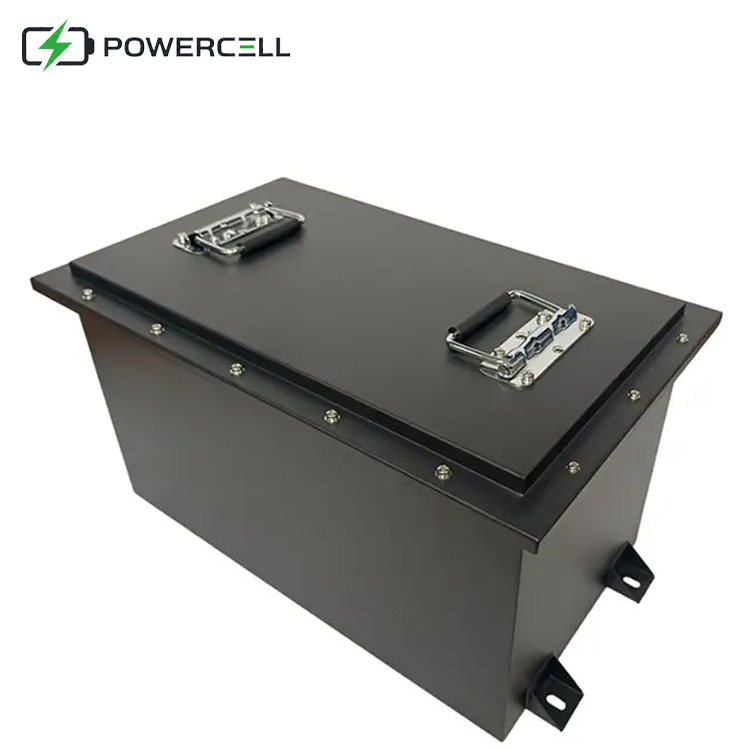
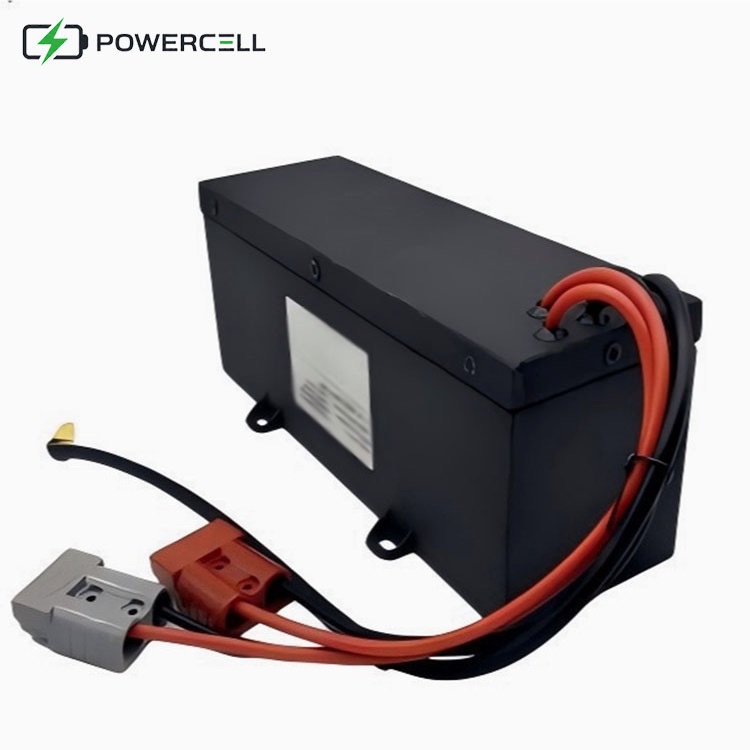
Send us your application, voltage, capacity, battery size, quantity, and branding needs. BYingPower will review your project and recommend the right LiFePO4 battery solution for golf carts, RVs, marine systems, solar storage, forklifts, or lead-acid replacement.
Custom battery pack review for your application
OEM/ODM and private-label battery guidance
BMS, charger, terminals, heating, and packaging support
A golf cart advertised as “48V” is not asking for a magical box labeled 48V; it is asking for a battery system whose real operating voltage, charger profile, discharge behavior, BMS cutoff logic, controller tolerance, solenoid rating, DC-DC converter input, and cable protection all behave inside the range that cart can survive.
So why do buyers still shop by the sticker?
Because the industry trained them to. And honestly, that has created a lot of sloppy installs.
Here is the plain answer: a 51.2V golf cart battery can often work in a 48V golf cart, especially when it is a 16S LiFePO4 pack designed as a 48V lithium golf cart battery replacement. But “often” is not the same as “always.” The pack must match the controller’s voltage window, charger output, current demand, communication needs, compartment size, and peak discharge load.
A 51.2V LiFePO4 battery is usually built from 16 cells in series. Each LiFePO4 cell has a nominal voltage of about 3.2V, so:
16 × 3.2V = 51.2V nominal
Fully charged, many 51.2V LiFePO4 packs reach:
16 × 3.65V = 58.4V full charge
That 58.4V number is where compatibility gets real. If your controller, relay, DC-DC converter, accessories, and charger strategy cannot tolerate that upper voltage, the battery is not compatible. I don’t care what the sales page says.
Why 51.2V Became the “Real” Lithium Replacement for 48V Carts
The old 48V golf cart world was built around lead-acid logic: four 12V batteries, six 8V batteries, or eight 6V batteries wired in series depending on the cart. Those packs sag under load. They lose voltage as they discharge. They punish acceleration. They demand maintenance. They also fail slowly enough that owners get used to weak performance and call it normal.
LiFePO4 does not behave that way.
A good 51.2V LiFePO4 golf cart battery holds voltage flatter, weighs less, charges faster, and can deliver stronger usable energy deeper into the discharge curve. That is why dealers like it. That is also why weak controllers, bad cables, tired solenoids, and lazy charger matching get exposed fast.
But here is my unpopular opinion: many “48V lithium upgrades” are not upgrade kits. They are boxes.
A real golf cart battery upgrade guide should start with the cart, not the battery. Club Car Precedent, Club Car Onward, E-Z-GO TXT, E-Z-GO RXV, Yamaha Drive2, Navitas controller conversions, Curtis controllers, Alltrax upgrades, 3kW motors, 5kW motors, lifted carts, rear seats, cargo kits, and hill-climb fleets do not all ask the same question. They all pull current differently.
And current is where cheap advice dies.
CoreSpark’s 48V vs 51.2V golf cart batteries dealer guide is a useful internal follow-up because dealer-level compatibility is less about “does it turn on?” and more about “will this survive warranty season?”
The Compatibility Checklist I Would Use Before Selling One Pack
1. Confirm the controller’s voltage ceiling
Start here. Not with amp-hours. Not with Bluetooth. Not with cycle-life claims.
A 51.2V LiFePO4 pack commonly charges to 58.4V, so the controller must tolerate that voltage without throwing an overvoltage fault. Many 48V golf cart controllers expect a high-voltage condition somewhere above normal lead-acid charge levels, but the exact tolerance depends on the controller model and programming.
Check the controller label. Pull the manual. Call the controller supplier if needed.
If nobody can confirm the voltage ceiling, I treat the install as unverified.
2. Match the charger to LiFePO4 chemistry
This is where people burn money.
A 51.2V LiFePO4 battery typically wants a charger profile around 58.4V with lithium-appropriate termination. A lead-acid charger with equalization, desulfation, or aggressive float behavior should not be trusted unless the battery maker explicitly approves it.
Do not equalize LiFePO4.
Do not use repair mode.
Do not assume “48V charger” means compatible.
The U.S. Consumer Product Safety Commission has repeatedly warned users to follow manufacturer charging instructions and use only chargers provided or recommended by the manufacturer for lithium-ion powered products, because charging behavior is a recurring fire-risk pattern in battery incidents. The CPSC’s own safety center says batteries have caused home fires and deaths while charging overnight, and it specifically warns against modified or unapproved battery packs. See the CPSC guidance on micromobility lithium-ion battery safety.
Golf carts are not e-scooters. Fine. But the lesson travels: charger mismatch is not a harmless detail.
3. Size BMS current for acceleration, not brochure runtime
A 100Ah battery with a weak BMS can be worse than a smaller pack with honest discharge ratings.
For a 48V lithium golf cart battery, I want to know:
Continuous discharge current
Peak discharge current
Peak duration in seconds
BMS low-voltage cutoff
BMS overcurrent behavior
Cell balancing method
Thermal cutoff values
Bluetooth, CAN, or RS485 communication options
Whether the charger is matched to the pack
CoreSpark’s 51.2V 105Ah LiFePO4 golf cart battery product page lists the kind of spec buyers should demand: 51.2V nominal voltage, 105Ah capacity, 5,376Wh energy, 47 kg weight, Grade-A prismatic cells, 200A discharge, CAN, RS485, Bluetooth, LCD display, and a 20A waterproof charger.
That is the level of detail a professional buyer should ask for. Not “how many miles?”
Miles are marketing. Amps are evidence.
4. Check the solenoid, cables, fuses, and converter
I’ve seen installs where the battery was blamed for shutdowns, but the real problem was a $20 solenoid or a cable lug crimped like someone used pliers from a kitchen drawer.
A 51.2V LiFePO4 battery can deliver current quickly. That is good for acceleration. It is also unforgiving when the rest of the electrical path is old, corroded, undersized, or unfused.
Check:
Main positive and negative cable gauge
Battery tray retention
Fuse or breaker rating
DC interrupt rating
Solenoid voltage rating
DC-DC converter input range
Accessory wiring
Motor controller peak draw
Terminal torque
Heat marks on old cables
Water exposure history
If the cart has lights, stereo, USB ports, lift kit, rear seat, cargo box, or upgraded motor, you do not have a stock load anymore. Stop pretending you do.
5. Measure physical fit and weight distribution
A lithium pack is lighter than lead-acid. Usually, that is a win. But golf carts were designed around battery weight sitting low in the chassis.
If you remove hundreds of pounds of lead-acid batteries and drop in one compact LiFePO4 battery, handling may change. Brake feel may change. Traction may change. On lifted carts, that matters.
Use brackets. Use restraints. Use vibration protection. Use insulated terminal covers.
A battery pack is not luggage.
48V vs 51.2V Golf Cart Battery: The Data Buyers Actually Need
Compatibility Factor
Traditional 48V Lead-Acid Golf Cart Battery
51.2V LiFePO4 Golf Cart Battery
What I Would Verify Before Installation
Nominal voltage
48V system label
51.2V nominal from 16S LiFePO4 cells
Controller accepts lithium voltage range
Full-charge voltage
Often near the high-50V range depending on charger and battery type
Usually 58.4V for 16S LiFePO4
Overvoltage threshold of controller and accessories
Voltage behavior under load
Noticeable sag during acceleration
Flatter voltage, stronger current delivery
BMS peak current and controller draw
Usable capacity
Often limited by lead-acid depth-of-discharge habits
Often deeper usable capacity depending on BMS design
Compare watt-hours, not only amp-hours
Maintenance
Watering, corrosion checks, ventilation for flooded packs
No watering; BMS-dependent protection
BMS quality, enclosure, terminals, charger
Charger profile
Lead-acid bulk/absorption/float; sometimes equalization
The Safety Conversation Nobody Wants in the Sales Call
Lithium iron phosphate, written as LiFePO4 or LFP, has a strong safety reputation compared with many nickel-heavy lithium-ion chemistries. I believe LFP is the right chemistry for most golf cart conversions. Lower thermal volatility, no cobalt, long cycle life, and strong cost trends make it attractive.
But safer does not mean idiot-proof.
In 2025, a CPSC commissioner’s statement said the agency’s proposed lithium-ion battery rulemaking highlighted 227 incidents, 39 deaths, and 181 injuries from 2019 through 2023 tied to lithium-ion battery fires in micromobility products. That is not a golf cart statistic, but it is a warning about the broader battery market: bad packs, bad charging, weak certification, and poor after-sale accountability can hurt people. Read the CPSC statement on lithium-ion battery fire incidents.
New York’s fire data is even more blunt. FDNY reported 277 lithium-ion battery fires in 2024, compared with 268 in 2023, while deaths fell from 18 in 2023 to six in 2024 after public messaging, inspections, and enforcement. See FDNY’s 2025 update on lithium-ion battery fire progress.
Again, not golf carts specifically. But if you sell batteries for a living and ignore those numbers, you are not being professional. You are being convenient.
There is also a regulatory smell test. The active ANSI/CAN/UL/ULC 2271 standard covers electrical energy storage assemblies for light electric-powered vehicles, and the 2023 edition includes updates involving temperature testing, functional safety, high-rate charge testing, overcharge and overdischarge checks, and single-cell failure design tolerance for large batteries. UL’s page for Batteries for Use in Light Electric Vehicle Applications is worth reading before anyone claims a battery is “safe” because the case looks clean.
One case study should make every importer nervous: in November 2025, CPSC warned consumers to stop using certain Rad Power Bikes lithium-ion batteries after 31 fire reports and about $734,500 in property damage; the agency said some incidents happened when the battery was not charging, not in use, and in storage. That CPSC warning on Rad Power Bikes batteries is ugly reading for anyone who thinks post-sale battery problems stay quiet.
This is the hard truth: compatibility is also liability.
Market Reality: LFP Prices Dropped, but Cheap Packs Still Scare Me
Battery buyers are getting more price-sensitive. I get it.
Reuters reported in October 2024 that global LFP cell prices had fallen to $59/kWh, with some transactions around $50/kWh, according to Benchmark Mineral Intelligence. That price pressure explains why more 48V lithium golf cart battery options are flooding the market. It also explains why some packs look suspiciously cheap. Read the Reuters report on record-low battery cell prices.
Here is my take: falling cell prices are good. Mystery packs are not.
A low price does not tell you:
Whether cells are Grade A or recycled pulls
Whether the BMS is correctly rated
Whether the charger profile is matched
Whether the enclosure resists vibration
Whether terminals are protected
Whether the pack has passed aging inspection
Whether the supplier can support warranty claims
Whether the documentation matches your import market
For OEM, dealer, and private-label programs, CoreSpark’s OEM/ODM LiFePO4 battery capabilities should be part of the internal link path because this is where pack configuration, labeling, BMS options, charger pairing, and export documentation become commercial requirements rather than blog talking points.
And for buyers replacing lead-acid systems beyond carts, CoreSpark’s lead-acid to LiFePO4 replacement guide belongs in the journey because many compatibility mistakes start with the fantasy that lithium is a one-for-one lead-acid swap.
It is not.
My Short Rule for 51.2V Compatibility
A 51.2V golf cart battery is compatible with a 48V golf cart only when the full system accepts the battery’s 58.4V charge voltage, the charger is LiFePO4-matched, the BMS can handle real acceleration current, the controller avoids overvoltage faults, the DC-DC converter survives the input range, and the cabling/fusing is sized for lithium’s lower internal resistance.
That sentence is long because the job is real.
Want a shorter version?
Test everything.
FAQs
Will a 51.2V battery work in a 48V golf cart?
A 51.2V battery will work in many 48V golf carts when it is a 16S LiFePO4 pack designed for 48V lithium replacement, the controller accepts approximately 58.4V at full charge, and the charger, BMS, solenoid, DC-DC converter, cables, and fuse protection are correctly matched.
The mistake is assuming the cart label decides compatibility. It does not. A 48V golf cart battery system is a voltage range, not a single frozen number. I would verify controller high-voltage tolerance first, then charger output, then BMS current rating under acceleration.
What is the difference between 48V and 51.2V golf cart batteries?
The difference between 48V and 51.2V golf cart batteries is usually chemistry and cell configuration: traditional “48V” often refers to lead-acid system labeling, while 51.2V usually refers to a 16S LiFePO4 lithium pack with 3.2V nominal cells and about 58.4V full charge.
That is why many lithium sellers use both terms. “48V lithium golf cart battery” is the buyer’s language. “51.2V LiFePO4” is often the engineering language. The two can overlap, but the actual compatibility depends on your cart’s voltage tolerance.
Do I need a special charger for a 51.2V LiFePO4 golf cart battery?
A 51.2V LiFePO4 golf cart battery should use a lithium-compatible charger, commonly with a 58.4V charge profile for 16S LiFePO4 packs, because lead-acid chargers may use float, equalization, desulfation, or repair modes that are not appropriate for lithium batteries.
Some lead-acid chargers may appear to work. That is not enough for me. If the charger is not approved by the battery manufacturer or configured for LiFePO4, you are guessing with an expensive battery pack and possibly the customer’s property.
Is a LiFePO4 golf cart battery safer than other lithium batteries?
A LiFePO4 golf cart battery is generally considered safer than many nickel-heavy lithium-ion chemistries because lithium iron phosphate chemistry has stronger thermal stability, but safety still depends on BMS design, charger matching, cell quality, enclosure protection, wiring, fusing, and installation discipline.
The chemistry gives you a better foundation. It does not forgive abuse. Water ingress, cheap chargers, bad terminals, weak BMS settings, and poor vibration control can still create failures. Safety is a system property, not a chemistry slogan.
How many amp-hours do I need for a 48V lithium golf cart battery?
The amp-hours needed for a 48V lithium golf cart battery depend on terrain, passenger weight, motor size, controller current, tire size, accessories, desired range, and usable watt-hours, but many cart buyers compare 100Ah, 105Ah, 150Ah, and 160Ah LiFePO4 options.
Do not buy by Ah alone. Calculate watt-hours with voltage × amp-hours, then look at usable capacity and discharge current. A 51.2V 105Ah pack stores about 5,376Wh on paper, but real range depends on load and driving behavior.
Can I replace lead-acid batteries with one 51.2V lithium battery?
You can replace a 48V lead-acid bank with one 51.2V lithium battery when the lithium pack is designed for golf cart use, physically fits the compartment, includes a suitable BMS, uses a matched charger, and supports the cart’s continuous and peak discharge current.
One-pack conversions can be clean. They can also expose every weakness in the old cart. Before removing lead-acid batteries, photograph the wiring, measure the tray, inspect cables, confirm polarity, and verify the charger and controller specs.
Your Next Step Before Buying or Selling a 51.2V Pack
Do not ask, “Is this a 48V golf cart battery?”
Ask the better question: Will this 51.2V LiFePO4 pack, at 58.4V full charge, with this BMS current rating and this charger, work safely with my exact controller, motor, solenoid, wiring, DC-DC converter, and use case?
That is the buyer’s checklist. That is the dealer’s warranty shield. And that is the difference between a clean lithium upgrade and a return shipment nobody wants to pay for.
If you are sourcing for a dealer program, fleet conversion, OEM project, or private-label battery line, start with CoreSpark’s 51.2V golf cart battery range and send the real cart details: model, controller, motor power, charger requirements, target Ah, peak current, compartment size, and quantity. The right supplier will ask uncomfortable questions before quoting.
That is a good sign.
Newsletter Updates
Enter your email address below and subscribe to our newsletter
CoreSpark Battery provides OEM, wholesale and custom LiFePO4 battery packs for golf carts, RVs, forklifts, solar storage, marine power and lead-acid replacement. We support battery brands, distributors, dealers and OEM buyers with reliable lithium power solutions, smart BMS options, private-label service and export-ready documentation.