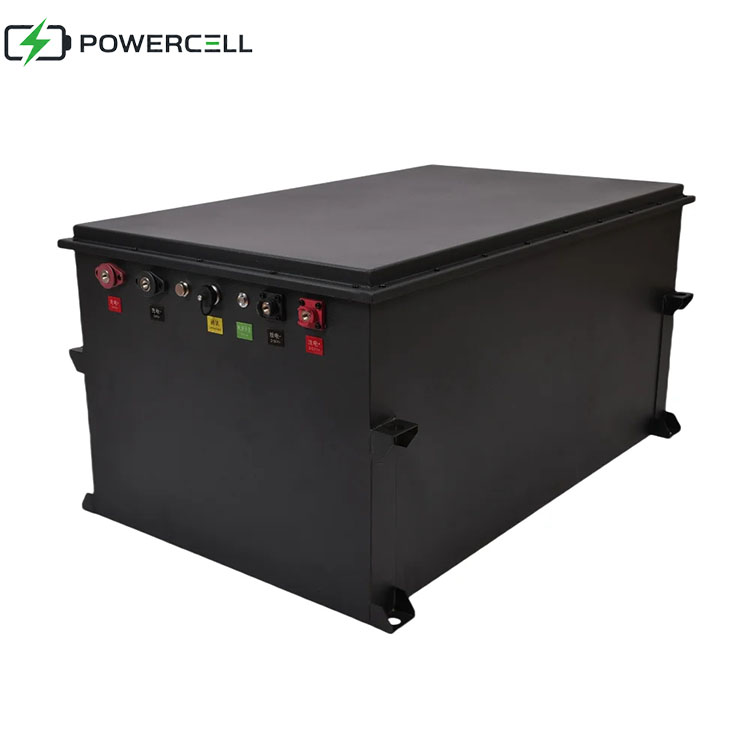
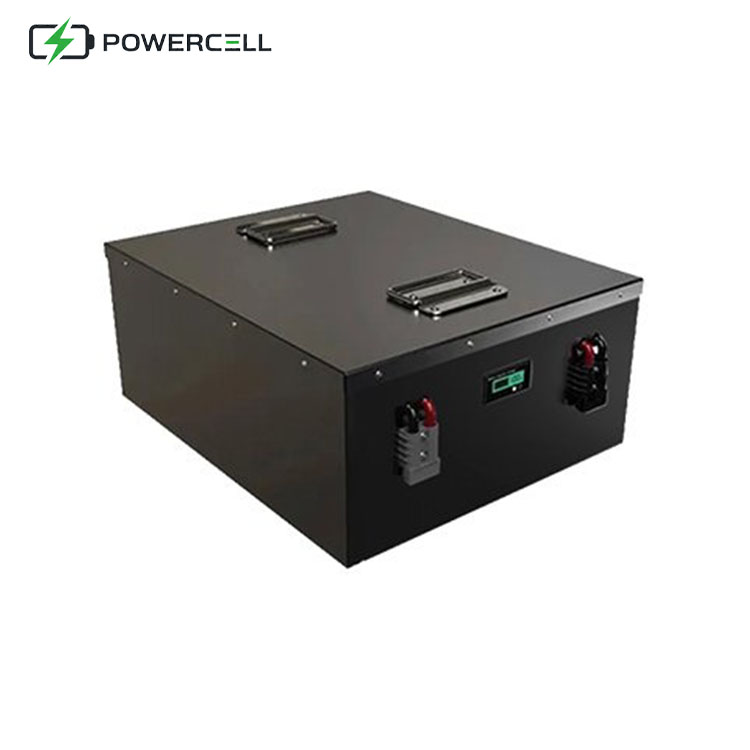
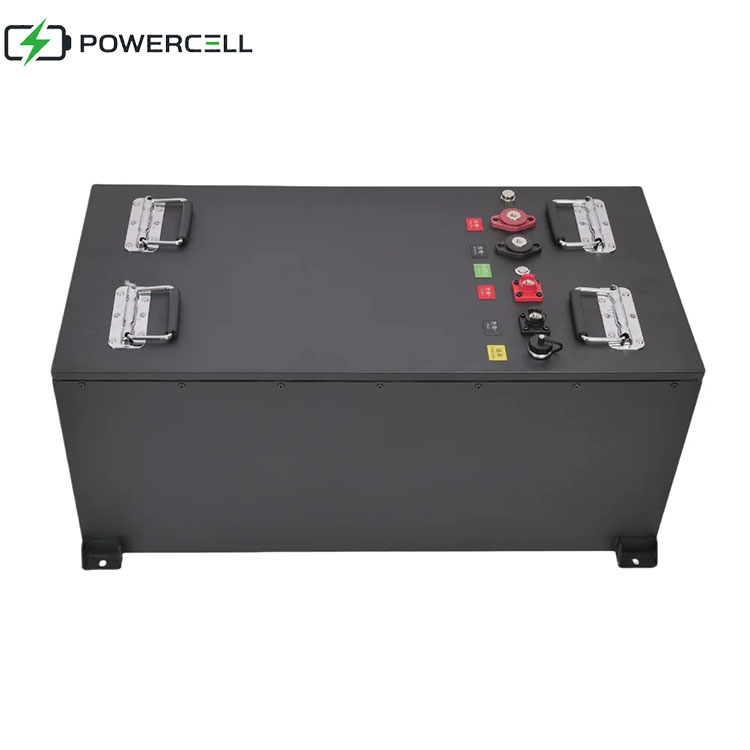
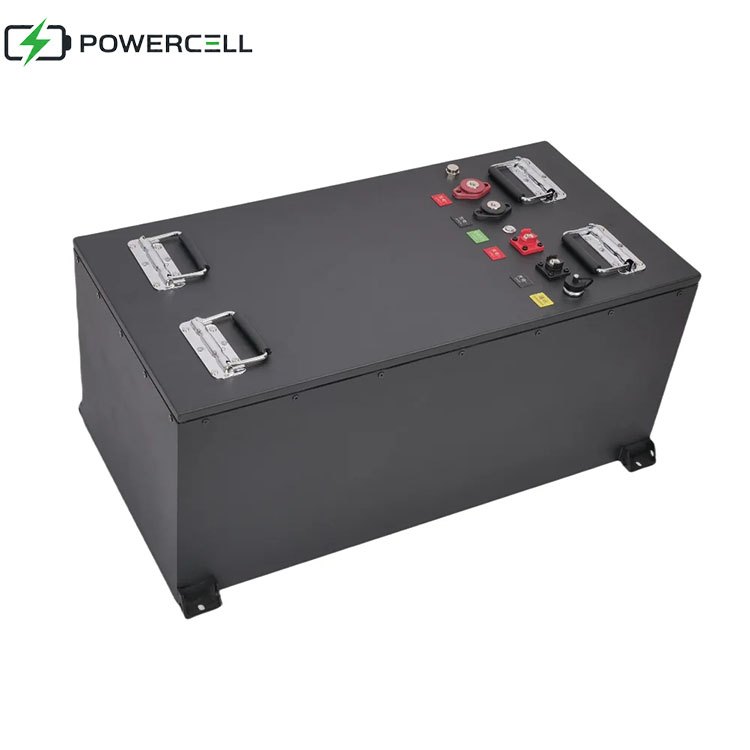
Пришлите нам ваше приложение, напряжение, емкость, размер батареи, количество и потребности в брендинге. BYingPower рассмотрит ваш проект и порекомендует подходящее решение на основе LiFePO4 аккумуляторов для гольф-каров, RV, морских систем, солнечных батарей, вилочных погрузчиков или замены свинцово-кислотных.
Индивидуальный обзор батарейных блоков для вашего применения
Руководство по изготовлению батарей для OEM/ODM и частных производителей
BMS, зарядное устройство, терминалы, нагрев и поддержка упаковки
Ускоренная обработка предложений для образцов и оптовых заказов
4-й этаж, корпус А, д. 2, 2-я улица Лунцзян, Сякен, город Цинси, провинция Дунгуань, Китай.
Проектирование системы зарядки парка гольф-каров: какая мощность требуется на один гольф-кар?
Большинство зарядных устройств для парка гольф-каров требуют примерно 1,0–1,6 кВт входной мощности переменного тока на каждый активно заряжаемый гольф-кар. Правильный расчет зависит от номинальной входной мощности, указанной на паспортной табличке зарядного устройства, типа аккумуляторной батареи, суточного энергопотребления, времени зарядки и систем управления зарядкой — а не только от количества гольф-каров.
Для парка техники гольф-клуба не имеет значения, что в рекламе зарядного устройства указано “20 ампер”, поскольку эта величина обычно характеризует ток постоянного тока, поступающий в аккумулятор, в то время как распределительный щит, питающий кабель, трансформатор, счетчик электроэнергии и ежемесячная плата за потребление зависят от входного переменного тока, поступающего с другой стороны зарядного устройства.
Почему так много тарифных планов начинаются с неправильного числа?
Вот прямой ответ: В качестве ориентировочного показателя при планировании следует исходить из потребления 1,0–1,6 кВт переменного тока на каждую тележку, находящуюся в процессе зарядки. Для стандартной батареи LiFePO4 емкостью 100 А·ч и напряжением 51,2 В, используемой в паре с зарядным устройством на 20 А, примерно 1,3 кВт на тележку — это обоснованная предварительная оценка.
Это не окончательные технические характеристики по электропитанию. Старое оборудование может работать в диапазоне ниже указанного, в то время как более быстрые зарядные устройства могут превышать его. Например, зарядное устройство E-Z-GO TXT 48 Fleet рассчитано на входное напряжение 120 В переменного тока и ток 8 А, что соответствует кажущейся нагрузке 0,96 кВА. Её выходной ток постоянного тока составляет 48 В при 13 А. Серия промышленных зарядных устройств Delta-Q включает модели мощностью 1 200 Вт и 1 500 Вт, что демонстрирует, насколько быстро может возрастать нагрузка на зарядное устройство, когда автопарки требуют сокращения времени обслуживания.
Суровая правда проста: Ни в коем случае не утверждайте модернизацию обслуживания автопарка, основываясь лишь на приблизительной оценке потребляемой мощности в ваттах на один карт. Исходите из максимальной входной мощности переменного тока, указанной на заводской табличке данного зарядного устройства, а затем учитывайте коэффициент мощности, одновременную зарядку, падение напряжения, температуру окружающей среды, существующие нагрузки здания и запас на расширение.
Амперы на выходе зарядного устройства — это не амперы в розетке
“Зарядное устройство для гольф-кара на 20 А” обычно не потребляет 20 А из розетки. Оно подает на аккумулятор постоянный ток силой примерно 20 А.
Основной расчет электрической нагрузки на гольф-карт выглядит следующим образом:
Выходная мощность зарядного устройства постоянного тока = Напряжение зарядки × Выходной ток постоянного тока
Расчетную входную мощность переменного тока можно затем рассчитать по следующей формуле:
Мощность входного переменного тока ≈ Мощность выходного постоянного тока ÷ КПД зарядного устройства
А расчетный ток в стене составляет:
Сила переменного тока ≈ входная мощность переменного тока ÷ (напряжение питания × коэффициент мощности)
Коэффициент мощности имеет значение. Номинальные параметры 120 В, 8 А соответствуют 0,96 кВА, но это не означает, что зарядное устройство автоматически потребляет 0,96 кВт реальной мощности. Это различие часто игнорируется при составлении быстрых предложений по автопарку.
В приведенной ниже таблице использовано напряжение зарядки 58,4 В для аккумуляторной батареи LiFePO4 класса 51,2 В и принята эффективность зарядного устройства 90%. Данные являются расчетными оценками и не заменяют документацию по оборудованию.
Настройки зарядного устройства
Приблизительная выходная мощность постоянного тока
Расчетная мощность на входе переменного тока
Приблизительный ток при напряжении 120 В
Предварительный вариант использования
E-Z-GO TXT 48 Fleet, 13 А, постоянный ток
624 Вт
Номинальная входная мощность 0,96 кВА
8A. Паспортная табличка
Старая 48-вольтовая свинцово-кислотная тележка для парка транспортных средств
Зарядное устройство для аккумуляторов LiFePO4 на 51,2 В, 15 А
876 Вт
0,97 кВт
8.1A до корректировки коэффициента мощности
Длительный ночной период
Зарядное устройство на 51,2 В LiFePO4, 20 А
1 168 Вт
1,30 кВт
10,8 А до корректировки коэффициента мощности
Практические настройки по умолчанию для автопарка
Зарядное устройство для аккумуляторов LiFePO4 на 51,2 В, 25 А
1 460 Вт
1,62 кВт
13,5 А до корректировки коэффициента мощности
Сокращение сроков выполнения заказов
Промышленное зарядное устройство мощностью 1 500 Вт
До 1 500 Вт
Свыше 1,5 кВт с учетом потерь
Специфическое для оборудования
Автопарк интенсивного использования или коммерческий автомобиль
Эти расчеты объясняют, почему я обычно начинаю проверку парка аккумуляторов емкостью 100 А·ч или 105 А·ч с зарядного устройства на 20 А, а не на 25 А. Переход с 20 А на 25 А позволяет сэкономить некоторое время, но при этом нагрузка на розетку приближается к практическому пределу отводной цепи на 120 В.
One Circuit Per Cart Does Not Mean Unlimited Simultaneous Charging
Branch-circuit design and total facility capacity are two different calculations.
Club Car’s published charging-station guidance says that, in a 120V, 60Hz installation, each charger should have its own separately protected 15A or 20A branch circuit. It also calls for an individual neutral and tells installers to consult the charger manufacturer when non-Club Car equipment is used.
The E-Z-GO TXT Fleet manual takes a similarly conservative position. It specifies a dedicated 15A circuit for each charger, prohibits other appliances from using the receptacle during charging, and lists the vehicle’s charger input as 120V AC at 8A.
That does not mean a 60-cart facility should casually be designed as 60 chargers multiplied by 15A, producing a presumed 900A load. Nor does it mean the designer can assume half the chargers will probably be idle.
Hope is not diversity.
A defensible charging design needs either:
Enough electrical capacity for the verified worst-case simultaneous load, or
Enforced load management that prevents the chargers from exceeding a defined site limit.
An employee promising to “plug them in gradually” is not load management. A laminated charging schedule is not load management. And a breaker tripping every busy Saturday night is certainly not load management.
For fleets above roughly 20–30 carts, I would strongly favor controls that stagger starts, prioritize low-state-of-charge vehicles, and cap total charger power. A licensed electrical designer must still review branch circuits, feeder sizing, phase balance, grounding, voltage drop, protective devices, local code requirements, and the authority having jurisdiction.
What 20, 40, and 60 Carts Really Do to the Building
Let us use a realistic planning example:
Battery: 51.2V, 100Ah LiFePO4
Nominal stored energy: 5.12 kWh
Average daily replenishment: 60%
Battery energy returned per cart: 3.07 kWh
Assumed charger efficiency: 90%
Wall energy per cart: approximately 3.41 kWh
Charger: 20A
Estimated active input per cart: 1.30 kW
The U.S. Energy Information Administration’s current table lists the 2025 national commercial electricity average at 13.41 cents per kWh, although local tariffs can be dramatically higher and may include separate demand charges.
Fleet size
Unmanaged peak at 1.30 kW per cart
Peak with 50% simultaneous charging
Estimated nightly energy
Energy-only cost at $0.1341/kWh
20 carts
26 kW
13 kW
68.3 kWh
$9.16
40 carts
52 kW
26 kW
136.5 kWh
$18.31
60 carts
78 kW
39 kW
204.8 kWh
$27.46
The energy bill looks manageable.
The peak may not.
A 40-cart fleet requiring 136.5 kWh over an eight-hour overnight period needs an average of only about 17.1 kW. A controlled 26 kW charging ceiling therefore leaves useful operating margin.
Cut the charging window to four hours, however, and the required average becomes roughly 34.1 kW. The same 26 kW cap can no longer return the required energy before morning.
This is the distinction many proposals miss:
Kilowatt-hours determine whether the carts finish charging. Kilowatts determine whether the electrical system survives the charging event.
Before choosing equipment from CoreSpark’s LiFePO4 golf cart battery range, document the fleet’s actual return time, departure time, daily state of charge, battery capacity, and charger input. Do not assume every cart returns at 20% state of charge. Do not assume every cart returns nearly full either.
Managed Charging Is Usually Cheaper Than Building for Chaos
A golf course has one major advantage over many road-vehicle fleets: carts often sit for several consecutive hours.
Use that dwell time.
The U.S. Department of Energy defines managed charging as strategic control over when and how vehicles charge while still meeting operating needs. DOE identifies lower installation costs, reduced peak pricing and demand charges, and better coordination with building loads as direct benefits.
A March 2024 DOE, NREL, Lawrence Berkeley National Laboratory, and Kevala study found that managed charging reduced modeled incremental distribution-grid investment from $2.3 billion to $1.6 billion—a 30% reduction. The study also modeled reductions of 50% in added substation needs, 40% in feeders, and 30% in service transformers. Golf carts operate at a much smaller scale, but the electrical principle remains the same: shifting flexible load can avoid unnecessary peaks.
Demand tariffs deserve special attention. DOE’s November 2024 electric school bus roadmap gives an example of ten 30kW buses charging simultaneously under a $10/kW demand rate. The resulting monthly demand charge is $3,000 before adding the rest of the building load.
Apply that same hypothetical $10/kW demand rate to an unmanaged 60-cart fleet at 78 kW, and the charging peak could represent $780 per month in demand cost. That is separate from the kilowatt-hour charge. The actual bill depends entirely on the utility tariff, meter configuration, ratchet clauses, time window, and existing clubhouse or maintenance-building peak.
So what should managed golf cart fleet charging do?
Start chargers in controlled groups
A 60-cart fleet can be divided into six groups of ten. At approximately 1.30 kW per charger, each group adds about 13 kW.
But fixed groups are only the beginning. A cart returning at 25% state of charge should not receive the same priority as one returning at 82%.
Charge against departure deadlines
Maintenance carts, beverage carts, marshal vehicles, and early-start player carts may have different departure times. The controls should prioritize operational deadlines, not parking-space numbers.
Set a hard site-power ceiling
The system should know the permitted charger load—for example, 30 kW—and queue charging sessions when that limit is reached. This is far safer than relying on estimated natural diversity.
Include the building load
The charger controller should not pretend the maintenance building is empty. Pumps, irrigation controls, HVAC, kitchen equipment, laundry, workshop tools, and lighting may already create a substantial peak.
Keep manual override accountable
Emergency charging may be necessary. Unlimited override is not. Log who changed the power cap, when it changed, and which carts received priority.
Lead-Acid and LiFePO4 Fleets Need Different Charging Rooms
Battery chemistry changes more than charging time.
Flooded lead-acid batteries can release hydrogen during charging. The E-Z-GO manual explicitly calls for a well-ventilated charging area free from flames, sparks, flammable liquids, and ignition sources such as gas-fired water heaters or furnaces.
LiFePO4 eliminates watering and routine hydrogen-gas management, but it introduces different requirements:
Exact maximum charging voltage
Approved continuous charge current
BMS charge limits
Low- and high-temperature protection
Correct connector and polarity
Compatible charger restart and termination behavior
Documented communication requirements where CAN or RS485 is used
My blunt opinion: converting the batteries without redesigning the charging plan is half a conversion.
A fleet buyer should request the battery datasheet, charger datasheet, charging curve, maximum input amperage, power factor, BMS specification, connector drawing, cable size, fuse rating, operating-temperature range, and applicable test documentation before issuing a purchase order.
The Best Charging Setup for a Golf Cart Fleet
There is no universal best arrangement, but there are clearly weak ones.
Charging architecture
Advantages
Weak points
Лучшая посадка
Dedicated outlet and charger per cart, unmanaged
Simple operation; every cart has a charger
Highest coincident peak; poor demand control; may force service upgrades
More DC cabling, connector handling, and design complexity
Purpose-built fleet barns
Solar plus managed charging
Can offset daytime energy and some facility load
Solar output may not align with overnight charging; storage adds cost
Courses with daytime dwell or battery storage
Battery storage for peak shaving
Can limit grid demand and improve resilience
Capital cost, controls, space, fire review, and maintenance
Sites with high demand charges or weak utility service
For a new 30- to 100-cart facility, my preferred baseline is straightforward:
One correctly matched charger connection per parking position
Dedicated branch-circuit protection as required by the manufacturer and local design
Central managed-charging control
A site-level kW limit
State-of-charge and fault visibility
Numbered parking positions and outlets
Spare panel and conduit capacity
Documented expansion allowance
Utility review before construction
I would not approve unmanaged all-at-once charging for a large fleet merely because the existing transformer has not failed yet. That is not engineering evidence. It is borrowed time.
CoreSpark's OEM and charger-matching capabilities can support projects that need specified battery voltage, capacity, BMS communication, connectors, charger selection, and private-label configurations rather than disconnected components.
Вопросы и ответы
Какая мощность требуется для зарядного устройства для гольф-кара?
A typical golf cart charger needs about 1.0 to 1.6 kW of AC input while actively charging, although an older 48V lead-acid unit may be closer to 0.96 kVA and a 25A lithium charger can approach 1.6 kW under common 120V assumptions.
Use approximately 1.3 kW per cart for an early 51.2V, 20A lithium-fleet estimate. Replace that number with the charger’s verified maximum AC input, input current, efficiency, and power factor before electrical construction begins.
Какой ток потребляет зарядное устройство для гольф-кара?
A golf cart charger commonly draws about 8 to 14 amps from a 120V outlet, but the exact input current depends on charger output, efficiency, power factor, supply voltage, and battery state, so the charger nameplate—not the advertised DC charge amperage—must control the electrical design.
An E-Z-GO TXT 48 Fleet charger is rated at 8A input, while a theoretical 51.2V, 25A lithium charger may draw around 13.5A at 120V under favorable efficiency and power-factor assumptions.
Можно ли подключить два зарядных устройства для гольф-каров к одной цепи на 20 А?
Two golf cart chargers should not share one 20A branch circuit unless the equipment manufacturer, electrical design, and local code review explicitly allow the combined load, because simultaneous charging can exceed the circuit’s continuous capacity and create nuisance trips, voltage drop, overheated connections, or incomplete overnight charging.
Club Car’s fleet guidance calls for an individual protected circuit for each charger, even when both halves of one duplex receptacle are used.
Как рассчитать мощность зарядной станции для 60 гольф-каров?
A 60-cart charging station is sized by multiplying each charger’s verified maximum AC input by the maximum planned simultaneous chargers, then adding existing building load, future expansion, voltage-drop limits, phase balance, ambient conditions, and the utility’s demand-rate rules before selecting panels, feeders, transformer capacity, controls, and branch circuits.
At an estimated 1.30 kW per active charger, 60 unmanaged carts create approximately 78 kW of charger load. A managed 50% concurrency limit reduces that estimate to about 39 kW, provided the available charging window can still deliver the required kilowatt-hours.
Литиевые аккумуляторы лучше свинцово-кислотных для зарядки автопарка?
Lithium iron phosphate fleet charging usually offers faster, more controllable charging and avoids lead-acid watering and hydrogen-gas management, but it still requires an approved LiFePO4 voltage profile, BMS communication or protection logic, temperature limits, matched connectors, documented charge current, and a building electrical system sized for coincident charger input.
Lithium is not an excuse to reuse an unidentified lead-acid charger. The battery supplier must approve the charger’s maximum voltage, current, termination logic, connector, and automatic restart behavior.
Build the Load Sheet Before Ordering Chargers
Stop guessing at the panel.
Prepare a one-page fleet charging schedule containing:
Number of carts now and after planned expansion
Battery chemistry, model, nominal voltage, and amp-hour capacity
Charger DC output voltage and current
Charger maximum AC input, power factor, and supply voltage
Average return state of charge
Earliest return and departure times
Priority vehicles and turnaround requirements
Existing facility peak load and electrical-service rating
Utility energy, time-of-use, and demand rates
Required spare capacity and redundancy
Then submit those details through CoreSpark’s golf cart battery and charger project review form. Ask for a matched battery, BMS, charger, connector, and charging-load specification before requesting the electrician’s final design.
Buy the system.
Not the label.
Обновления рассылки
Введите свой Email ниже и подпишитесь на рассылку новостей
Компания BYingPower поставляет аккумуляторные батареи LiFePO4 по схеме OEM, оптом и по индивидуальным заказам для гольф-каров, автофургонов, вилочных погрузчиков, систем накопления солнечной энергии, судовых энергетических систем, а также в качестве замены свинцово-кислотных аккумуляторов. Мы оказываем поддержку производителям аккумуляторов, дистрибьюторам, дилерам, системным интеграторам и OEM-заказчикам, предлагая надежные решения на основе литиевых аккумуляторов, интеллектуальные системы управления аккумуляторными батареями (BMS), услуги по производству под собственной торговой маркой, а также содействие в оформлении экспортной документации.