Send us your application, voltage, capacity, battery size, quantity, and branding needs. BYingPower will review your project and recommend the right LiFePO4 battery solution for golf carts, RVs, marine systems, solar storage, forklifts, or lead-acid replacement.
Custom battery pack review for your application
OEM/ODM and private-label battery guidance
BMS, charger, terminals, heating, and packaging support
Faster quote path for samples and bulk orders
4th Floor, Building A, No. 2, Longjiang 2nd Road, Xie Keng, Qingxi Town, Dongguan Province,China.
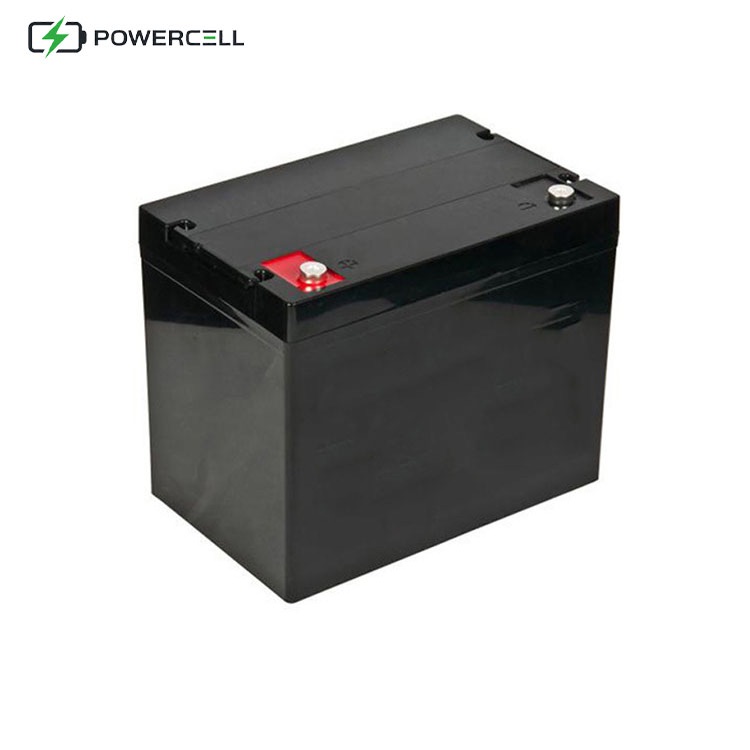
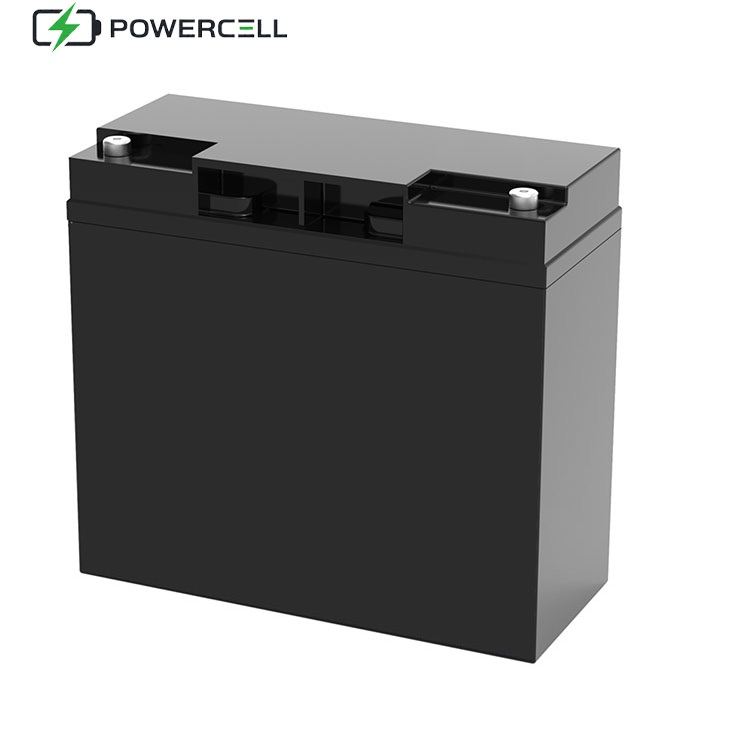
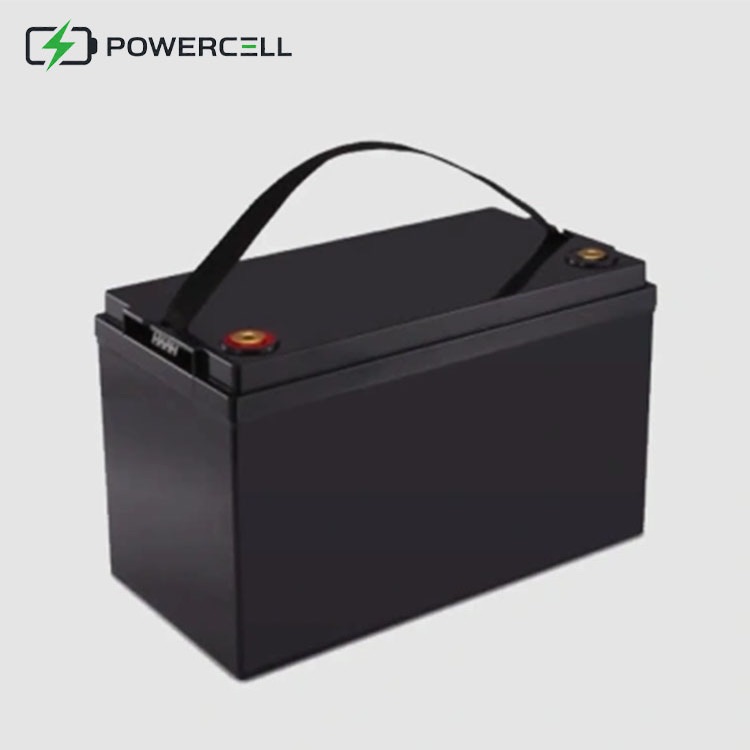
Lead-acid replacement LiFePO4 batteries are not magic drop-ins. This article explains what serious buyers should demand from a LiFePO4 battery supplier before placing OEM, wholesale, or private-label orders.
The Battery Market Has a Dirty Little Phrase: “Drop-In Replacement”
I hate it.
“Drop-in replacement” sounds clean, simple, and dealer-friendly. But in the real battery business, it often hides the messy details: charger profiles, BMS current limits, cold-temperature charging, cable sizing, fuse ratings, enclosure geometry, and export documentation.
That matters.
A lead acid replacement LiFePO4 battery can be a brilliant upgrade when the supplier knows what they are doing, but it can become an expensive warranty fight when a buyer treats a 12.8V 100Ah lithium iron phosphate pack as if it were just a lighter blue box replacing a 12V AGM battery. Is that really a battery upgrade, or just a purchasing department hoping chemistry will solve engineering?
For B2B buyers, the right Lead Acid Replacement Batteries program is not about buying the cheapest lithium pack per amp-hour. It is about selecting a LiFePO4 battery supplier that understands voltage behavior, discharge curves, BMS protection, export compliance, private-label risk, and after-sales failure patterns before the first container leaves the factory.
And yes, I’ll say the uncomfortable part: many “lithium iron phosphate battery supplier” websites sell capacity. The better suppliers sell risk control.
Why LiFePO4 Is Winning, But Lead-Acid Is Not Dead
Lead-acid is old. Not useless.
The lead-acid battery industry still has one of the strongest circular-economy stories in energy storage. The U.S. EPA notes that new U.S.-made lead-acid batteries contain more than 80% recycled material in its lead-acid battery collection case study, and EPA material data reports that recycled battery lead was about 99% of generation in 2018 on its nonferrous metals data page.
So the lazy argument — “lead-acid is bad, lithium is good” — is not serious enough for professional buyers.
Here is the harder truth: lead-acid has a mature recycling chain, low upfront cost, familiar charging behavior, and decades of field acceptance. LiFePO4 brings higher usable capacity, lighter weight, flatter voltage, stronger deep-cycle performance, and lower maintenance, but only when the battery pack, BMS, charger, wiring, and application are matched correctly.
That is the real story.
Reuters reported that LFP batteries are helping drive the energy storage boom, with UBS estimating that total storage capacity must grow eight-fold by 2030 and 34-fold by 2050 to support renewable expansion, according to its 2025 report on the battery shift away from nickel and cobalt. That is not hype. That is infrastructure pressure.
But big demand attracts weak suppliers. And weak suppliers love vague phrases.
“Grade A cells.” “6000 cycles.” “Bluetooth BMS.” “Factory direct.”
Fine. Show the test data.
The Replacement Math Buyers Keep Getting Wrong
A 100Ah label is not a truth serum.
A 12V 100Ah lead-acid battery and a 12.8V 100Ah LiFePO4 battery may look comparable on a quote sheet, but they behave differently under load, especially when depth of discharge, voltage sag, temperature, charge acceptance, and cycle life enter the calculation.
A 12.8V 100Ah LiFePO4 battery stores about 1,280Wh nominal energy. In many real applications, a buyer may use 80–100% of that rated capacity depending on the BMS, discharge rate, and manufacturer limits. A lead-acid battery may be rated at 100Ah, but many users avoid repeatedly discharging below 50% state of charge because deep discharge accelerates wear.
That gap is why 1:1 Ah replacement is often nonsense.
If your old system used two 12V 100Ah AGM batteries, the correct replacement may not automatically be two 12V 100Ah LiFePO4 batteries. It might be one 12V 150Ah pack, one 12V 200Ah pack, or a higher-voltage design if inverter power is high. If the load includes a 2,000W or 3,000W inverter, current becomes the silent killer.
At 12V, a 3,000W inverter can pull more than 250A before losses. At 24V, current roughly halves. At 48V, it falls again. That is why professional buyers should review 12V LiFePO4 Battery options carefully instead of assuming every 12V lithium box is suitable for RV, marine, UPS, solar, and mobility use.
Lead-Acid vs LiFePO4: The Buyer’s Comparison Table
Factor
Lead-Acid Battery
Lead-Acid Replacement LiFePO4 Battery
What Buyers Should Ask
Nominal voltage
12V class
12.8V typical for 4S LiFePO4
Will the charger accept lithium voltage settings?
Usable capacity
Often limited by depth-of-discharge practice
Often higher usable energy per rated Ah
What is the recommended DoD and cycle test condition?
Weight
Heavy
Usually much lighter
Will lower weight affect ballast or vehicle balance?
Voltage curve
More voltage sag under load
Flatter discharge curve
Will the old SOC meter read correctly?
Maintenance
Flooded types need upkeep; AGM/GEL less
Low routine maintenance
What monitoring is provided: Bluetooth, LCD, CAN, RS485?
Charging
Mature, forgiving in many systems
Needs correct lithium profile
Is charger matching included?
Cold charging
Chemistry dependent
Charging below 0°C can be unsafe without protection
Does the BMS block low-temperature charging?
Export complexity
Familiar but still regulated
Requires lithium transport documentation
Can supplier provide UN38.3, MSDS, labeling support?
Recycling system
Highly mature in U.S. lead markets
Developing and chemistry-dependent
What end-of-life plan is offered?
Best fit
Low-cost, familiar systems
Deep-cycle, weight-sensitive, high-cycle systems
Is the application actually ready for lithium?
What a Serious LiFePO4 Battery Supplier Must Prove
The market does not need another supplier claiming “high quality.” It needs suppliers who can show process control.
When I look at a LiFePO4 battery supplier, I do not start with the product photo. Product photos lie politely. I start with the boring documents and the ugly questions: cell source, BMS rating, continuous discharge current, peak current duration, low-temperature cutoff, charger compatibility, pack aging test, case material, terminal torque, vibration exposure, and warranty exclusion language.
That is where the truth lives.
A professional OEM/ODM LiFePO4 battery supplier should support custom voltage, capacity, casing, terminal layout, BMS configuration, communication options, branding, packaging, and documentation. More importantly, the supplier should tell you when your requested design is stupid.
That sounds harsh. It is useful.
The Supplier Questions I Would Ask Before Paying for Samples
Can you provide the exact cell model and cell matching standard?
What is the continuous discharge current, and for how many seconds can the BMS support peak discharge?
Does the BMS include overcharge, over-discharge, over-current, short-circuit, and temperature protection?
Does the battery block charging below 0°C, or does it include a heating function?
Can the supplier provide UN38.3 test summary, MSDS/SDS, CE, RoHS, IEC 62619, UL-related documents, or project-specific certification support?
Does the charger profile match LiFePO4 absorption and float behavior?
Can they provide a 12V, 24V, 48V, 51.2V, or 76.8V platform depending on the application?
Can they explain why a 100Ah lithium pack may replace more than 100Ah of lead-acid capacity in some use cases, but not in all?
If the salesperson cannot answer without sending a screenshot from a catalog, be careful.
Export Compliance Is Where Amateur Suppliers Expose Themselves
Shipping lithium batteries is not paperwork theater.
PHMSA states that lithium cells and batteries offered for transportation must pass UN Manual of Tests and Criteria Section 38.3, and manufacturers must make test summary documents available upon request under rules effective January 21, 2022, as explained on its Transporting Lithium Batteries page.
That single requirement filters out a lot of weak suppliers.
A professional lead acid replacement lithium battery supplier should understand UN38.3, MSDS/SDS, lithium battery marks, carton labeling, watt-hour declarations, dangerous goods packaging, and the difference between small parcel samples and sea-freight bulk orders. The buyer should not have to educate the factory about the documentation needed for air cargo, ocean freight, customs clearance, or marketplace compliance.
And there is another angle: safety perception.
The FAA reported 38 verified lithium battery incidents involving smoke, fire, or extreme heat on passenger and cargo aircraft through June 30, 2025, after a record 89 incidents in 2024, according to its article On the Case: Preventing Lithium Battery Hazards. That does not mean LiFePO4 is unsafe by default. It means sloppy battery sourcing, poor transport control, damaged goods handling, and weak documentation are business risks.
Nobody wants their first big private-label lithium order delayed because a forwarder asks for a test summary the supplier cannot produce.
The best LiFePO4 replacement for lead acid depends on the load profile. An RV house battery is not a forklift battery. A marine trolling motor battery is not a UPS battery. A solar storage battery is not a golf cart pack. The chemistry may be LiFePO4, but the BMS strategy, casing, cable, charger, current rating, communication, waterproofing, and service expectation can be completely different.
For RV and off-grid buyers, the main issues are usable capacity, inverter surge, solar charge controller settings, alternator protection, and cold-weather behavior. A buyer building private-label RV LiFePO4 battery programs should care about low-temperature cut-off, heating pads, Bluetooth monitoring, and charger matching.
For forklift buyers, the problem is harsher. You are dealing with high current, vibration, opportunity charging, fleet uptime, operator abuse, and sometimes ballast requirements. A lithium forklift battery pack is not simply a lead-acid tray with better chemistry inside. It is an industrial power system.
For solar storage buyers, charge coordination matters. NREL’s work on the economics of lithium-ion and lead-acid batteries in microgrids notes that thermal conditions and enclosure design can materially affect lead-acid lifetime, as shown in its report on lithium-ion and lead-acid batteries in microgrids. That is the kind of detail that separates real system design from catalog shopping.
Where “Drop-In” Makes Sense — and Where It Does Not
Drop-in lead acid replacement battery products make sense when the old system has moderate current, compatible voltage, enough installation space, acceptable charger behavior, and no hidden thermal or communication requirements.
They do not make sense when the buyer ignores alternator charging, uses an old lead-acid charger with aggressive float behavior, expects a tiny BMS to feed a large inverter, or sells the product into cold regions without charge protection.
That is not lithium’s fault. That is sourcing negligence.
The Hard Truth About Price
Cheap batteries are expensive.
I have watched buyers negotiate $4 or $6 off a battery pack, then lose far more through bad cartons, rejected labels, mismatched chargers, unclear warranty rules, and customer returns caused by BMS cutoffs they never tested. In the battery business, unit price is only one line in the cost model; the real bill arrives through freight delays, warranty claims, replacement shipments, bad reviews, and distributors who stop reordering after the first mess.
A serious LiFePO4 battery supplier should help you reduce total program risk, not just quote a lower EXW price.
Here is what price should include:
Cell consistency.
BMS margin.
Correct charger recommendation.
Sample testing.
Private-label packaging.
Documentation.
Pre-shipment inspection.
Warranty clarity.
Replacement strategy.
Technical support.
If you are comparing two suppliers and one is 12% cheaper but cannot explain UN38.3, low-temperature charging, inverter surge, or carton drop-test logic, the cheaper quote is not cheaper. It is a deferred loss.
How to Replace Lead Acid Battery with LiFePO4 Without Looking Like an Amateur
Start with the load, not the battery.
Calculate watt-hours per day, peak current, surge current, charging source, operating temperature, installation space, cable length, fuse rating, and the old battery’s actual behavior. Then decide whether the replacement should stay at 12V or move to 24V, 48V, or another platform.
A good workflow looks like this:
Map the original lead-acid system: voltage, capacity, charger, load, cable, fuse, space, and environment.
Calculate energy demand in Wh, not just Ah.
Select LiFePO4 capacity based on usable energy and discharge rate.
Match BMS continuous and peak current to real loads.
Confirm charger profile, solar controller settings, alternator protection, or DC-DC charging.
Check low-temperature charging protection.
Validate terminal layout, case size, mounting, and IP rating.
Request certification and transport documentation before mass production.
Test samples under actual load.
Only then move to bulk order.
This is why a buyer should also read deeper technical resources like the site’s Lead-Acid Replacement Guides instead of treating the purchase as a catalog exercise.
FAQs
What is a lead-acid replacement LiFePO4 battery?
A lead-acid replacement LiFePO4 battery is a lithium iron phosphate battery designed to replace AGM, GEL, flooded, or sealed lead-acid batteries in compatible systems while offering lighter weight, higher usable capacity, flatter voltage, longer cycle life, and lower maintenance when the charger, BMS, current rating, and application conditions are properly matched.
In plain language, it is not just “a lithium battery with the same voltage.” The battery must match the system’s electrical behavior. For example, a 12.8V LiFePO4 pack may fit a 12V lead-acid battery tray, but the charger profile, low-temperature protection, fuse sizing, and BMS current limit still need review.
Is a LiFePO4 battery a direct drop-in replacement for lead-acid?
A LiFePO4 battery can be a direct drop-in replacement for lead-acid only when the voltage range, physical size, charger profile, discharge current, temperature protection, terminal layout, and application load match the original system requirements. If those conditions are not verified, “drop-in” becomes a marketing claim, not an engineering fact.
For small moderate-load systems, replacement can be simple. For RV inverters, golf carts, forklifts, marine motors, solar banks, and UPS systems, the buyer should confirm BMS current rating, charging method, and installation environment before approving production.
What should I ask a LiFePO4 battery supplier before ordering?
You should ask a LiFePO4 battery supplier for the cell model, BMS rating, continuous and peak discharge current, low-temperature charging behavior, charger compatibility, cycle test conditions, UN38.3 test summary, MSDS/SDS, certification support, warranty terms, sample testing process, and private-label production controls before placing a bulk order.
A reliable supplier should answer with technical details, not vague claims. The strongest suppliers can explain why one application needs a standard 12V battery, another needs a 24V platform, and another should use a custom BMS or communication protocol.
What is the best LiFePO4 replacement for lead acid?
The best LiFePO4 replacement for lead acid is the battery pack that matches the original system’s voltage, usable energy demand, peak load, charging source, temperature range, installation space, and safety documentation requirements while offering enough BMS margin for real-world use rather than only passing ideal catalog specifications.
For RV and solar systems, usable capacity and charging compatibility often matter most. For forklifts, current delivery and industrial durability matter more. For mobility and marine applications, size, waterproofing, vibration resistance, and charger matching may decide the correct model.
How do I replace a lead acid battery with LiFePO4 safely?
To replace a lead acid battery with LiFePO4 safely, first calculate real watt-hour demand, check peak current, verify charger compatibility, confirm BMS protection, inspect wiring and fuse ratings, review low-temperature charging risks, validate physical fit, and request transport and safety documents before moving from sample testing to bulk orders.
The biggest mistake is replacing by amp-hour label alone. A 100Ah lithium battery and a 100Ah lead-acid battery do not deliver the same user experience under deep-cycle loads. Buyers should test actual use conditions before launching a wholesale or private-label program.
Why does UN38.3 matter for LiFePO4 battery buyers?
UN38.3 matters for LiFePO4 battery buyers because lithium batteries must pass transport safety tests covering altitude simulation, thermal testing, vibration, shock, external short circuit, impact or crush, overcharge, and forced discharge before they can be shipped through regulated logistics channels with proper documentation.
For importers, distributors, and OEM buyers, missing UN38.3 documentation can delay shipment, trigger forwarder rejection, disrupt launch schedules, and damage customer trust. It is not optional paperwork. It is part of responsible lithium battery sourcing.
Your Next Steps
If you are sourcing a lead-acid replacement LiFePO4 battery supplier, stop asking only for price.
Ask for the battery’s voltage platform, cell type, BMS rating, charger recommendation, low-temperature behavior, cycle test conditions, warranty rules, UN38.3 test summary, MSDS/SDS, packaging plan, and private-label support. Then test samples under real load before approving mass production.
For OEM, wholesale, and distributor projects, send your target voltage, capacity, application, quantity, branding needs, certification market, and charger requirements through the CoreSpark Battery contact page. A serious LiFePO4 battery program starts with engineering questions, not a pretty product photo.
Newsletter Updates
Enter your email address below and subscribe to our newsletter
BYingPower provides OEM, wholesale, and custom LiFePO4 battery packs for golf carts, RVs, forklifts, solar storage, marine power, and lead-acid replacement applications. We support battery brands, distributors, dealers, system integrators, and OEM buyers with reliable lithium battery solutions, smart BMS options, private-label services, and export documentation support.