Send us your application, voltage, capacity, battery size, quantity, and branding needs. BYingPower will review your project and recommend the right LiFePO4 battery solution for golf carts, RVs, marine systems, solar storage, forklifts, or lead-acid replacement.
Custom battery pack review for your application
OEM/ODM and private-label battery guidance
BMS, charger, terminals, heating, and packaging support
Faster quote path for samples and bulk orders
4th Floor, Building A, No. 2, Longjiang 2nd Road, Xie Keng, Qingxi Town, Dongguan Province,China.
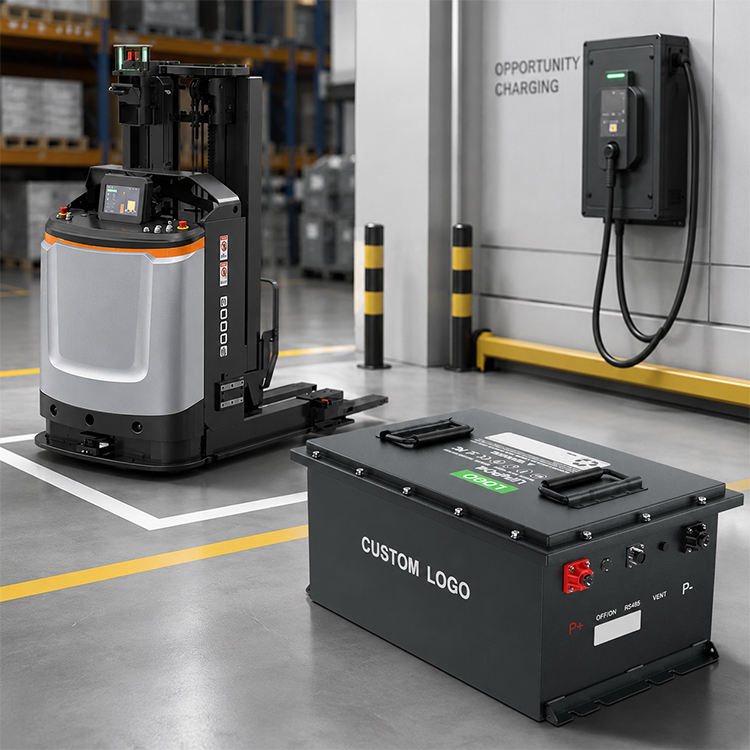
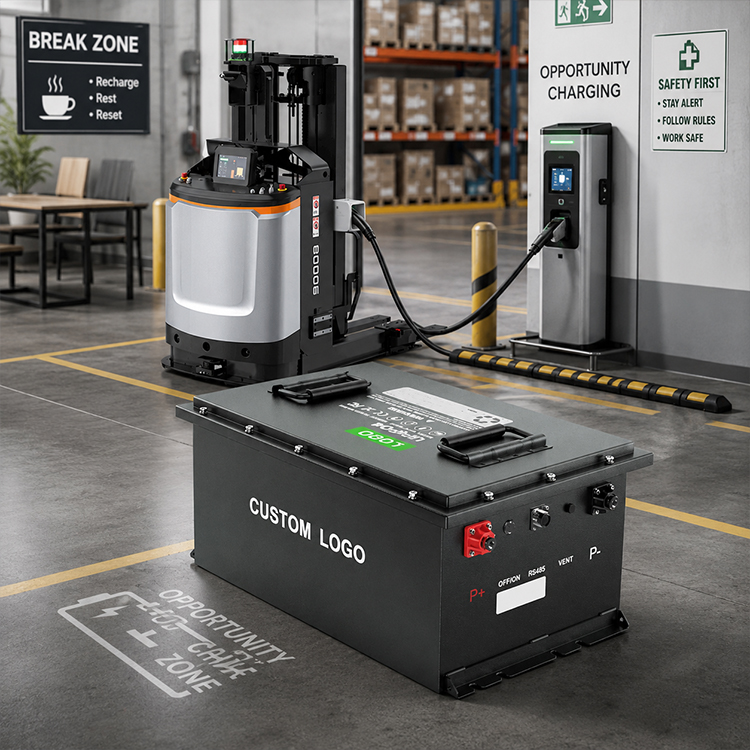
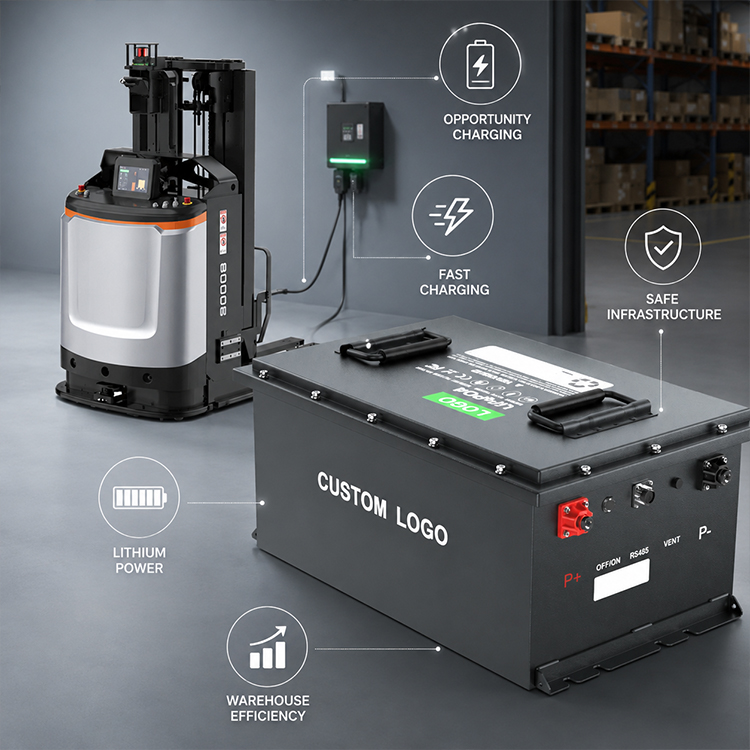
Forklift opportunity charging looks simple: plug in during breaks, keep the truck moving, reduce battery swaps. The ugly truth is that weak infrastructure planning can turn fast charging into cable chaos, heat, downtime, and compliance exposure.
The Ugly Truth About Forklift Opportunity Charging
Downtime lies.
A warehouse manager can stare at a forklift fleet report and believe the operation has a “battery problem,” when the real failure is usually a badly placed charger, undersized electrical service, lazy break scheduling, poor cable protection, or a purchasing team that treated forklift opportunity charging like a plug-and-play accessory instead of an engineered infrastructure decision.
So who really owns the loss: the battery, the charger, or the layout?
Forklift opportunity charging means charging electric forklifts during natural pauses: lunch breaks, shift handovers, loading delays, sanitation windows, operator breaks, dock congestion, or scheduled idle minutes. The battery stays inside the truck. No battery extraction. No swap room drama. No wasted operator walk time.
But I’ll say the part vendors often soften: opportunity charging only works when the building is designed around the behavior. Not the brochure. The behavior.
Toyota describes opportunity charging as a method where forklifts are plugged in during lunches, breaks, and shift changes, with lithium-ion batteries being better suited than lead-acid because lead-acid can face shorter life and extra maintenance under that use pattern. Their own warehouse guidance also states that this approach requires the right charging stations, not merely old lead-acid chargers reused out of convenience. Toyota’s opportunity charging guidance makes that point plainly.
If you are planning a new forklift battery charging infrastructure project, start with the fleet, not the charger. Count trucks. Count shifts. Count breaks. Count the distance from the work zone to the proposed charger. Then count the lies in your current uptime report.
Table of Contents
What Opportunity Charging Infrastructure Actually Includes
A proper electric forklift charging station is not just a charger bolted to a wall.
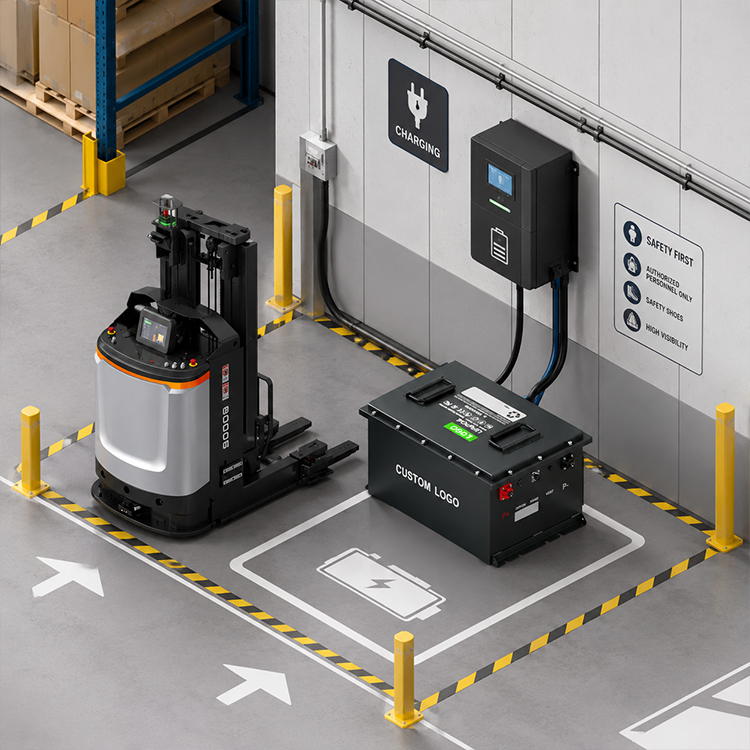
It is a controlled charging point with enough electrical capacity, the correct charger profile, safe traffic separation, connector protection, thermal planning, cable management, signage, emergency equipment, fire controls, and operating rules. That sounds like overkill until one operator drives away with a live cable, blocks an aisle to grab 9 minutes of charge, or parks a 48V truck at a 36V charger because the plugs “look close enough.”
Bad design spreads.
For lithium-ion forklift battery charging, especially LiFePO4 systems, the infrastructure should usually include:
Dedicated charger locations near natural idle zones, not hidden in a remote room nobody wants to visit
Charger output matched to battery voltage, chemistry, BMS limits, and target charge window
Protected charger mounting using bollards, guards, recessed walls, or traffic-separated charging bays
Cables kept off travel paths with retractors, hooks, overhead drops, or short protected runs
Clear signage for voltage, connector type, charger ID, truck assignment, and charge procedure
Fire extinguisher access, emergency communication, and documented response steps
Ventilation review, especially when lead-acid batteries are still used nearby
Data capture: charger logs, battery SOC, fault codes, temperatures, and utilization
This is where I would link buyers to CoreSpark’s custom forklift lithium battery packs because charger planning and battery selection are the same conversation in serious fleets. Voltage, Ah, kWh, BMS current limit, CAN/RS485 communication, connector rating, and charger curve all need to line up before anyone talks about “fast.”
The Compliance Part Nobody Wants to Read
Forklift charger installation requirements are not just electrical-shop housekeeping.
OSHA’s powered industrial truck rule says battery charging installations must be in designated areas, and it calls for facilities to flush and neutralize spilled electrolyte, provide fire protection, protect charging apparatus from truck damage, and provide adequate ventilation for fumes from gassing batteries. That language comes straight from OSHA 29 CFR 1910.178(g), not from a sales deck.
And OSHA’s own powered industrial truck eTool lists what a properly equipped battery charging area should have: no-smoking rules, warning signs, fire protection, water supply, eyewash able to provide a 15-minute flow, emergency communication, ventilation to avoid hydrogen buildup, neutralization materials, an extinguisher, and protection for charging equipment from truck impact.
Here is the hard truth: lithium reduces some lead-acid mess, but it does not delete infrastructure duty.
A LiFePO4 forklift battery does not need watering. It does not gas hydrogen like flooded lead-acid during normal charging. It can support short, repeated charge events better than old lead-acid routines. Good. But the charger can still be crushed. The cable can still trip someone. The plug can still arc if abused. The truck can still block a fire route. The panel can still be undersized. The operator can still ignore the procedure.
So, no, “lithium” is not a safety plan.
The Data Says This Is Not a Toy Category
Forklifts are not warehouse furniture with forks attached.
The National Safety Council reports that forklifts were the source of 84 work-related deaths in 2024 and 25,110 DART cases in 2023–2024, including 15,460 DAFW cases. DART means days away from work, job restriction, or transfer. That is a payroll, insurance, morale, and operational continuity problem, not a slide in a safety meeting. Read the NSC forklift injury data before treating charger placement as a minor layout task.
The broader workplace picture is not soft either. The U.S. Bureau of Labor Statistics reported 5,070 fatal work injuries in 2024, down 4.0% from 5,283 in 2023, and 2.5 million private-industry injury and illness cases in 2024. That comes from the BLS Injuries, Illnesses, and Fatalities program.
Why drag safety data into a forklift opportunity charging infrastructure guide?
Because charging stations change traffic. They create new stopping points, new pedestrian exposure, new cable locations, new electrical hazards, and new congestion patterns. A charger in the wrong place is not just inconvenient. It is a new incident path with a metal box at the end of it.
Lead-Acid, Lithium-Ion, and LiFePO4: Pick the Infrastructure Before the Chemistry Picks You
Lead-acid is heavy, familiar, cheap up front, and maintenance-hungry.
Lithium is faster, cleaner, smarter, and less forgiving when specified lazily.
LiFePO4, or lithium iron phosphate, is the chemistry I would usually want in hard-working warehouse fleets because it has strong thermal stability, long cycle life, and better fit for partial charging than flooded lead-acid. But the battery does not operate in a vacuum. It operates inside a truck, under a duty cycle, behind a BMS, through a connector, into a charger, and on a floor where humans keep making very human decisions.
For businesses replacing older flooded batteries, CoreSpark’s lead-acid to lithium forklift conversion checklist belongs early in the buying path. The conversion is not just voltage. It is charger compatibility, counterbalance, BMS behavior, connector rating, operating temperature, data-plate review, and operator procedure.
Here is my unpopular rule: if the buyer cannot explain the charging window, they are not ready to buy the charger.
A Toyota lithium-ion battery case study described a customer running two 10-hour shifts with a sit-down counterbalance forklift and an 18-85-23 lead-acid battery; the customer had a 935Ah battery with 748Ah usable capacity, but Toyota’s two-week power study found average daily usage of 1,380Ah and peak usage of 1,426Ah, which pushed the setup beyond its real capacity. That is exactly the kind of raw duty-cycle math buyers need before choosing opportunity charging, fast charging, or a second battery. Toyota’s lithium-ion case study is worth reading for the EBU logic alone.
Charger Placement: The Part That Makes or Breaks the System
The best forklift charging infrastructure is usually boring.
It puts chargers where the truck already stops. It avoids long walks. It avoids blind corners. It keeps cables out of tire paths. It does not force a truck to cross pedestrian zones just to grab 12 minutes of charge. It does not turn the break area into an electrical obstacle course.
I would map chargers around these zones:
Shift Handover Points
Shift handover is one of the cleanest charging windows because operators already pause, supervisors already check status, and trucks are usually parked in known locations. This is where a 10–20 minute charging event can become routine instead of “extra work.”
Break and Lunch Parking Areas
If operators take breaks at fixed times, the charger should meet them there. Not 80 meters away. Not behind the racking. Not next to the dock door where trailers, pedestrians, and impatient drivers collide into one mess.
Staging and Dispatch Zones
For fleets that cycle between receiving, staging, and putaway, charger placement near dispatch zones can work well. But watch congestion. A charger that blocks staging flow will be hated within a week.
Maintenance and Inspection Areas
This is not always the main charging zone, but it should have access to diagnostic charging, BMS data, and service-safe procedures. For custom fleets, CoreSpark’s OEM/ODM LiFePO4 battery engineering page is a more serious internal link than a generic catalog page because custom BMS, casing, communication, testing, and charger matching matter here.
Infrastructure Choices: What I Would Approve and What I Would Reject
Infrastructure Decision
What Works
What Fails
My Hard Rule
Charger location
Near natural idle points, with clear traffic separation
Remote charging rooms that operators avoid
Put chargers where behavior already exists
Charger sizing
Matched to battery voltage, BMS current limit, duty cycle, and break length
“Biggest charger we can buy” thinking
Faster is not better if heat, wiring, or BMS limits are ignored
Cable management
Short protected cables, retractors, hooks, or overhead drops
Cables across aisles, under tires, near dock traffic
If a forklift can run over it, redesign it
Safety equipment
Signage, extinguisher, emergency communication, protection from impact
Bare charger on a column in a traffic lane
Protect the charger from the truck and the worker from the charger
Data tracking
Charger logs, SOC trends, fault codes, temperature events
Operators guessing charge status from habit
If you do not measure charging, you are managing folklore
Mixed chemistry
Separate procedures for lithium and lead-acid
One charger culture for all batteries
Mixed fleets need labels, training, and discipline
Expansion planning
Spare panel capacity, extra conduit, scalable charger IDs
One-off installs every time a truck is added
Build for the next five trucks, not the last one
Small miss. Big bill.
A forklift fast charging project can quietly overload an old panel, create demand spikes, shorten connector life, or move congestion from the battery room to the aisle. I do not care how impressive the charger looks. If the electrical plan, fleet schedule, and traffic map do not agree, the project is unfinished.
The Electrical Planning Nobody Puts in the Sales Pitch
Forklift fast charging is really a power-delivery problem.
A 48V or 51.2V LiFePO4 forklift battery may be paired with a charger rated by output voltage and current, but the building sees input power, branch circuits, breaker sizing, heat, duty cycle, and simultaneous loads. Ten chargers plugged into ten trucks at the same break time is not the same load profile as ten chargers scattered across a 24-hour day.
If you are sourcing custom industrial batteries, the CoreSpark forklift battery solutions hub is the natural place to connect education with the buying journey. It fits because buyers researching charging, maintenance, replacement planning, and LiFePO4 options are usually still early enough to prevent bad infrastructure decisions.
The Fast-Charging Trap
Fast charging sounds heroic.
But the warehouse does not need heroic charging; it needs repeatable charging that fits the duty cycle without cooking components, annoying operators, or creating electrical bottlenecks.
Here is the trap: management asks for “maximum uptime,” procurement asks for “best price,” maintenance asks for “simple install,” and operations asks for “no process change.” Those four requests cannot all win.
For lithium-ion forklift battery charging, the better question is not “How fast can it charge?” The better question is: “How much energy must be safely returned during the available idle windows, and how often, without exceeding charger, connector, BMS, thermal, or building limits?”
That question is dull. It also saves fleets.
Toyota Material Handling International states that lithium-ion batteries support fast charging, opportunity charging during breaks, longer life cycles than lead-acid, and lower electricity costs through higher charging efficiency. Their lithium-ion page also claims roughly 20% lower electricity costs from higher charging efficiency. Toyota Material Handling International’s lithium-ion overview gives the high-level case.
Still, I would not approve infrastructure from a benefit page alone. I would demand truck-by-truck power studies, measured daily Ah use, actual route behavior, battery temperature data, and photos of the proposed charger locations.
How to Set Up Forklift Opportunity Charging Stations
If I were building the plan from scratch, I would use this sequence.
Step 1: Build the Duty-Cycle File
Record every truck by model, voltage, battery capacity, shift assignment, daily run hours, loads handled, routes, idle windows, and battery SOC at the start and end of each shift. Do this for at least one heavy week, not one pretty Tuesday.
Step 2: Decide the Charging Philosophy
Choose one:
Overnight charging only
Opportunity charging during breaks
Forklift fast charging during short windows
Mixed charging with scheduled rotation
Battery swap plus charging room
Lithium conversion with distributed chargers
Most operations want the second or third option and budget like they are choosing the first.
Step 3: Match Battery and Charger
For LiFePO4 forklift batteries, match charger voltage, current, profile, connector, communication, and BMS limits. Do not let the plug shape make the decision. A connector is not a compatibility certificate.
Step 4: Map Charger Locations Against Traffic
Place chargers where trucks naturally stop. Then overlay pedestrian routes, dock traffic, fire lanes, racking, blind corners, sanitation routes, maintenance access, and emergency exits. If the charger creates a new conflict, move it.
Step 5: Engineer Electrical Capacity
Ask a qualified electrician or engineer to calculate input load, branch circuits, panel capacity, conductor sizing, protective devices, ventilation or heat concerns, and future expansion. Do not let a battery supplier pretend this is optional.
Step 6: Write Operator Rules
Operators need simple rules: where to park, when to plug in, how to inspect the cable, what faults mean, when to stop using a charger, what not to touch, and who gets called when the system fails.
Step 7: Track the First 30 Days
The first month tells the truth. Track missed charges, fault codes, SOC drift, overheated connectors, blocked chargers, operator complaints, and trucks that still run low before shift end. Then adjust the system before bad habits harden.
For fleets that need application review before quote approval, CoreSpark’s LiFePO4 battery project case studies page is a useful internal bridge because it frames voltage, capacity, installation space, working current, charging method, runtime expectations, and operating environment as project inputs—not afterthoughts.
The Buyer’s Checklist for Forklift Charger Installation Requirements
Do not approve an electric forklift charging station until these points are documented:
Battery voltage, Ah, kWh, and allowed charge current
Charger input voltage and output rating
Charger profile approved for the battery
Connector type and amp rating
Cable protection method
Charger impact protection method
Floor marking and signage
Emergency stop or disconnect access
Fire extinguisher placement
Eyewash and electrolyte controls where lead-acid applies
Ventilation review where gassing batteries apply
Operator training procedure
Lockout/tagout and maintenance procedure
Charger ID and assigned truck list
Data logging or inspection cadence
Panel capacity and future expansion plan
The one I see missed most often? Connector rating.
A fleet will buy a high-output charger, pair it with a lithium battery, keep the old connector habit, and then act surprised when heat, wear, or intermittent faults show up. Electricity punishes assumptions.
FAQs
What is forklift opportunity charging infrastructure?
Forklift opportunity charging infrastructure is the planned network of chargers, electrical capacity, safe charging zones, cable protection, ventilation, fire controls, operator procedures, and battery-management rules that lets electric forklifts recharge during breaks, lunches, shift handovers, and idle minutes without removing the battery from the truck.
In practical terms, it is the system that makes opportunity charging reliable instead of random. The charger matters, but the layout, timing, safety controls, and operator behavior matter just as much.
Is forklift opportunity charging better for lithium-ion or lead-acid batteries?
Forklift opportunity charging is generally better suited to lithium-ion, especially LiFePO4, because the chemistry and BMS can tolerate frequent partial charging far better than flooded lead-acid systems that often need watering, equalization, cool-down time, and stricter charge discipline to avoid shortened service life.
Lead-acid can be opportunity charged in some cases, but the maintenance and battery-life tradeoffs are harder to ignore. For multi-shift operations, lithium usually gives cleaner scheduling and less battery-room labor.
What are the OSHA requirements for forklift battery charging stations?
OSHA forklift battery charging rules require designated charging areas and protective provisions for electrolyte flushing and neutralization, fire protection, charger damage prevention, ventilation for gassing batteries, safe truck positioning, no smoking, flame and spark control, and keeping metallic objects away from uncovered batteries during charging.
Lithium may reduce electrolyte and hydrogen concerns under normal use, but OSHA-style planning still matters because chargers, cables, traffic, fire response, and operator procedures remain part of the workplace safety file.
How many forklift chargers does a warehouse need?
A warehouse needs enough forklift chargers to return required energy during real idle windows, based on fleet size, battery kWh, daily Ah consumption, shift pattern, charger output, simultaneous charging demand, and acceptable reserve SOC at the end of each operating period.
The lazy answer is one charger per truck. The better answer comes from a power study. Some fleets need fewer chargers with better placement; others need more chargers because all trucks break at the same time.
Can I use my old lead-acid charger for a lithium forklift battery?
You generally should not use an old lead-acid charger for a lithium forklift battery unless the battery manufacturer confirms the voltage, charging profile, current limit, connector, communication requirements, and BMS behavior are compatible in writing for that exact battery model.
Lithium charging is controlled by different assumptions. The wrong profile can cause faults, incomplete charging, battery shutdown, heat, warranty conflict, or shortened pack life. Match the charger to the battery, not to the plug.
Where should forklift opportunity charging stations be placed?
Forklift opportunity charging stations should be placed near natural idle points such as break areas, shift handover zones, dispatch lanes, staging areas, or inspection points, while staying clear of pedestrian routes, dock traffic, emergency exits, blind corners, and areas where cables can be crushed.
The best charger location is the one operators will actually use without creating a new traffic hazard. Convenience matters because neglected chargers do not improve uptime.
Your Next Steps: Build the Charging Plan Before You Buy the Battery
Forklift opportunity charging is not magic. It is math, behavior, and infrastructure.
If you are planning lithium-ion forklift battery charging, forklift fast charging, or a full lead-acid-to-LiFePO4 conversion, do not start with a charger quote. Start with your forklift model list, shift schedule, battery voltage, measured daily energy use, break timing, charger locations, electrical panel capacity, and safety requirements.
Then send that file to a supplier that can review the battery and charger as one system. CoreSpark Battery can support forklift dealers, warehouse operators, distributors, and OEM buyers with custom LiFePO4 forklift battery pack review, OEM/ODM battery engineering, and project-level specification support.
For a serious quote, prepare the forklift data plate, current battery label, charger label, compartment dimensions, operating hours, target charge windows, and quantity forecast. Then contact CoreSpark Battery for a technical review.
Newsletter Updates
Enter your email address below and subscribe to our newsletter
BYingPower provides OEM, wholesale, and custom LiFePO4 battery packs for golf carts, RVs, forklifts, solar storage, marine power, and lead-acid replacement applications. We support battery brands, distributors, dealers, system integrators, and OEM buyers with reliable lithium battery solutions, smart BMS options, private-label services, and export documentation support.