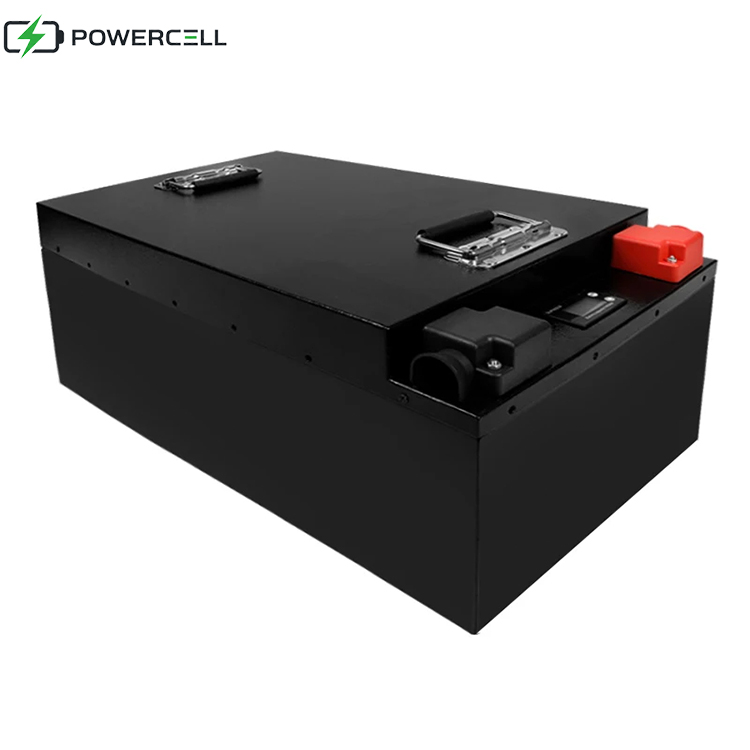
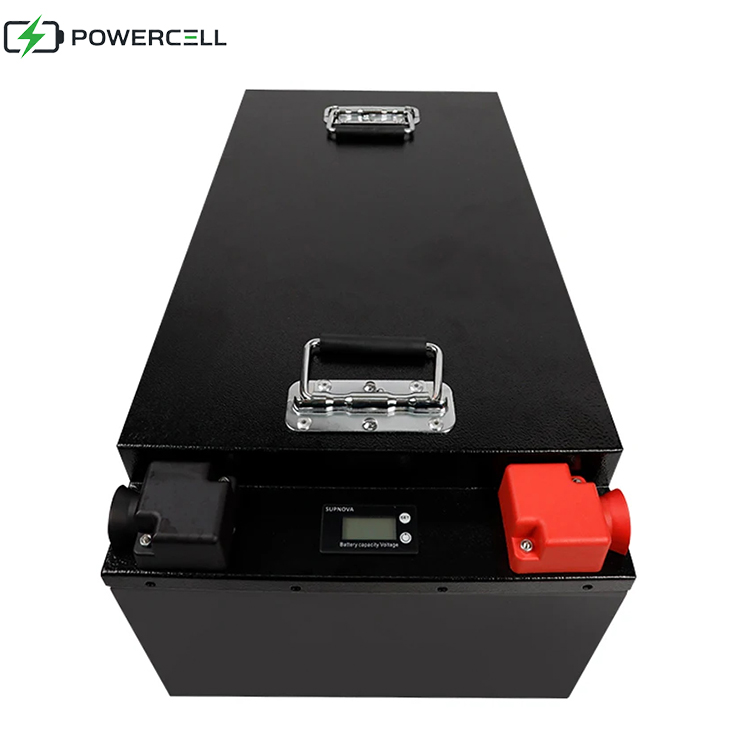
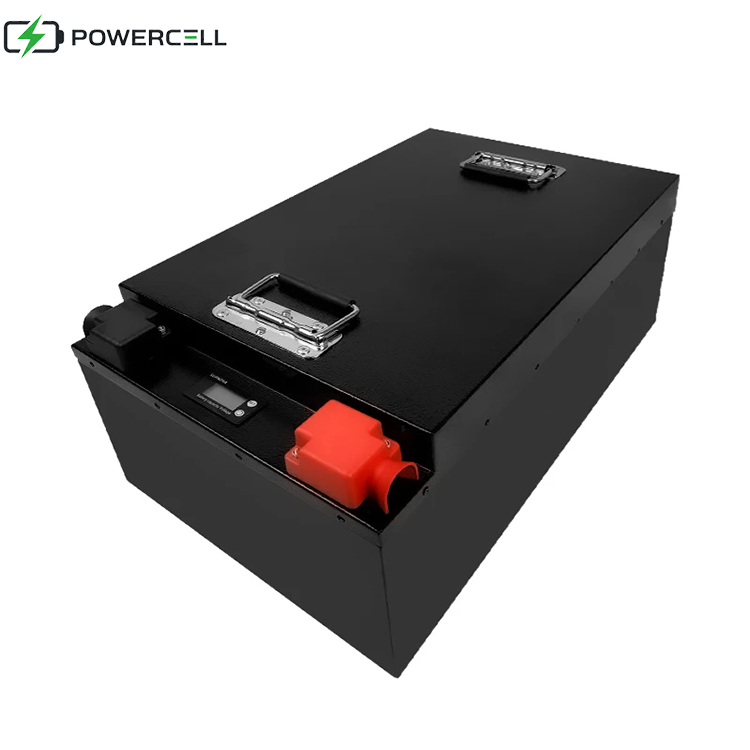
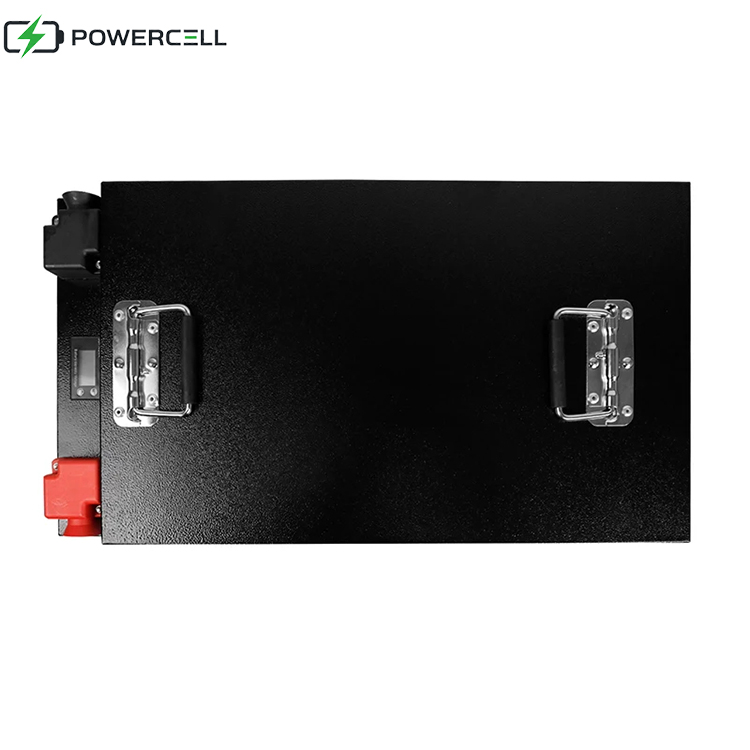
Send us your application, voltage, capacity, battery size, quantity, and branding needs. BYingPower will review your project and recommend the right LiFePO4 battery solution for golf carts, RVs, marine systems, solar storage, forklifts, or lead-acid replacement.
Custom battery pack review for your application
OEM/ODM and private-label battery guidance
BMS, charger, terminals, heating, and packaging support
Faster quote path for samples and bulk orders
4th Floor, Building A, No. 2, Longjiang 2nd Road, Xie Keng, Qingxi Town, Dongguan Province,China.
Cold-Climate Golf Cart Batteries: Is Self-Heating Worth It?
Self-heating sounds like an obvious upgrade for lithium golf cart batteries in winter, but many buyers pay for it without understanding when the heater runs, where its power comes from, or whether the BMS actually blocks unsafe charging. Here is the cold-weather math suppliers rarely show.
A lithium golf cart battery that delivers strong acceleration, predictable range, and clean charging at 20°C can behave like a different product after spending twelve hours outside at -10°C, especially when its charger, BMS, heater, insulation, and temperature sensors were selected as separate sales features rather than engineered as one system.
So is self-heating worth paying for?
My answer is blunt: yes, for golf carts that are regularly stored or charged below freezing; probably not, for carts kept in heated garages and used only on mild afternoons.
That distinction matters because the term “self-heating battery” is becoming marketing shorthand. Some packs heat automatically. Some heat only after a charger is connected. Some consume stored battery energy. Others depend on external AC power. And a few merely have low-temperature protection while sellers loosely describe them as heated.
Lithium iron phosphate, or LiFePO4, remains one of the better battery chemistries for golf carts because it offers a flat discharge curve, high cycle life, lower weight than lead-acid, and strong thermal stability. But LiFePO4 does not escape basic electrochemistry.
At lower temperatures:
Electrolyte conductivity falls.
Lithium-ion movement slows.
Internal resistance rises.
Voltage sag increases under acceleration.
Available power and usable capacity decline.
Charging becomes much more sensitive than discharging.
The last point causes the most trouble.
A cold battery may still move the cart, yet refuse to charge later. Owners often interpret that as a defective charger, failed BMS, or dead pack. In many cases, the BMS is deliberately opening the charging circuit because one or more temperature sensors have reported an unsafe condition.
The U.S. Department of Energy has reported that lithium-ion discharge capacity can fall by as much as 65% when test temperature drops from 25°C to -40°C. That figure covers broader lithium-ion research rather than one specific golf cart pack, but it shows how aggressively low temperature can affect cell resistance, voltage, and usable energy. The same DOE material identifies low ionic conductivity, slower lithium transfer, and lithium plating as major subzero problems. See the DOE low-temperature battery research.
The hard truth?
Cold-weather discharge is inconvenient. Cold-weather charging can be damaging.
Why Charging Below Freezing Is the Real Risk
When a lithium battery charges normally, lithium ions move into the graphite anode. When the cell is too cold, that insertion process slows. If charging current continues at an unsuitable rate, metallic lithium can collect on the anode surface instead of being stored correctly inside it.
That is lithium plating.
Lithium plating can reduce capacity, increase internal resistance, shorten cycle life, and create safety concerns. Damage may not appear as an immediate dramatic failure. The battery can seem normal after warming up while having suffered irreversible internal degradation.
This is why many lithium golf cart batteries allow discharge at temperatures such as -20°C but block charging around 0°C. The exact limits vary by cell, pack design, BMS programming, charging current, sensor location, and manufacturer approval.
Do not assume that “operating temperature: -20°C to 60°C” means the battery can be charged across that entire range. A professional specification sheet should list charge temperature, discharge temperature, and storage temperature separately.
For buyers comparing golf cart lithium battery options, that separation matters more than a vague “all-weather” badge. CoreSpark’s product range includes multiple voltage platforms, while its technical content also distinguishes low-temperature charging protection from ordinary discharge operation.
What a Self-Heating Lithium Golf Cart Battery Actually Does
A self-heating lithium golf cart battery uses internal heating elements, temperature sensors, and BMS controls to raise cell temperature before normal charging begins.
Heat is useful.
But a heater is not magic, and it cannot rescue poor sensor placement, weak insulation, an incompatible charger, an undersized BMS, or heating logic that activates too late and stops before the coldest cells reach an acceptable temperature.
A properly designed heated LiFePO4 golf cart battery generally follows this sequence:
The charger is connected or a heating request is triggered.
The BMS reads temperature from one or more sensors.
If cell temperature is below the programmed charging threshold, normal charging remains blocked.
Internal heating pads or films warm the battery cells.
The BMS confirms that the required temperature has been reached.
Heating stops or reduces.
Normal LiFePO4 charging begins.
That sequence sounds simple. It is not.
The temperature sensor may sit near the center cells, an outer wall, the BMS board, or a heater pad. A sensor positioned in the warmest part of the enclosure can approve charging while cells near an exterior metal panel remain colder. One temperature reading does not automatically describe the entire pack.
Three Heating Architectures Buyers Commonly Encounter
Charger-powered heating uses incoming charger energy to warm the battery before sending meaningful charging current into the cells. This is often the best arrangement for carts connected to reliable AC power because heating does not consume much stored driving range.
Battery-powered heating draws energy from the battery itself. It can work without AC power, but it may deepen discharge during long cold periods. That is a serious concern if the pack already has low state of charge or if accessories create parasitic loads.
Hybrid heating can draw from the charger when connected and from the battery under selected conditions. This gives more flexibility but requires careful minimum-state-of-charge logic, fuse protection, thermal controls, and documented failure behavior.
Which architecture is being quoted?
Many sales pages never say.
Penn State researchers demonstrated how effective rapid internal heating can be under controlled conditions. Their all-climate lithium-ion cell warmed from -20°C to 0°C in about 20 seconds while consuming roughly 3.8% of cell capacity; warming from -30°C to 0°C took about 30 seconds and used approximately 5.5%. The research design reportedly added 1.5% to cell weight and 0.04% to base battery cost. Penn State’s self-heating battery study is not a specification for commercial golf cart packs, but it proves that controlled internal heating can cost less energy than operating a conventional cold battery.
And that is the important distinction: the concept works, but the quality of commercial execution varies.
The Energy Math Behind Internal Heating
Buyers often ask whether the heater will drain the battery. The honest answer depends on heater wattage, heating duration, insulation, starting temperature, pack mass, and whether the energy comes from AC power or the battery.
Consider an illustrative 51.2V 100Ah LiFePO4 battery:
Nominal stored energy: 51.2V × 100Ah = 5.12kWh
A 200W heater running for 30 minutes: 0.10kWh
Estimated share of nominal battery energy: about 1.95%
A 300W heater running for 45 minutes: 0.225kWh
Estimated share of nominal battery energy: about 4.39%
These figures are examples, not universal heater specifications. Still, they expose why vague claims such as “minimal power consumption” are useless.
Ask for watts and minutes.
A heater that consumes 0.10kWh before charging may be a sensible trade when it prevents the BMS from blocking an entire morning’s operation. But a battery-powered heater cycling repeatedly through a two-day cold snap can become a meaningful parasitic load.
Insulation also changes the calculation. An uninsulated aluminum enclosure loses heat faster than a well-insulated pack with controlled thermal pathways. More heater wattage may produce worse results if most of the energy warms the casing and outside air rather than the cell mass.
When Self-Heating Pays for Itself
For a private owner, the financial return is usually measured in convenience and avoided damage. For a fleet, the calculation becomes more direct.
Suppose ten carts must be available at 7:00 a.m. A cold-protection shutdown delays each cart by 45 minutes while staff move batteries, warm buildings, reset chargers, or diagnose a “failure” that is actually temperature protection.
Even without battery damage, repeated winter delays create labor cost, missed rentals, maintenance calls, and dissatisfied customers.
Fleet buyers should include those losses when calculating the return from lithium. CoreSpark’s guide to calculating golf cart fleet lithium ROI provides a broader framework for comparing purchase price with maintenance, replacement frequency, downtime, charging, and labor.
Is Self-Heating Worth It for Your Golf Cart?
Here is the practical answer.
Operating Scenario
Self-Heating Value
My Verdict
Main Reason
Battery stored in a heated garage above 5°C
Low
Usually skip it
The cells rarely reach the low-temperature charging cutoff
Occasional frosty mornings between 0°C and -5°C
Moderate
Useful, not mandatory
Prevents intermittent no-charge events and waiting
Cart stored outdoors all winter
High
Worth it
Cell temperature may stay below safe charging limits for hours
Daily fleet charging below freezing
Very high
Treat it as a system requirement
Downtime and charging consistency outweigh the added cost
Operation around -10°C to -20°C
Very high
Buy only with full thermal documentation
Heater power, insulation, sensing, and BMS logic become central
Long-term winter storage without AC power
Conditional
Heating alone is not enough
Stored energy, parasitic loads, and state of charge still need management
Mild climate with rare freezing nights
Low
Spend money elsewhere
Better BMS data, charger matching, and waterproofing may deliver more value
My unpopular opinion is that many recreational buyers overbuy heating while commercial buyers under-specify it.
A homeowner in Florida may pay extra for self-heating because it sounds premium. A course operator in Minnesota may order a “cold-rated” battery without asking whether the heater can operate from charger power, how many watts it draws, or how evenly it warms a 105Ah pack.
That is backwards.
Self-Heating Is Usually Worth It When
Self-heating makes commercial sense when several of these conditions apply:
The cart is regularly parked outdoors.
Charging begins before sunrise.
Ambient temperature stays below 0°C for several hours.
The pack cannot be easily moved indoors.
Fleet availability matters more than the lowest purchase price.
Staff cannot manually warm or monitor every vehicle.
Cold-related BMS shutdowns would interrupt rentals, patrol work, maintenance, or transportation.
The battery supplier can document heater operation and temperature protections.
Self-Heating Is Probably Not Worth It When
Skip the feature when the battery stays in a heated space, freezing conditions are rare, and charging can wait until the pack warms naturally.
But do not confuse “no heater needed” with “no cold protection needed.” A non-heated battery should still have reliable low-temperature charging cutoff, accurate sensors, and clear fault reporting.
A heater is optional in some climates.
Protection is not.
What Suppliers Rarely Put in the Headline
The best golf cart batteries for cold weather are not simply the packs with the biggest heater.
They are the packs with transparent thermal engineering.
Before approving a self-heating lithium golf cart battery, request written answers to the following questions:
What Temperature Starts and Stops Heating?
You need both numbers.
A pack might begin heating at -5°C and stop at 5°C. Another may activate just below 0°C and permit charging immediately at 0°C. Those strategies create different warm-up times and safety margins.
Ask whether the threshold is based on the coldest sensor, warmest sensor, average temperature, or a single probe.
Where Does the Heater Get Its Power?
“Automatic heating” does not answer this.
Confirm whether power comes from:
The connected charger
Stored battery energy
An external auxiliary input
A combination of sources
Also ask whether normal charging current remains fully blocked during preheating.
What Is the Total Heater Wattage?
Get an actual watt figure, not “fast heating.”
A 100W heater and a 400W heater will behave differently in a 30kg to 50kg battery pack. Yet wattage alone does not prove performance. Cell arrangement, heater coverage, insulation, thermal contact, and ambient airflow matter.
How Many Temperature Sensors Are Installed?
One sensor is cheap.
It may also miss a cold outer cell or a heater hot spot. Larger packs should be evaluated for temperature spread, not just one reading displayed in a Bluetooth application.
Can the BMS Show Heating Status?
A useful smart BMS should tell the operator whether the pack is:
Too cold to charge
Actively heating
Warm enough to charge
Experiencing a heater fault
Blocking charging for another reason
Without that information, technicians waste time guessing. CoreSpark’s guide to diagnosing a lithium golf cart battery that will not charge explains how cold protection, charger mismatch, wiring faults, and BMS sleep states can create similar symptoms.
Is the Charger Matched to the Pack?
A heater cannot correct an unsuitable charger profile.
Charging current, maximum voltage, connector polarity, communication, temperature behavior, and BMS settings must all agree. Buyers comparing 15A, 20A, and 25A charging should review the actual charging-time and electrical-load tradeoffs in this golf cart lithium charger amperage comparison.
And no, the highest current is not automatically the best winter charger. A battery that has only just crossed its minimum charging temperature may require controlled current rather than an immediate maximum-rate charge.
Real-World Evidence: Heating Helps, but Pack Quality Still Rules
Battery companies increasingly treat cold performance as a competitive target. In July 2023, CATL said new electrolyte materials could improve battery charging efficiency by 50% at -20°C and 43% under more typical conditions. Reuters also noted that cold slows electrochemical reactions and creates additional energy demand. Read the Reuters report on CATL’s cold-weather battery work.
That announcement tells us two things.
First, cold performance is not a solved problem. Second, battery manufacturers are attacking it through multiple routes: heating, electrolytes, cell design, BMS control, and thermal management.
Do not let a heater distract from the rest of the pack.
In March 2023, the U.S. Consumer Product Safety Commission recalled about 7,250 RELiON InSight Series 48V lithium batteries used in golf carts and other vehicles after five reports of overheating. The recall does not prove that self-heating caused the failures, and it should not be misrepresented that way. It does show that voltage, cell quality, BMS behavior, assembly, thermal protection, and traceability all matter in a commercial traction battery. Review the CPSC RELiON recall.
The charger deserves equal scrutiny. A separate CPSC recall covered about 19,000 Lester Electrical golf cart chargers after 12 reports of control boards showing overheating or burning. That case involved charger hardware, not cold-weather heating, but it reinforces a point the golf cart industry often avoids: charging safety belongs to the complete system, not the battery label alone.See the CPSC golf cart charger recall.
No single feature proves quality.
Not Bluetooth. Not heating. Not a metal enclosure. Not a claimed 5,000-cycle lifespan.
How to Protect Golf Cart Batteries in Winter
Winter protection begins before the first freezing morning.
Keep the battery dry. Inspect cable lugs, charger connectors, seals, strain reliefs, and enclosure drains. Water intrusion combined with road salt, condensation, or damaged connector insulation can create faults that look like temperature problems.
Monitor actual battery temperature through the BMS when that data is available. Ambient air temperature is not the same as cell temperature. A battery that spent the night in an unheated enclosure may remain cold after the surrounding air begins warming.
Do not force charging by bypassing the BMS, warming the sensor with a handheld heater, increasing charger voltage, or repeatedly resetting low-temperature protection. Those shortcuts defeat the system designed to protect the cells.
And investigate sudden winter range loss methodically. Tire pressure, thickened gearbox lubricant, increased rolling resistance, voltage sag, accessory loads, cell imbalance, and cold-related capacity loss can occur together. CoreSpark’s nine checks for sudden lithium golf cart range loss provides a structured diagnostic path rather than assuming the battery has reached end of life.
For long-term storage:
Follow the manufacturer’s recommended storage state of charge.
Disconnect unnecessary accessories and DC-DC loads.
Check battery state periodically.
Avoid leaving a depleted pack in freezing conditions.
Do not rely on the heater to manage months of unattended storage.
Use a dry location with stable ventilation and temperature where possible.
FAQs
What is a self-heating golf cart battery?
A self-heating golf cart battery is a lithium iron phosphate battery pack with internal heating elements, temperature sensors, and BMS logic that warms the cells before charging when they are below the manufacturer’s safe charge threshold, usually near 0°C or 32°F, while still allowing controlled discharge at lower temperatures.
Some systems use charger power, while others consume energy stored in the battery. Buyers should confirm the heating source, activation temperature, shutoff temperature, wattage, sensor count, and minimum state of charge.
Are self-heating golf cart batteries worth it?
Self-heating is worth the extra cost when a golf cart is stored or charged outdoors in repeated freezing conditions, because the feature can reduce no-charge events, operator delays, and cold-related charging damage; it is usually unnecessary when the battery remains in a heated garage above about 5°C or 41°F.
For commercial fleets, the decision should include downtime, labor, lost rentals, and morning availability rather than battery purchase price alone.
Can LiFePO4 golf cart batteries charge below freezing?
Most LiFePO4 golf cart batteries can discharge below freezing within their specified limits, but many should not accept charge current near or below 0°C unless the manufacturer approves low-temperature charging or the pack first warms itself, because cold charging can promote lithium plating and permanent capacity loss.
Always follow the battery’s separate charging-temperature specification. A broad operating-temperature range is not enough evidence that subzero charging is allowed.
What are the best golf cart batteries for cold weather?
The best golf cart batteries for cold weather combine a documented low-temperature charge cutoff, automatic internal heating, accurate cell-level temperature sensing, a matched charger, visible BMS fault data, sealed connectors, proper insulation, and warranty language that clearly states the allowed charging, discharging, and storage temperature ranges.
Ignore vague “all-season” claims unless the supplier provides heater wattage, warm-up test data, sensor locations, protection thresholds, and full charger specifications.
How do I protect golf cart batteries in winter?
To protect golf cart batteries in winter, keep the pack dry, store it within the manufacturer’s state-of-charge and temperature limits, disconnect parasitic accessories, use only the approved charger, avoid charging a frozen pack, inspect cables and connectors, and verify through the BMS that cell temperature is safe before charging.
Never bypass low-temperature protection or use uncontrolled heat sources such as open flames, heat guns, or heaters placed directly against the battery enclosure.
Your Next Step: Specify the Heating System, Not Just the Feature
Do not request “a heated battery” and assume every supplier means the same thing.
Specify the cart voltage, battery capacity, lowest expected temperature, outdoor storage duration, charging schedule, available AC power, required warm-up time, heater wattage, power source, BMS communication, sensor count, enclosure rating, charger output, and warranty conditions.
For dealer, fleet, wholesale, or private-label projects, review CoreSpark’s custom LiFePO4 battery OEM and ODM capabilities and request a written cold-weather configuration rather than accepting a generic product listing. The site lists low-temperature heating, smart BMS programming, Bluetooth monitoring, charger matching, CAN/RS485 communication, and customized pack development among its available options.
Then put the supplier’s claims under pressure.
Ask for cold-start data. Ask where the sensors sit. Ask how much energy the heater consumes. Ask what happens when state of charge is low. Ask whether the battery heats from charger power or drains itself.
A good supplier will answer with numbers.
A weak one will answer with adjectives.
Newsletter Updates
Enter your email address below and subscribe to our newsletter
BYingPower provides OEM, wholesale, and custom LiFePO4 battery packs for golf carts, RVs, forklifts, solar storage, marine power, and lead-acid replacement applications. We support battery brands, distributors, dealers, system integrators, and OEM buyers with reliable lithium battery solutions, smart BMS options, private-label services, and export documentation support.