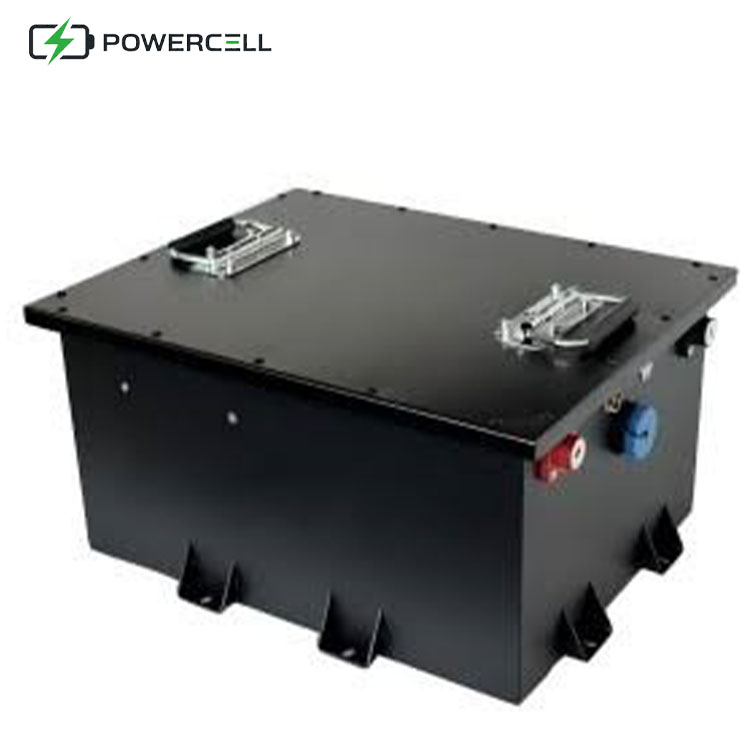
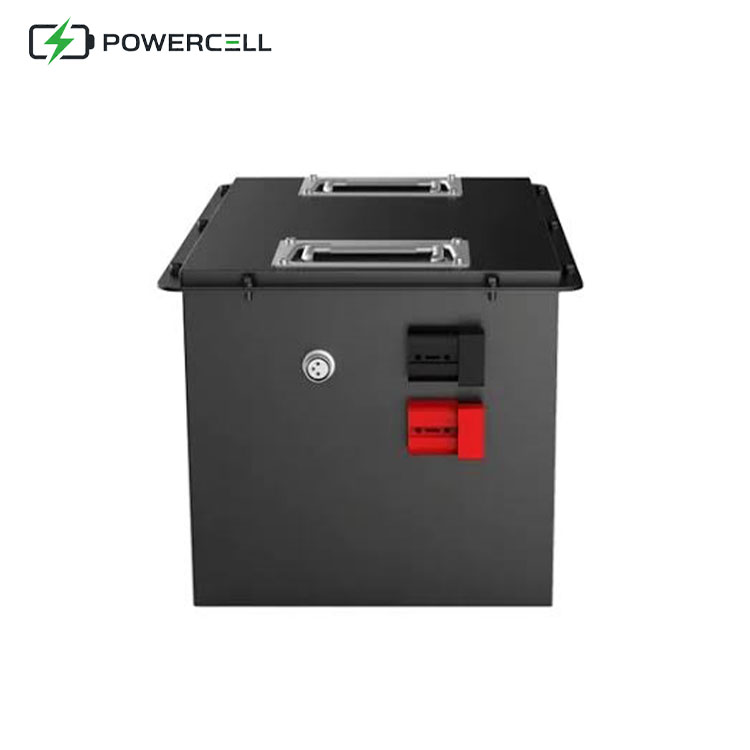
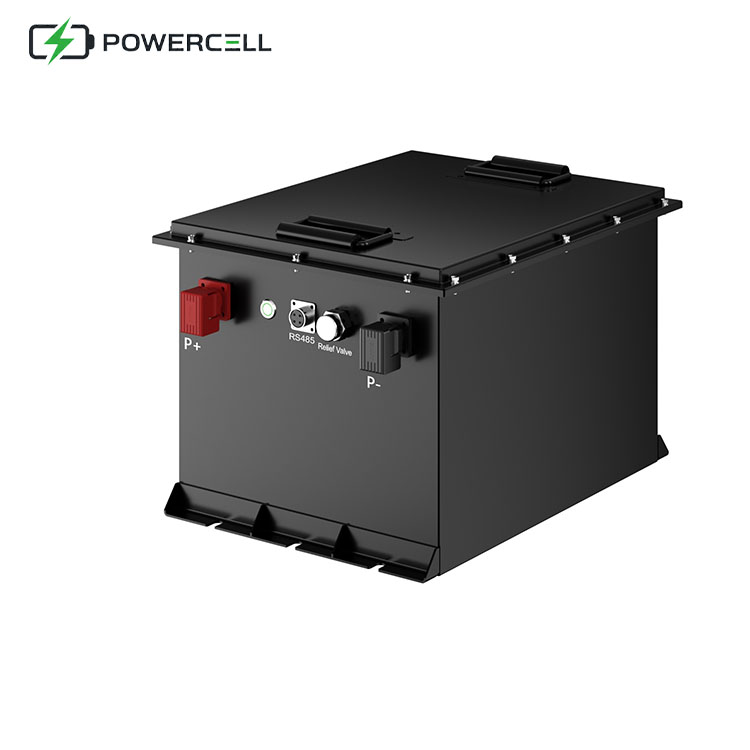
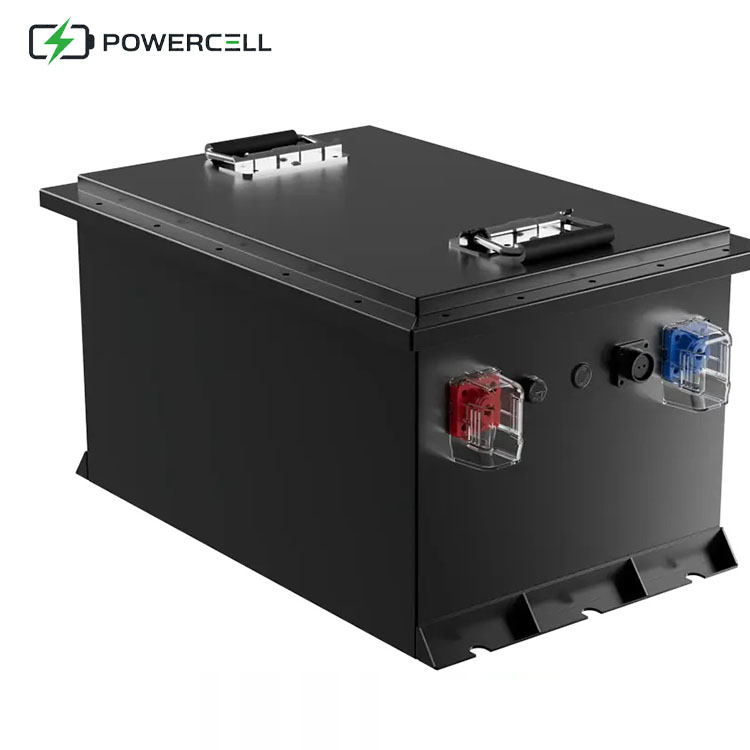
Send us your application, voltage, capacity, battery size, quantity, and branding needs. BYingPower will review your project and recommend the right LiFePO4 battery solution for golf carts, RVs, marine systems, solar storage, forklifts, or lead-acid replacement.
Custom battery pack review for your application
OEM/ODM and private-label battery guidance
BMS, charger, terminals, heating, and packaging support
Faster quote path for samples and bulk orders
4th Floor, Building A, No. 2, Longjiang 2nd Road, Xie Keng, Qingxi Town, Dongguan Province,China.
Golf Cart Battery Compartment Measurement Template: 12 Checks Before Ordering
A battery that fits on paper can still collide with a seat base, strain a cable, trap water, or leave no room for a hold-down. Use this 12-check golf cart battery compartment measurement template before approving a replacement pack or bulk order.
A battery pack that appears to fit on a product page can still fail in the cart because lid ribs, terminal boots, cable bends, restraint brackets, floor humps, charger hardware, and corroded tray edges consume the space that headline dimensions ignore.
Why gamble freight, labor, and warranty margin on three casual measurements?
The search intent behind golf cart battery dimensions is partly informational, but the buyer is usually close to a transaction. They are not researching battery trivia. They are trying to avoid ordering an expensive object that cannot be installed safely.
My hard-line view is simple: length × width × height is not a fitment check. It is only the beginning of one.
Golf Cart Battery Dimensions Are an Installation Envelope, Not a Box Size
The battery industry already recognizes that fit involves more than case dimensions. The Battery Council International group-size system classifies batteries by maximum external dimensions, terminal arrangement, performance characteristics, and chemistry. Batteries within the same BCI group are expected to remain within 2 mm of the standardized physical size.
That helps when replacing one conventional battery with another battery of the same group.
But golf carts complicate the job.
A 36V lead-acid cart may have six separate 6V batteries. A cart labeled 48V may use six 8V batteries, eight 6V batteries, four 12V batteries, or a single lithium pack, depending on the vehicle and conversion. The total tray footprint, cable pattern, terminal positions, weight distribution, and hold-down system can therefore change completely even when the voltage label looks familiar. CoreSpark’s Club Car lithium conversion compatibility chart shows why model names such as DS, Precedent, Onward, Tempo, Carryall, and Villager are not enough to approve a battery.
Consider these published golf cart battery dimensions:
LiFePO4 pack offered for higher-voltage applications
509 × 334 × 230 mm, ±3 mm; about 20.04 × 13.15 × 9.06 in
46.5 kg; 102.5 lb
A longer, lower enclosure can fit one tray and fail another despite similar capacity claims
The Trojan T-105 specifications list a 281 mm overall height and 28 kg weight, while the two CoreSpark examples publish materially different one-piece enclosure proportions and a stated ±3 mm size tolerance. Those are not interchangeable shapes.
That is the hard truth about a generic golf cart battery size chart: it can screen candidates, but it cannot approve an installation.
The 12-Check Golf Cart Battery Compartment Measurement Template
Use millimeters as the primary unit. Inches are useful for customers, but millimeters reduce rounding errors when the battery case, tray rail, or terminal cover is close to an obstruction.
Measure the cart itself. Do not estimate the new compartment from the dimensions of the old batteries, because the old bank may leave unused gaps that cannot support a larger enclosure.
Check
What to record
How to measure it
Pass-or-fail rule before ordering
1
Cart identity
Record manufacturer, model, model year, complete serial number, controller model, and original battery arrangement
Do not approve the order when the vehicle architecture remains unidentified
2
Electrical system
Record nominal voltage, existing charger model, controller voltage limit, motor rating, accessories, and DC-DC converter
Battery, charger, controller, solenoid, converter, fuse, and accessories must share a verified operating range
3
Usable tray length
Measure the clear length at the front, center, and rear of the proposed pack position
The battery’s maximum length, including manufacturing tolerance, must be less than the smallest usable measurement
4
Usable tray width
Measure at the bottom, case midpoint, and top because side walls and frames may taper
The battery’s maximum width, including tolerance and brackets, must clear the narrowest point
5
Closed-lid height
Measure from the true supporting surface to the lowest seat base, lid rib, hinge, frame tube, or cover obstruction
Include the case, feet, terminals, bolts, boots, cable lugs, cable arc, and any protective cover
6
Obstruction map
Record floor humps, welds, rails, crossmembers, charger receptacles, switches, hinges, and moving hardware
No battery surface, terminal, cable, or connector may contact an obstruction during operation or servicing
7
Terminal position and polarity
Photograph and measure positive and negative terminal locations from two fixed tray edges
Cables must reach the correct terminals without crossing dangerously, stretching, or touching moving or sharp parts
8
Cable routing and bend space
Measure the complete path from each cable lug to the new terminal location
Reject any plan requiring tight bends, unsupported extensions, improvised splices, or tension on the terminal
9
Hold-down system
Record existing bracket locations, bolt spacing, rail dimensions, and available anchor points
The battery must have positive mechanical restraint approved for its enclosure; friction and battery weight are not restraints
10
Floor support and weight
Inspect tray corrosion and measure the flat supporting footprint; record old and new system weight
The enclosure base must be adequately supported, and the chassis must tolerate the revised load and weight distribution
11
Water, heat, and airflow
Record drains, splash paths, wash-down exposure, nearby heat sources, and enclosed areas
The battery enclosure rating and installation method must match the actual exposure; never assume “under the seat” means dry
12
Access and service path
Measure the opening through which the pack enters, connector access, lifting space, display access, and removal route
The pack must be installable and removable without crushing cables, dismantling unsafe components, or lifting from electrical terminals
No universal clearance number can replace the battery manufacturer’s written installation requirements. A rigid case that misses the frame by 1 mm may appear to fit while stationary and then strike the chassis as the cart flexes, vibrates, or travels over rough ground.
Use this copy-and-send worksheet when requesting a quote:
GOLF CART BATTERY COMPARTMENT MEASUREMENT RECORD

Cart manufacturer:
Model:
Model year:
Complete serial number:
Controller manufacturer and model:
Motor rating:
Current battery configuration:
Nominal system voltage:
Existing charger manufacturer and model:
Accessories installed:
Lift kit / tire size:
Passenger or cargo configuration:

USABLE COMPARTMENT DIMENSIONS

Tray length — front:
Tray length — center:
Tray length — rear:

Tray width — bottom:
Tray width — center:
Tray width — top:

Height to lowest obstruction — front:
Height to lowest obstruction — center:
Height to lowest obstruction — rear:

Battery-entry opening length:
Battery-entry opening width:
Battery-entry opening height:

POSITIVE TERMINAL LOCATION

Distance from left tray edge:
Distance from front tray edge:
Maximum available terminal height:

NEGATIVE TERMINAL LOCATION

Distance from left tray edge:
Distance from front tray edge:
Maximum available terminal height:

Cable length available:
Existing cable gauge:
Main fuse or breaker rating:
Hold-down mounting points:
Tray corrosion or damage:
Drain and water-entry locations:
Maximum proposed battery weight:

PHOTOS ATTACHED

[ ] Full cart
[ ] Serial-number label
[ ] Existing battery bank from above
[ ] Empty tray from above
[ ] Front of compartment
[ ] Rear of compartment
[ ] Left side
[ ] Right side
[ ] Closed-lid obstruction
[ ] Controller label
[ ] Charger label
[ ] Cable and fuse layout
How to Measure a Golf Cart Battery Compartment Without Fooling Yourself
Measure the smallest usable space
A tray that measures 540 mm long at the top but only 515 mm between lower rails has a usable length of 515 mm, not 540 mm.
Repeat every measurement at several points. Old trays bend. Weld beads protrude. Corrosion swells under coatings. Plastic seat bases sag. And factory brackets are rarely positioned for the one-piece lithium enclosure you found online.
I would rather reject a borderline fit during quoting than discover it after international freight.
Close the seat or battery cover
Open-lid measurements are notoriously misleading.
Place straightedges across the tray and measure to the lowest point of the closed seat base or cover. Watch for molded ribs, hinges, latch hardware, seat supports, tow/run switches, charging receptacles, and accessory wiring.
Then build a cardboard or rigid-foam mock-up using the battery’s maximum published dimensions, not merely its nominal case size. Add the manufacturer’s tolerance. Add the actual terminal hardware and cable path.
The box fits. Do the cables?
Measure terminals as three-dimensional objects
Battery terminal clearance is not just the height of the threaded stud. It includes the post, washer stack, lug, nut, insulating boot, cable diameter, and the curve required to route the cable away from the battery.
A cable should not become the hold-down bracket.
Record polarity too. Reversing the battery orientation to make it fit may place the positive terminal beside a frame rail, make the original cables too short, block the display, or point communication ports toward a wet wheel well.
Confirm the voltage envelope before celebrating the physical fit
Physical fit does not establish electrical compatibility.
A common 51.2V LiFePO4 pack uses 16 cells in series:
16 × 3.2V = 51.2V nominal
At 3.65V per cell, the pack reaches:
16 × 3.65V = 58.4V fully charged
That 58.4V value must be acceptable to the controller, solenoid, DC-DC converter, charger circuit, accessories, and battery-management system. CoreSpark’s 51.2V golf cart battery compatibility guide explains why a cart marked “48V” cannot be approved from the dashboard label alone.
Buyers comparing replacement platforms can review the broader golf cart battery range and 48V lithium golf cart battery options, but the product category is only a shortlist. The compartment record and electrical audit still decide whether a pack belongs in the cart.
Three Failure Patterns the Battery Industry Keeps Underestimating
Charging hardware can fail even when the battery fits
In May 2020, the U.S. Consumer Product Safety Commission recalled about 1,000 Garia model-year 2010–2019 golf and courtesy electric vehicles because a fuse could overheat and melt during charging. The lesson is uncomfortable: a mechanically neat installation can still be electrically wrong. Read the Garia charging-system recall.
That is why check 12 includes the charger and associated hardware. The wrong charger profile, poor fuse selection, undersized conductor, weak crimp, or inaccessible connector can turn a “drop-in” replacement into a recurring service claim.
Drop-in is marketing. Verification is engineering.
A familiar group-size label does not erase battery risk
In March 2023, CPSC announced a recall involving specified serial-number ranges of RELiON InSight Series 48V lithium-ion batteries, model 48V030-GC2, because the batteries could overheat and create thermal-burn and fire hazards. The intended applications included golf carts, low-speed vehicles, AGVs, and utility vehicles. See the RELiON InSight Series recall.
The GC2 reference made the product easier to understand as a replacement format. It did not eliminate the need to verify serial numbers, approved parallel arrangements, charging instructions, cable routing, enclosure condition, and recall status.
Specifications matter. Traceability matters too.
Water exposure is not a minor compartment detail
In March 2024, CPSC recalled about 500 Tracker Off Road OX EV vehicles because water could enter the lithium-ion battery pack and pose a fire hazard. The case was not about abstract laboratory abuse; it was about real vehicles operating where water and debris exist. Read the Tracker OX EV fire-hazard recall.
This does not prove that every wet compartment will cause a battery fire. It proves that water paths deserve the same attention as length and width.
Inspect drain holes. Photograph splash paths. Note pressure-washing practices. Verify connector orientation. Ask for the enclosure’s documented protection rating and installation limits rather than treating “waterproof” as a complete engineering statement.
Measure the Old Battery Bank Before Recycling It
Do not tear out the lead-acid bank and immediately send it away.
First photograph:
Battery orientation
Series-cable sequence
Main positive and negative exits
Charger leads
Accessory taps
Hold-down hardware
Spacer locations
Tray support points
Vent openings
Any signs of heat, acid damage, corrosion, or water entry
Then record the total bank footprint and individual battery dimensions.
The U.S. EPA’s 2026 Battery Collection Best Practices Report states that lead-acid batteries have an industry-reported recycling rate of 99.3% in the United States, while noting that no widely accepted national lithium-ion recycling rate currently exists. Responsible disposal matters, but documentation should happen before the old installation disappears. Read the EPA battery collection report.
And do not copy old mistakes into the new installation. An existing cable routed across a sharp edge is evidence of a problem, not approval to repeat it.
FAQs
How do I measure golf cart battery compartment dimensions?
A golf cart battery compartment should be measured at its narrowest usable length, width, and height after accounting for rails, brackets, lid ribs, terminals, cable bends, hold-down hardware, and the manufacturer’s stated case tolerance, because the largest empty-looking section is rarely the true installation envelope.
Take measurements at the front, center, and rear. Close the seat or cover, map every obstruction, and verify that the fully assembled terminal and cable arrangement clears the structure.
What does GC2 golf cart battery group size mean?
GC2 is a Battery Council International group-size designation that standardizes the battery’s maximum external dimensions, terminal arrangement, performance class, and chemistry notation, but it does not guarantee that a multi-battery golf cart tray will accept every lithium replacement pack or one-box conversion without separate compartment measurements.
Use GC2 as a cross-reference, not blanket installation approval. A single GC2-format battery and a large one-piece LiFePO4 pack create entirely different restraint, cable, weight, and service requirements.
Will a 51.2V battery fit and work in a 48V golf cart?
A 51.2V LiFePO4 battery can replace many carts sold as 48V only when the controller, solenoid, DC-DC converter, charger, fuse, cables, and accessories tolerate the pack’s actual operating range, commonly up to 58.4V at full charge, while the enclosure and terminals also fit the measured tray.
Review the 51.2V compatibility guide before treating the 48V label as approval. The cart model, controller type, charger, peak current, compartment, and accessory loads all affect the decision.
How much battery terminal clearance does a golf cart need?
Battery terminal clearance is the free vertical and lateral space needed above and around each post, busbar, bolt, boot, and cable lug so the lid, seat base, frame, or moving hardware cannot touch energized metal, crush insulation, or force a cable into a damaging bend.
There is no honest universal number for every enclosure and terminal design. Obtain the battery manufacturer’s minimum requirement, model the installed hardware, close the compartment, and reject zero-clearance arrangements.
What is the best golf cart battery size for replacement?
The best replacement battery size is the largest fully compatible pack that fits inside the verified installation envelope, can be securely restrained, preserves service access, matches the cart’s voltage and peak-current demand, and uses a manufacturer-approved charger rather than merely matching the old battery’s advertised amp-hour number.
Capacity matters only after fit and compatibility. Compare watt-hours, continuous discharge current, peak-current duration, charger output, enclosure dimensions, terminal position, battery weight, documentation, and warranty support.
Send the Measurements Before You Order
Do not send a supplier a message that says, “I need a 48V battery for a Club Car.”
Send the completed 12-check template, the cart’s full serial number, controller label, charger label, old battery layout, accessory list, tray battery layout, accessory list, tray photographs, smallest usable dimensions, proposed quantity, and required delivery date.
A professional supplier should ask questions before taking your money.
That is not sales friction. It is the first sign that somebody is checking wether the battery will actually fit.
Newsletter Updates
Enter your email address below and subscribe to our newsletter
BYingPower provides OEM, wholesale, and custom LiFePO4 battery packs for golf carts, RVs, forklifts, solar storage, marine power, and lead-acid replacement applications. We support battery brands, distributors, dealers, system integrators, and OEM buyers with reliable lithium battery solutions, smart BMS options, private-label services, and export documentation support.