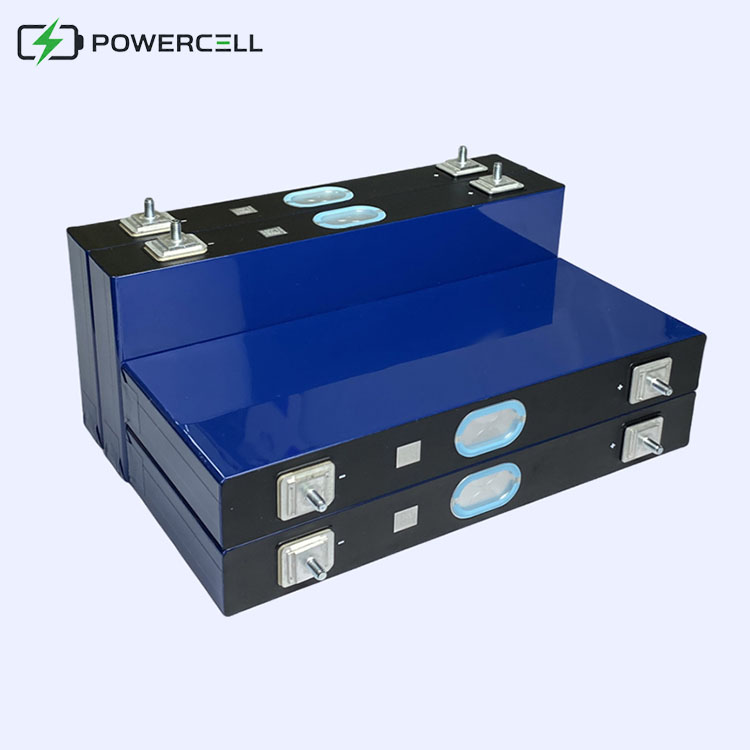
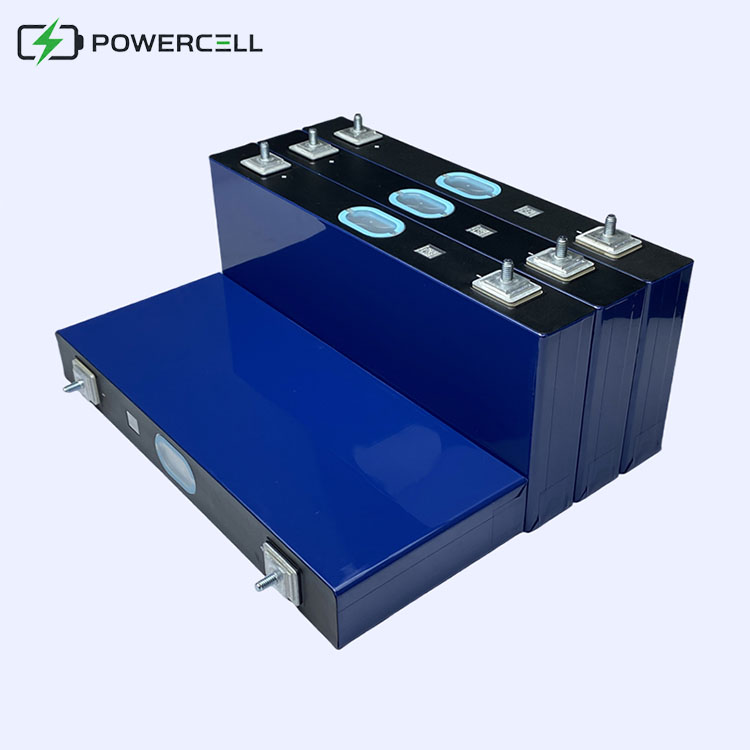
Send us your application, voltage, capacity, battery size, quantity, and branding needs. BYingPower will review your project and recommend the right LiFePO4 battery solution for golf carts, RVs, marine systems, solar storage, forklifts, or lead-acid replacement.
Custom battery pack review for your application
OEM/ODM and private-label battery guidance
BMS, charger, terminals, heating, and packaging support
Faster quote path for samples and bulk orders
4th Floor, Building A, No. 2, Longjiang 2nd Road, Xie Keng, Qingxi Town, Dongguan Province,China.
Golf Cart Loses Power Uphill: Battery, Controller, or Motor?
When a golf cart struggles going uphill, the motor is rarely the first component I blame. This guide shows how to separate battery voltage drop, controller problems, BMS protection, motor faults, and drivetrain drag with real measurements.
An electric golf cart can feel perfectly healthy on level pavement yet lose half its speed on a grade because climbing demands more wheel torque, more motor current, and more sustained power than casual flat-ground driving ever reveals.
So which part is actually failing?
In most cases, a golf cart loses power uphill because the battery pack cannot hold voltage under load, a cable or terminal is adding resistance, or the controller is limiting current. The motor belongs farther down the suspect list.
That order matters. I think any shop that recommends a new motor before recording loaded battery voltage and current is guessing with the customer’s money.
My hard rule is simple: test the battery under load, inspect the high-current circuit, read the controller data, and only then condemn the motor.
Why a Golf Cart Struggles Going Uphill
A hill turns the cart into a rolling load test. It demands energy and torque at the same time.
Consider a cart, passengers, and cargo weighing 1,200 lb, or roughly 544 kg. At 10 mph on a 10% grade, the system needs about 2.4 kW of mechanical climbing power before accounting for tire losses, drivetrain friction, electrical losses, or acceleration.
At 80% overall efficiency, the battery may need to deliver close to 3 kW continuously. That is approximately 62 A from a 48V supply, and the current can rise far higher during a hill start, hard acceleration, or operation with oversized tires.
This is why a cart that cruises on 20–40 A over flat ground can suddenly expose a weak cell, overheated cable, undersized BMS, or conservative controller setting on the first serious incline.
The current numbers are not theoretical decoration. A recent Curtis M-Series motor-controller data sheet lists two-minute current limits ranging from 275 A to 550 A across the 1204M, 1205M, and 1221M families. It also describes five-second boost output, programmable undervoltage cutback, and thermal protection—exactly the functions that become visible when a cart climbs a ramp or hill.
More current creates more heat. Electrical heating rises according to:
Heat loss = Current² × Resistance
Double the current and resistive heating becomes four times greater. That ugly battery cable may remain cool on flat ground and become painfully hot during a long climb.
Tiny resistance matters.
A connection adding only 0.01 Ω will waste 100 W at 100 A. At 200 A, the same bad connection wastes 400 W and drops 2 V before the energy even reaches the controller.
Battery, Controller, or Motor? Read the Symptoms First
Use the cart’s behavior to narrow the search, but do not treat symptoms as proof. Measurement decides the case.
What the cart does
Most likely suspect
Test that proves it
What not to replace yet
Runs normally on flat ground but slows sharply on the hill
Weak battery, unbalanced cells, cable resistance
Record total pack voltage and individual battery or cell-group voltage during the climb
Motor
Accelerates, loses power, then recovers after the pedal is released
Lithium BMS overcurrent or low-cell protection
Read BMS event history, minimum cell voltage, pack current, and temperature
Controller
Pulls strongly when cold but fades after several hills
Controller or motor thermal reduction
Log controller and motor temperature before and after the loss
Battery pack
Pack voltage remains stable, but motor current stops rising
Controller current limit, throttle input, speed sensor, or programming
Check fault codes and voltage at the battery and controller simultaneously
Motor
Burning smell, arcing, rough operation, or abnormal motor noise
Brushes, commutator, bearings, windings, or damaged cables
Inspect the motor and perform resistance, insulation, and current tests
Battery capacity upgrade
Here is the uncomfortable truth: a large motor can make an underpowered cart worse.
A torque motor paired with an old lead-acid bank may demand more current, create deeper golf cart battery voltage drop under load, and force the controller into protection sooner. The owner spends more and the hill performance barely improves.
Test the Battery Pack Before Buying Anything
A resting voltage reading is not a battery test.
It is a starting point.
A weak battery can show an acceptable voltage after charging because a digital meter places almost no load on it. The failure appears when the motor asks for current and the battery’s internal resistance pulls the terminal voltage down.
The official E-Z-GO TXT 48V Owner’s Guide makes a blunt point: battery capacity must be established through a load test with a discharge machine. It also states that a new battery may require up to 100 charge-and-discharge cycles to reach maximum capacity and recommends hydrometer testing to identify an underperforming flooded lead-acid unit.
Record Voltage During the Actual Failure
Use a meter with min/max capture, a secured data logger, or a Bluetooth battery monitor. Do not ask a passenger to hold exposed meter leads while the cart is moving.
Record:
Resting pack voltage after charging
Pack voltage during initial acceleration
Lowest voltage during the hill
Voltage at each lead-acid battery during the same load
Current at the main positive or negative cable
Battery state of charge
Cable and terminal temperature
BMS minimum-cell voltage on lithium systems
Test on the same hill, with the same passenger load and similar state of charge. Random tests produce random conclusions.
For a flooded lead-acid pack, compare every battery under the same load. A 48V cart may use six 8V batteries, eight 6V batteries, or four 12V batteries. The weak unit usually falls farther and recovers faster than the others when the pedal is released.
Do not obsess over one universal voltage-drop number. Battery model, temperature, age, state of charge, current, and test duration all change the result.
Compare like with like.
If five 8V batteries remain tightly grouped while one falls dramatically lower, that outlier deserves attention. If the entire pack collapses evenly, the bank may be discharged, aged, undersized, or burdened by excessive current demand.
Inspect the High-Current Path
Check every connection between the battery and motor:
Battery posts and interconnect cables
Main fuse or breaker
Contactor or solenoid
Controller B+ and B− terminals
Motor cables
Ground or negative return path
Crimped lugs and cable strands
Look for discoloration, melted insulation, green corrosion, loose hardware, distorted washers, cracked lugs, and cables that feel hotter than their neighbors.
A thermal camera helps, but your voltage meter can do the same detective work. Measure voltage across each connection while the cart is under load. A healthy closed connection should show very little voltage across it. A measurable rise points to resistance.
Do not disconnect or tighten high-current components with the pack active. Follow the vehicle manufacturer’s tow, maintenance, and battery-isolation procedure.
Lithium Packs Need Cell-Level Data
When an electric golf cart loses power uphill after a lithium conversion, the pack may not be empty. The BMS may be protecting it.
A Bluetooth screen showing “70% state of charge” does not clear the battery. One weak cell group can hit its low-voltage threshold while the average pack voltage still appears acceptable.
Read:
Minimum and maximum cell voltage
Cell-voltage difference
Continuous discharge current
Peak current and permitted duration
MOSFET or BMS temperature
Low-voltage events
Overcurrent events
Pack disconnect history
A 51.2V 105Ah LiFePO₄ pack stores 5.376 kWh of nameplate energy:
51.2V × 105Ah = 5,376Wh
At 200 A, the nominal electrical output is:
51.2V × 200A = 10.24kW
But a “200A BMS” label is incomplete. Is that 200 A continuous, a 10-second peak, or an advertising number with no thermal test behind it?
That is why I separate energy from power. The battery may hold enough watt-hours for the route and still shut down because its BMS cannot support the hill-start current.
If the cart shuts off rather than merely slowing down, use the event data and work through these golf cart BMS cut-off problems before ordering a controller or motor.
When Golf Cart Controller Problems Cause the Power Loss
The controller does not simply pass battery power to the motor. It meters output, limits current, watches voltage, processes the throttle signal, reacts to temperature, and may reduce performance when it detects a condition outside its programmed limits.
That reduction can feel exactly like a weak battery.
The Curtis 1268 controller manual states that its main current-limit setting controls the maximum current supplied during drive operation and can directly reduce the maximum torque applied by the motor. On that model, the drive current limit can be adjusted from 100 A to the controller’s full rated current.
That single detail destroys a common myth: full throttle does not guarantee full motor torque.
The pedal can command 100%, while the controller supplies only the current allowed by its programming, temperature, battery voltage, or fault strategy.
Signs the Controller Is Limiting Output
Suspect the controller when:
Battery voltage remains reasonably stable during the loss
The cart reaches the same current ceiling on every hill
Output falls after repeated acceleration
The controller heat sink becomes very hot
A temperature or undervoltage code appears
The cart works normally after cooling
Throttle command reaches 100%, but PWM output or motor current does not
The problem started after controller programming was changed
The controller and motor are mismatched
Curtis documentation also explains that current limiting reduces pulse-width-modulated output until motor current falls below the programmed ceiling. That protection reduces stress on the controller, battery, motor, and drivetrain—but it also means a deliberately limited controller can make a healthy motor feel weak on a hill.
Thermal Reduction Has a Pattern
A cold cart that attacks the first hill and crawls up the fourth hill probably does not have a simple state-of-charge problem.
Log temperatures.
Controller protection strategies vary, but they commonly reduce current as heat rises. The loss may feel smooth rather than dramatic. After several minutes of cooling, full output returns.
Check for:
Dirty or blocked cooling surfaces
Controller mounted against insulation
Loose high-current connections creating heat
Excessive vehicle weight
Oversized tires
Aggressive acceleration programming
Controller current beyond the motor’s intended range
Repeated low-speed, high-current climbing
Low speed and high torque are punishing because airflow is poor while current remains high.
Do not “fix” thermal reduction by simply increasing the current limit. That can turn a protective symptom into a failed controller, damaged motor, welded contactor, or overheated cable.
When the Golf Cart Motor Is Losing Torque
Yes, a bad motor can cause a golf cart to lose power uphill.
But it is often overdiagnosed.
A motor fault becomes more convincing after the battery maintains voltage, the cables pass voltage-drop testing, the controller commands the expected current, and the drivetrain spins freely.
DC Series-Motor Failure Clues
On older Club Car, E-Z-GO, and Yamaha DC systems, inspect:
Worn or sticking brushes
Burned or grooved commutator
Carbon buildup
Loose field or armature connections
Shorted armature turns
Field-winding damage
Bearing drag
Overheated insulation
Incorrect motor wiring after a repair
A worn brush may still conduct enough current for light flat-ground driving. Under climbing load, arcing and poor contact become much more obvious.
Sepex and AC Systems Add More Variables
Separately excited DC and AC systems may also suffer from:
Motor speed-sensor failure
Encoder alignment problems
Field-current programming errors
Phase-cable resistance
Temperature-sensor faults
Incorrect motor maps
Controller and motor incompatibility
Resolver or feedback errors
Do not interpret “high current” as proof that the motor is healthy. A stalled motor, dragging brake, damaged bearing, or incorrect gearing can consume high current while producing poor vehicle speed.
Check Mechanical Drag Before Removing the Motor
This step gets ignored constantly.
Set the cart to the manufacturer’s tow or maintenance mode, isolate electrical power, lift it with rated equipment, and inspect wheel rotation safely.
Check:
Brake adjustment and release
Rear axle and differential
Wheel bearings
Tire pressure
Tire diameter
Alignment
Lift-kit geometry
Gear ratio
Added passenger or cargo weight
A cart fitted with 23-inch tires in place of 18-inch tires effectively raises the gearing by about 28%.
23 ÷ 18 = 1.278
The motor must produce more torque at the same grade, while acceleration weakens and current rises. Owners frequently call this “motor failure” when the real problem is gearing they changed themselves.
Hard truth: cosmetic upgrades are not electrically free.
How to Fix a Golf Cart Losing Power Uphill
Fix the measured failure, not the most exciting component.
If the Battery Voltage Collapses
For lead-acid systems:
Fully charge the bank with the correct charger
Check electrolyte level and specific gravity
Load-test the complete pack
Compare individual batteries under load
Replace damaged cables and lugs
Replace a failed battery with a manufacturer-approved match
Evaluate full-bank replacement when units are old or badly mismatched
For lithium systems:
Review BMS fault history
Check cell balance near full charge and under load
Verify continuous and peak discharge ratings
Confirm low-temperature and high-temperature limits
Check charger compatibility
Confirm controller peak current does not exceed the battery’s safe output
Ask the supplier for test data, not adjectives
The U.S. Department of Energy notes that lithium-ion batteries offer high power-to-weight ratios, high energy efficiency, low self-discharge, and good high-temperature performance. Those are real advantages, but they do not remove the need to match voltage, BMS current, charger profile, wiring, and thermal limits.
Return unknown programming to a documented baseline
Upgrade only when the battery, cables, contactor, motor, and drivetrain can support the added current
A larger controller is not automatically better. It can expose an undersized BMS, weak cable, tired battery, or motor that cannot shed the additional heat.
If the Motor or Drivetrain Is Faulty
Release dragging brakes
Replace damaged bearings
Correct tire pressure and alignment
Regear carts with oversized tires
Inspect brushes and commutator
Perform winding-resistance and insulation tests
Check sensors and feedback wiring
Repair or replace the motor only after confirming the fault
For hills, I prefer torque-focused system design over advertised top speed. The best golf cart motor for hills is the motor that works with the battery’s power capability, the controller’s current map, the axle ratio, the tire diameter, and the cart’s actual loaded weight.
Not the biggest motor.
The matched motor.
A Diagnostic Sequence That Stops Expensive Guessing
Use this order every time:
Step 1: Reproduce the Problem
Record the grade, load, tire size, state of charge, ambient temperature, speed, and time until power loss.
Compare each lead-acid battery or each lithium cell group during the same event.
Step 4: Test the High-Current Connections
Measure voltage drop across cables, lugs, fuse, contactor, and controller terminals under load.
Step 5: Read Fault Codes and Temperatures
Check BMS, controller, charger, and motor data where available.
Step 6: Compare Commanded and Delivered Current
Stable battery voltage plus unexpectedly low motor current points toward controller settings, throttle input, sensor data, or protection logic.
Step 7: Inspect Mechanical Load
Check brakes, bearings, tires, alignment, gearing, and payload.
Step 8: Test the Motor
Inspect brushes, commutator, windings, bearings, sensors, insulation, and motor temperature.
This sequence is slower than guessing for ten minutes.
It is much faster than replacing three good parts.
FAQs
Why does my golf cart lose power uphill?
A golf cart loses power uphill when the drive system cannot maintain the voltage and current required for higher torque, usually because the battery pack sags under load, a cable adds resistance, the BMS or controller limits current, the motor overheats, or the drivetrain creates excessive mechanical drag.
Begin with an on-hill voltage and current test. A resting battery reading cannot show what happens under traction load.
How can I tell whether the battery or controller is bad?
A battery problem shows up as a sharp pack-voltage drop, one weak battery or cell group, hot or corroded connections, or a BMS low-voltage event, while a controller problem usually keeps battery voltage relatively stable but caps motor current, records a fault code, or reduces output after heating.
Record battery voltage, controller current, throttle command, fault codes, and temperature during the same climb. Do not compare measurements taken on different routes or at different charge levels.
Can a bad golf cart motor cause uphill power loss?
A bad golf cart motor can cause uphill power loss when worn brushes, damaged windings, poor commutation, overheated insulation, a failing speed sensor, or incorrect field-current settings prevent the motor from producing torque, but the motor should be blamed only after battery voltage, cable loss, controller output, brakes, bearings, and gearing test correctly.
Motor trouble becomes more likely when current is available, voltage remains stable, mechanical drag has been ruled out, and the motor produces abnormal heat, noise, arcing, or inconsistent torque.
How do I fix a golf cart losing power uphill?
The correct fix for a golf cart losing power uphill is the repair that restores loaded voltage and commanded motor current: replace the weak battery or damaged cable, correct BMS sizing, reprogram or replace a current-limiting controller, repair mechanical drag, or install a torque-focused motor matched to the system voltage and gearing.
Do not begin by purchasing an upgrade kit. Begin by writing down pack voltage, minimum cell voltage, peak current, controller temperature, tire diameter, vehicle load, and fault codes.
What is the best golf cart motor for hills?
The best golf cart motor for hills is a torque-oriented motor that matches the cart’s voltage, controller current, axle ratio, tire diameter, vehicle weight, cooling limits, and duty cycle; choosing the largest advertised horsepower without matching those parts can reduce efficiency, trigger thermal protection, damage the controller, or produce worse low-speed drivability.
For lifted carts or repeated steep climbs, lower gearing may deliver a larger real-world improvement than a motor-only replacement.
Your Next Steps: Test the Hill Before You Order Parts
Charge the cart fully. Secure a voltage logger or meter. Record pack voltage, individual battery or minimum-cell voltage, peak current, controller temperature, and fault codes during the exact hill where the power disappears.
Then follow the evidence:
Voltage collapses: test the battery and cables.
Voltage holds but current is capped: inspect the controller and programming.
Voltage and current are available but torque is weak: inspect drag, gearing, and motor condition.
The lithium pack shuts off: investigate BMS current, cell voltage, and temperature limits.
For a battery specification review, send the cart model, system voltage, controller model, peak current, tire diameter, passenger load, hill grade, required range, tray dimensions, and charger details through the CoreSpark custom LiFePO₄ battery inquiry page.
Do not ask for “a stronger battery.”
Ask for a pack that can prove it will hold voltage and deliver current on your hill.
Newsletter Updates
Enter your email address below and subscribe to our newsletter
BYingPower provides OEM, wholesale, and custom LiFePO4 battery packs for golf carts, RVs, forklifts, solar storage, marine power, and lead-acid replacement applications. We support battery brands, distributors, dealers, system integrators, and OEM buyers with reliable lithium battery solutions, smart BMS options, private-label services, and export documentation support.